
Finding the best camping solar panels can make off grid adventures much easier by providing a dependable way to recharge portable power stations, batteries, phones, lights, and other essential devices using sunlight.The best options combine strong power output, efficient solar cells, portability, durable weather resistant construction, flexible positioning, and broad compatibility with camping power systems.
Whether you need a lightweight panel for weekend trips or a higher wattage option for RVs and extended stays, choosing the right solar panel depends on your energy needs and available storage space. In this guide, we will cover the important features to look for, highlight the top picks, provide a practical buying guide to help you choose the right panel, and answer frequently asked questions about using solar panels for camping.
Best Camping Solar Panels
1)ZOUPW 350W Portable Solar Panel

Get it on Amazon
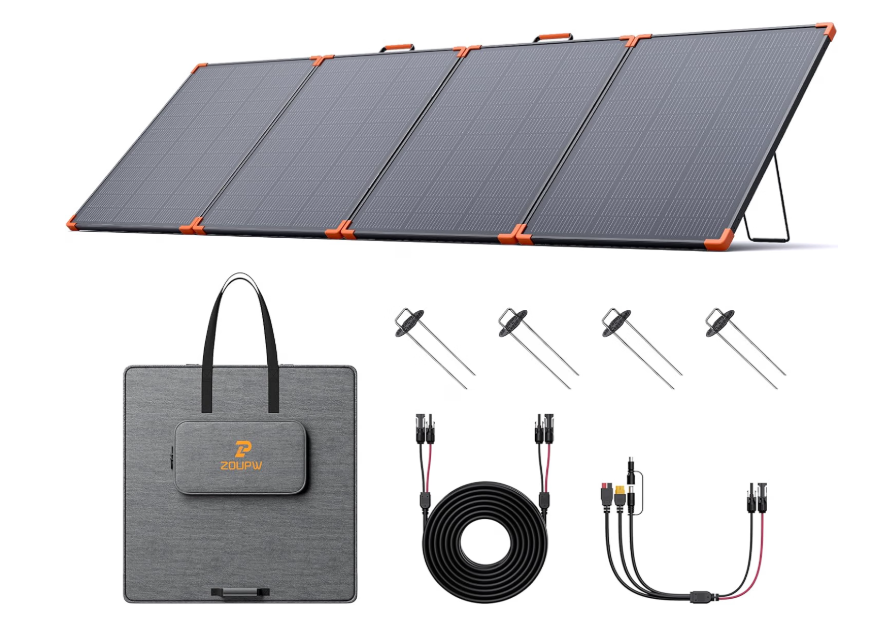
The ZOUPW 350W Portable Solar Panel is designed for campers, RV travelers, overlanders, and anyone who needs substantial solar power without installing permanent rooftop panels. It combines N Type monocrystalline cells, a high 50.2V open circuit voltage, a folding briefcase design, and multiple connection options for compatibility with several large portable power stations. With a claimed 25% efficiency and a weight of 22.2 pounds, it offers a practical balance between high power generation and portability for off grid adventures.
The N Type monocrystalline cells are one of the main reasons this panel is suited to demanding camping use. Unlike traditional P Type cells, the panel uses 16 busbars and is designed to reduce internal resistance and avoid Light Induced Degradation. This means it is intended to maintain its performance over years of use rather than experiencing significant degradation associated with LID. The claimed 25% efficiency can also help the panel capture more usable energy when sunlight conditions are less than ideal.
For campers using high capacity solar generators, the 50.2V open circuit voltage is particularly important. The higher voltage is designed to maximize solar input efficiency for power stations with capacities of around 1kWh or more. The included 4 in 1 connector cable provides XT60, Anderson, DC7909, and DC8020 connections, giving the panel compatibility with various models from EcoFlow, Bluetti, Anker Solix, and Jackery. However, buyers should check the input voltage specifications of their power station before purchasing because this panel is not designed for small 12V to 20V power stations.
Portability is another practical advantage for camping. Although a 350W panel naturally takes up more space than smaller portable panels, ZOUPW has designed this model to fold into a briefcase style package. It weighs 22.2 pounds and has a magnetic handle for carrying. The four adjustable kickstands can be deployed quickly, with the manufacturer stating that setup can take around 10 seconds. This makes it easier to move the panel throughout the day as the sun changes position.
The adjustable kickstands also allow the panel to be positioned at approximately a 45 degree angle rather than simply laying flat on the ground. According to the manufacturer, angling the panel this way can capture up to 30% more sunlight than laying it flat. Actual gains will depend on the time of day, season, weather, and geographical location, but the ability to adjust the angle is useful when trying to maximize solar collection while camping.
Durability is important when a solar panel is being transported and used outdoors, and the ZOUPW 350W is built with an ETFE coating and an IP68 waterproof rating. The junction box is rated IP67, providing additional protection against rain and dust. This makes the panel suitable for outdoor applications such as RV boondocking, overlanding, camping, and emergency backup. Even so, portable solar panels should be handled carefully during setup and transportation to avoid damaging the cells.
The included accessories make the package more convenient for campers. Along with the 350W solar panel, buyers receive an extension cable, a 4 in 1 connector cable, a storage bag, and a user manual. ZOUPW also provides a 3 year warranty and lifetime technical support. Having the required connection cables included can reduce the need to purchase additional accessories separately, although compatibility should still be confirmed with the specific power station being used.
There are some important operating precautions to consider. The panel includes bypass diodes and anti shading protections, but the manufacturer does not recommend long term fixed, series, or parallel connections. Shading should also be minimized because partial obstruction can reduce output and create heat buildup. The panel should never be stepped on, covered with heavy objects, or subjected to excessive pressure because this can crack the solar cells and reduce power production. Keeping the surface clean from dust, grass, and debris is also important for maintaining stable performance.
For camping situations where a large amount of solar input is needed without committing to a permanent installation, the ZOUPW 350W offers a useful combination of power, portability, weather resistance, and connection flexibility. Its 50.2V output makes it particularly relevant for larger solar generators, while the folding design allows campers to pack it away when traveling. The main consideration is whether your power station can safely accept the panel’s voltage, so checking compatibility before purchase is essential.
Pros
• 350W rated solar output provides substantial charging potential for camping and RV use
• N Type monocrystalline cells offer a claimed 25% efficiency
• 16 busbars are designed to reduce internal resistance
• 50.2V open circuit voltage is suitable for compatible high capacity power stations
• 4 in 1 connector supports several common connection types
• Compatible with selected EcoFlow, Bluetti, Anker Solix, and Jackery power stations
• ETFE coating and IP68 waterproof construction are suited to outdoor conditions
• Four adjustable kickstands make it easier to position toward the sun
• Folds into a briefcase style design for transportation and storage
• Magnetic handle makes carrying more convenient
• Includes extension cable, connector cable, storage bag, and user manual
• Backed by a 3 year warranty and lifetime technical support
Cons
• The 22.2 pound weight may be considerable for campers prioritizing ultralight equipment
2)Green Magic Portable 400 Watt Solar Panel
Get it on Amazon
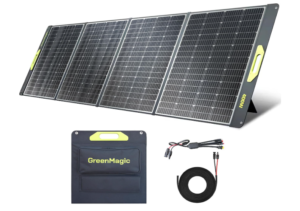
The Green Magic Portable 400 Watt Solar Panel is designed for campers, RV travelers, and outdoor users who need a substantial amount of solar power without installing permanent panels. With a 400W output, monocrystalline silicon cells, a claimed conversion efficiency of 21.5% to 23.5%, and a foldable design, it provides a convenient way to recharge compatible portable power stations while traveling. Its combination of high output and relatively portable construction makes it suitable for off grid camping, road trips, RV adventures, and emergency power needs.
The panel uses built in monocrystalline silicon solar cells designed to provide efficient energy conversion while offering resistance to heat and chemicals. Green Magic states that the panel achieves a 21.5% to 23.5% conversion efficiency, allowing it to convert a substantial portion of available sunlight into usable electricity. The manufacturer also states that the panel has 95% transparency, which is intended to support effective sunlight transmission to the solar cells.
With a rated 400W output, this panel can provide significant solar input for compatible large capacity power stations. It also supports parallel and series wiring, giving users additional flexibility when expanding their solar setup. However, the actual power produced will depend on sunlight intensity, weather, panel positioning, temperature, and shading, so the rated 400W should not be treated as a constant output.
Compatibility is another useful aspect of the Green Magic panel. It comes with a built in cable featuring an MC4 connector and is advertised as being compatible with approximately 95% of portable power stations. It can work with power stations from brands such as Jackery, Goal Zero, EcoFlow, Bluetti, and Anker, among others. Even with broad compatibility, users should check their power station’s voltage, current, and solar input limits before connecting the panel.
Setting up the panel is relatively straightforward because it has four built in adjustable kickstands. These allow the panel to be positioned at an angle rather than simply placed flat on the ground, helping users orient it toward the sun for better solar harvesting. The kickstands can be deployed within seconds and provide a stable setup for campsites, while four hanging loops around the edges provide additional mounting possibilities, including mounting the panel on the side of an RV.
The Green Magic 400W is also designed with outdoor use in mind. It uses laminated construction with a heat resistant, dustproof, and waterproof surface film, while the 840D Oxford cloth outer layer adds protection against scratches, moisture, and general handling. The panel has an IP65 waterproof rating, which means it is designed to withstand water splashes. However, the manufacturer specifically warns against leaving it exposed to rain or soaking it in water because the junction box is not waterproof.
Despite its high 400W rating, the panel remains reasonably portable for its power class. It folds down to approximately one quarter of its full size, with a folded dimension of 32.09 by 31.30 by 1.97 inches. A rubber carrying handle allows it to be transported in a briefcase style, while the 21.5 pound weight makes it possible to move between the vehicle and campsite without requiring permanent installation.
Storage is another advantage for campers who have limited space inside an RV or vehicle. Folding the panel reduces its overall footprint considerably compared with rigid rooftop solar panels. When traveling between campsites, users can fold it away and carry it using the integrated handle. It can then be unfolded at the destination and positioned using the adjustable kickstands.
The Green Magic Portable 400 Watt Solar Panel is a practical choice for campers who prioritize high solar output while still wanting a foldable system. Its 400W rating, adjustable kickstands, MC4 connection, broad claimed compatibility, and weather resistant construction give it several useful qualities for outdoor power generation. The main points to check before purchasing are your power station’s solar input specifications and the panel’s 21.5 pound weight and folded
dimensions.Pros
• 400W rated output provides substantial charging potential for compatible power stations
• Monocrystalline silicon cells offer a claimed 21.5% to 23.5% conversion efficiency
• Designed with heat and chemical resistant solar cells
• Supports parallel and series wiring for additional setup flexibility
• MC4 connector provides broad compatibility with many solar generators
• Advertised compatibility with approximately 95% of power stations
• Compatible with selected Jackery, Goal Zero, EcoFlow, Bluetti, Anker, and other power stations
• Four adjustable kickstands make positioning the panel easier
• Four hanging loops provide additional mounting options
• Folds down to approximately one quarter of its full size
• Rubber handle makes briefcase style carrying convenient
• 21.5 pound weight is relatively manageable for a 400W portable panel
• 840D Oxford cloth construction provides additional durability
• IP65 rated panel surface helps protect against water splashes
Cons
• The junction box is not waterproof
3)E POWO 400W Portable Solar Panel
Get it on Amazon
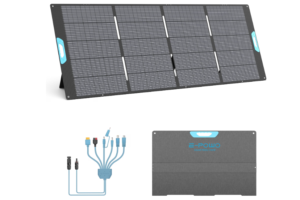
The E POWO 400W Portable Solar Panel is designed for campers and outdoor enthusiasts who want high solar output without installing permanent panels on an RV or vehicle. With a 400W rated output, high efficiency monocrystalline cells, ETFE coating, multiple connector options, and a foldable design, it can provide a practical source of renewable energy for compatible portable power stations. Its combination of power, adjustability, and weather resistant construction makes it suitable for camping, hiking, RV trips, and emergency backup situations.
One of the main advantages of the E POWO panel is its claimed conversion efficiency of up to 23.5%. It combines high efficiency monocrystalline solar cells with an ETFE coated surface to help convert available sunlight into usable electricity. The ETFE coating is also designed to improve resistance to dust and weather exposure, which can be useful when the panel is repeatedly used outdoors in different environments.
The panel provides several connection options for portable power stations. Its 7 in 1 cable includes connections for Anderson, XT60, DC7909, DC5521, DC8020, DC5525, and DC35135, allowing it to work with a wide variety of power stations. This makes the panel particularly convenient for users who already own a compatible solar generator. However, buyers should always check their power station’s voltage, current, and solar input specifications before connecting a 400W panel.
Portability is another important consideration. The E POWO 400W panel weighs 15.57 kg, or approximately 34.3 pounds, and folds down to 37.76 by 24.96 by 1.3 inches. Although it is not an ultralight panel, the folding design makes it easier to transport and store than a rigid 400W solar array. When folded, it has a briefcase style form that can be carried between a vehicle and campsite.
The built in kickstands make positioning the panel easier once you reach your campsite. The panel can be adjusted to three angles of approximately 40, 50, or 60 degrees, allowing users to orient it toward the sun throughout the day. Proper positioning can improve solar collection compared with leaving the panel completely flat. The design is also intended to provide stability in stronger winds, while reinforced grommets offer additional options for mounting the panel to an RV or tent.
Durability is another area where the E POWO 400W is designed for outdoor use. The ETFE lamination provides the solar module with an IP67 waterproof rating, while the waterproof Oxford fabric casing adds another layer of protection. Its fiberglass structure is designed to provide durability, corrosion resistance, and thermal stability. These materials can be useful for campers who regularly expose their equipment to dust, changing temperatures, and outdoor conditions.
The panel also includes a built in accessory pouch, which gives users a convenient place to store cables and small accessories when traveling. Having the cables close to the panel can make setup and packing easier, particularly when moving frequently between campsites. The three angle positions and mounting grommets also give users more flexibility than a panel that can only be placed flat on the ground.
In the package, E POWO includes the 400W portable solar panel, a 7 in 1 cable, and a user manual. The company provides an 18 month warranty from the purchase date and states that it aims to respond to product issues within 24 hours. Users should also keep realistic expectations about charging performance because cloud cover, shade, and other obstacles can significantly reduce the amount of solar energy reaching the cells.
For campers who need a high output portable solar panel, the E POWO 400W offers a combination of 23.5% claimed efficiency, multiple connection options, adjustable positioning, and weather resistant construction. Its biggest tradeoff is portability: at approximately 34.3 pounds, it is considerably heavier than some other foldable panels in the same power category. For users who have enough vehicle storage and want a 400W panel with flexible positioning and broad connector support, its feature set is well suited to camping and portable power applications.
Pros
• 400W rated output provides substantial charging potential
• Monocrystalline solar cells offer a claimed conversion efficiency of up to 23.5%
• ETFE coating helps improve dust and weather resistance
• IP67 waterproof solar module provides protection against water exposure
• Waterproof Oxford fabric casing adds additional outdoor protection
• Fiberglass structure is designed for durability and corrosion resistance
• 7 in 1 cable provides multiple connector options
• Supports Anderson, XT60, DC7909, DC5521, DC8020, DC5525, and DC35135 connections
• Three adjustable angles of 40, 50, and 60 degrees help with solar positioning
• Reinforced grommets provide additional mounting options
• Built in accessory pouch helps keep cables organized
• Foldable briefcase style design makes transportation easier
• Includes an 18 month warranty
Cons
• At approximately 34.3 pounds, it is relatively heavy for a portable solar panel
4)ZOUPW 450W Portable Solar Panel N Type
Get it on Amazon
The ZOUPW 450W Portable Solar Panel N Type is built for campers who need substantial solar charging capacity while still wanting a foldable and transportable setup. Designed around N Type monocrystalline cells, a 16 busbar configuration, high voltage output, and an aerospace grade fiberglass structure, it is aimed primarily at large capacity portable power stations. Its 450W rating makes it suitable for RV boondocking, overlanding, camping, and emergency power applications where faster solar charging is important.
The panel uses N Type monocrystalline cells with a 16 busbar design. According to the manufacturer, this construction reduces internal resistance and the risk of micro cracks while avoiding the Light Induced Degradation associated with traditional P Type panels. ZOUPW claims the panel can maintain up to 25% efficiency over years of use and produce up to 10% more power in conditions such as cloudy weather, early mornings, and late afternoons. Actual performance will still depend on sunlight intensity, weather, positioning, temperature, and shading.
With a 450W rated output, the panel is intended for high capacity solar generators rather than smaller portable power stations. It has a 45.9V open circuit voltage and is designed for systems accepting approximately 40V to 60V solar input. It is advertised as compatible with selected EcoFlow Delta models, Anker C1000 and C1000 Gen 2, and Bluetti Elite 100. Buyers should pay close attention to their power station’s solar input specifications because the panel is not intended for low voltage units with input requirements below 30V, including models such as the Jackery 1000, 500, and 300 or Bluetti EB70S.
Connection is relatively straightforward thanks to the included 4 in 1 adapter cable. The cable provides XT60, Anderson, DC7909, and DC8020 connections, giving users several options for connecting the panel to compatible power stations. ZOUPW lists compatibility with various EcoFlow, Anker, Jackery, and other models, including some systems designed for 2kWh or greater capacities. Nevertheless, compatibility should always be confirmed before purchase because connector type alone does not guarantee that a power station can safely accept the panel’s voltage and current.
Despite producing 450W of rated power, the panel is designed to remain manageable for outdoor use. It weighs 29.5 pounds and uses an aerospace grade fiberglass structure that ZOUPW says makes it approximately 30% lighter than comparable 400W rigid panels. Four reinforced kickstands can be adjusted to approximately 45 degrees, allowing campers to position the panel toward the sun and make setup easier when traveling without assistance.
The panel is also designed to withstand demanding outdoor conditions. Its ETFE coating and sealed lamination provide an IP68 rating for protection against water and dust. This makes it suitable for situations involving sudden rain, marine spray, and dusty environments, although the connectors should not be soaked. The integrated smart bypass diodes are designed to help maintain power production when part of the panel becomes shaded while reducing the risk of hot spots.
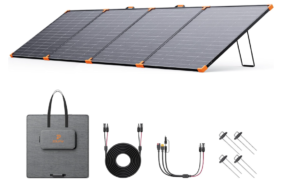
For campers who frequently move between locations, the included accessories add convenience. The package includes the 450W solar panel, a solar extension cable with multiple connector options, four ground stakes, a storage bag, and a user manual. The ground stakes can help secure the panel outdoors, while the storage bag makes transportation and storage more convenient. ZOUPW also provides a 36 month warranty, a 30 day money back guarantee, and 24 hour customer support.
There are some important operating precautions to keep in mind. Although the panel includes bypass diodes and anti shading protection, ZOUPW does not recommend long term fixed, series, or parallel connections or continued operation in shaded conditions. Users should avoid connecting panels with significantly different ages or levels of degradation in series or parallel. The panel should also be kept free of dust, grass, and debris because partial obstruction can reduce efficiency and contribute to heat buildup.
The ZOUPW 450W Portable Solar Panel N Type is primarily suited to campers using high capacity power stations that can accept its relatively high voltage. Its combination of 450W output, claimed 25% efficiency, N Type cells, IP68 construction, adjustable kickstands, and multiple connection options gives it considerable flexibility for larger off grid systems. The main limitation is compatibility: users with low voltage power stations will need a different solar panel, so checking the power station’s input requirements is essential before purchasing.
Pros
• 450W rated output provides substantial solar charging capacity
• N Type monocrystalline cells are designed for high efficiency
• 16 busbars are designed to reduce internal resistance and micro crack risks
• Claimed efficiency of up to 25%
• Manufacturer claims up to 10% more power in certain low light conditions
• 45.9V open circuit voltage suits compatible high capacity power stations
• Designed for systems accepting approximately 40V to 60V solar input
• Four reinforced kickstands allow adjustable positioning
• Aerospace grade fiberglass construction helps reduce weight
• 29.5 pound weight is relatively manageable for a 450W panel
• ETFE coating and sealed lamination provide IP68 protection
• Smart bypass diodes provide additional protection against partial shading
• 4 in 1 adapter supports XT60, Anderson, DC7909, and DC8020 connections
• Includes four ground stakes and a storage bag
• 36 month warranty and 30 day money back guarantee
Cons
• Not suitable for low voltage power stations with input requirements below 30V
5)RENOGY REGO 400W Portable Solar Panel
Get it on Amazon
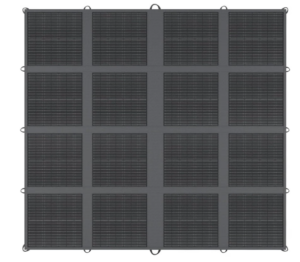
The RENOGY REGO 400W Portable Solar Panel is designed for campers who want high solar output without carrying the bulk associated with many conventional 400W panels. Weighing only 16.09 pounds, this solar blanket uses a patented 16 fold compression design that Renogy says makes it 75% smaller and 62% lighter than comparable 400W systems. Its combination of N Type solar cells, 25% efficiency, multiple placement options, and compatibility with power stations and 12V or 24V batteries makes it a versatile option for camping, RV travel, road trips, and emergency backup power.
Portability is one of the biggest advantages of the RENOGY REGO 400W. At 16.09 pounds, it is considerably lighter than many high output portable solar panels. The patented 16 fold design allows the blanket to compress into a package smaller than a standard backpack, making storage much easier when vehicle space is limited. A carry handle and adjustable shoulder straps also make it easier to transport from a vehicle to a campsite.
The flexible design provides several ways to position the panel. When fully unfolded, it is approximately the width of the front of an SUV, pickup truck, or 4×4 crossover. Campers can place it on the ground, hang it in a sunny location, or position it against a vehicle. Renogy also describes using it on the front window as a sunshade while charging a portable power station. This can be particularly useful when the vehicle itself is parked in a shaded location but a nearby area receives direct sunlight.
The REGO uses N Type solar cells with 16BB technology and a claimed 25% efficiency. Renogy states that the design provides stable performance and a higher temperature coefficient, helping the panel maintain output in high temperatures. This can be useful for camping in hot environments where conventional solar panels may experience reduced performance as temperatures rise. As with any solar panel, actual output will vary according to sunlight intensity, weather, positioning, temperature, and shading.
Compatibility is another strong point for this solar blanket. It includes a 118 inch, or 3 meter, cable and is designed to work with portable power stations as well as 12V and 24V battery systems. Renogy lists compatibility with AGM, LiFePO4, and deep cycle batteries, making the panel suitable for a wide range of camping, RV, automotive, marine, and emergency backup applications. Users should still verify the charging requirements and electrical specifications of their particular battery or power station before connecting it.
The ETFE laminated construction provides protection for regular outdoor use, while the panel carries an IP65 rating. It is designed to operate across a temperature range from minus 10°C to 65°C. Reinforced stitching and handcrafted construction are intended to improve durability, while the integrated handle and shoulder straps make the blanket easier to carry. Although the panel is designed for outdoor use, an IP65 rating does not mean it should be submerged or exposed to conditions beyond its specified protection level.
For campers who frequently move between locations, the REGO’s compact storage design can make a significant difference. Traditional 400W panels can take up considerable room in an RV, SUV, or truck, whereas this solar blanket can be compressed into a much smaller package. Its flexible format also makes it easier to find a suitable sunny location without needing to carry a rigid panel and separate mounting equipment.
Renogy also provides long term coverage for the product. The 400W solar panel comes with a 2 year warranty covering materials and workmanship, along with a 25 year commitment to maintain 80% output. This provides additional reassurance for users planning to incorporate the panel into a long term camping, RV, or backup power setup.
The RENOGY REGO 400W Portable Solar Panel is particularly suited to campers who value portability and flexible placement. Its 400W capacity and claimed 25% efficiency provide substantial solar generation potential, while the 16 fold design makes it much easier to store and carry than many rigid panels. Its ability to work with portable power stations and 12V or 24V battery systems further expands its usefulness, although buyers should verify electrical compatibility before connecting it to their equipment.
Pros
• 400W rated solar output provides substantial charging potential
• Weighs only 16.09 pounds
• Patented 16 fold compression design makes storage highly compact
• Manufacturer states it is 75% smaller and 62% lighter than comparable 400W systems
• N Type solar cells provide a claimed 25% efficiency
• 16BB technology is designed for stable solar performance
• Designed to maintain performance in higher temperatures
• 118 inch, or 3 meter, cable provides flexibility when positioning the panel
• Compatible with portable power stations and 12V or 24V battery systems
• Supports AGM, LiFePO4, and deep cycle battery applications
• Can be placed on the ground, hung, or positioned against a vehicle
• Can be used as a vehicle sunshade while charging
• ETFE laminated construction adds durability
• IP65 rating provides protection against dust and water exposure
• Operates from minus 10°C to 65°C
• Carry handle and adjustable shoulder straps make transportation easier
• 2 year warranty for materials and workmanship
• 25 year commitment to maintain 80% output
Cons
• Its large unfolded footprint can require considerable space at the campsite
6)MHPOWOS 400W Bifacial Portable Solar Panel
Get it on Amazon
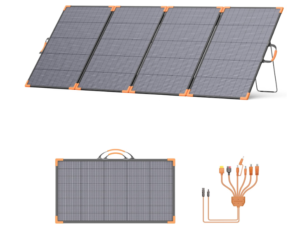
The MHPOWOS 400W Bifacial Portable Solar Panel is designed for campers, RV owners, and off grid users who want substantial solar charging capacity in a relatively lightweight package. Unlike conventional single sided panels, this model uses both the front and back surfaces to capture sunlight, with the manufacturer claiming up to 20% more energy generation. It combines bifacial solar technology, 25% claimed conversion efficiency, an adjustable support system, IP68 protection, and multiple connector options for portable power stations.
The bifacial design allows the panel to collect sunlight from both sides. The front surface captures direct sunlight, while the rear surface can collect reflected or diffused light from the surrounding environment. MHPOWOS claims this can generate up to 20% more energy than single sided panels under suitable conditions. The actual additional energy will depend heavily on the surface beneath and around the panel, sunlight angle, weather, and how much reflected light reaches the rear surface.
The panel uses ETFE covered monocrystalline silicon solar cells with multilayer cell technology and a claimed conversion efficiency of up to 25%. This provides good energy conversion potential for a portable panel and can make it useful when charging a compatible power station during camping trips. It is important to remember that the 400W rating represents the panel’s rated maximum under suitable conditions, while real world output can vary throughout the day.
Portability is another useful aspect of the MHPOWOS panel. It weighs approximately 19.7 pounds, or 8.95 kg, which the manufacturer says is 35% lighter than traditional 400W panels. The integrated rubber handle makes transportation easier, while the folded dimensions measure approximately 22.4 by 38.3 by 2.8 inches. This combination makes it practical for users who need substantial solar capacity but have limited storage space in an RV, van, truck, or camping vehicle.
The panel includes three reinforced brackets and an adjustable support system that can be positioned between approximately 30 and 60 degrees. This allows users to adjust the panel toward the sun and provides a stable setup on suitable flat surfaces. Correct positioning can improve solar collection and can also help the rear surface receive reflected sunlight, which is particularly relevant to the bifacial design.
Durability is another important consideration for camping equipment. The MHPOWOS 400W uses an ETFE coating designed to withstand outdoor conditions, while its IP68 waterproof rating provides a high level of protection against dust and water. The aluminum frame is designed to resist corrosion and provide structural durability. Despite its weather resistant construction, the manufacturer advises avoiding prolonged exposure to heavy rain.
The panel is designed to work with high capacity portable power stations and 12V RV batteries. Its 7 in 1 solar cable includes DC7909, DC8020, XT60, DC5521, DC5525, DC35135, and Anderson connectors. This wide range of connection options makes it easier to connect the panel to many solar generators, although users should still confirm their specific power station’s voltage, current, and solar input limits before connecting it.
One limitation is that the panel itself does not store electricity. It produces electricity from sunlight but requires a compatible power station, battery, or other storage system if users want to save energy for use after sunset. This is normal for portable solar panels, but it is an important distinction for first time buyers who may expect the panel to function as a standalone battery.
For camping and RV use, the MHPOWOS 400W Bifacial Portable Solar Panel offers a combination of high rated output, relatively low weight, flexible positioning, and broad connector support. Its ability to capture light from both sides can provide an advantage in environments with reflective surfaces, while the 25% claimed efficiency gives it strong solar generation potential. The main considerations are the space required for effective bifacial operation, the need for a separate battery or power station for energy storage, and the importance of verifying compatibility before use.
Pros
• 400W rated output provides substantial solar charging potential
• Bifacial design captures sunlight from both front and rear surfaces
• Manufacturer claims up to 20% more energy than single sided panels under suitable conditions
• Claimed conversion efficiency of up to 25%
• ETFE covered monocrystalline silicon solar cells provide efficient energy conversion
• Weighs approximately 19.7 pounds, or 8.95 kg
• Manufacturer states it is 35% lighter than traditional 400W panels
• Adjustable support system allows positioning from approximately 30 to 60 degrees
• Three reinforced brackets provide stable positioning
• Rubber carrying handle makes transportation easier
• IP68 waterproof rating provides strong protection against dust and water
• Weather resistant ETFE coating is designed for outdoor use
• Corrosion resistant aluminum frame adds durability
• 7 in 1 cable offers multiple connector options
• Compatible with many high capacity portable power stations
• Suitable for camping, RVs, van life, and emergency power applications
• Includes an 18 month warranty
Cons
• The panel cannot store electricity on its own
7)Renogy 300W Portable Solar Panel

Get it on Amazon
The Renogy 300W Portable Solar Panel is designed for campers, RV owners, and off grid users who want a practical balance between solar output, portability, and durability. It uses N Type solar cells with 16BB technology and a claimed 25% conversion efficiency, allowing it to generate more usable electricity from available sunlight. Its foldable construction, adjustable kickstands, waterproof design, and tool free setup make it suitable for camping trips, RV travel, emergency backup, and other portable power applications.
The panel uses premium N Type solar cells combined with 16BB technology to achieve a claimed 25% conversion efficiency. Renogy states that this is higher than the 22.5% efficiency associated with standard 9BB 300W panels. Higher efficiency can be especially useful when space is limited because more electricity can be generated from a similarly sized panel. It can also be beneficial during less favorable sunlight conditions, although actual output will depend on weather, positioning, temperature, and shading.
Portability is another useful aspect of the Renogy 300W panel. It weighs 18.74 pounds, which Renogy says is 17% lighter than a standard 300W portable solar panel. When folded, it measures approximately 23.2 by 29.3 by 3.2 inches, making it easier to store inside an RV, vehicle, or camping gear compartment. The foldable design also allows users to transport the panel between different locations without needing a permanent installation.
Renogy states that the panel can generate up to approximately 960Wh per day depending on available sunlight. This makes it suitable for replenishing compatible portable power stations and batteries during outdoor trips. Daily energy production will naturally vary with the number of peak sunlight hours, weather conditions, panel angle, temperature, and shading, so the stated daily figure should be viewed as a sunlight dependent estimate rather than a guaranteed amount.
Durability is another important part of the design. The panel has an IP67 waterproof rating and uses a hail resistant ETFE coating designed to protect the solar cells during outdoor use. Renogy states that the panel can operate across temperatures from approximately minus 40°F to 185°F, making it suitable for a wide range of challenging weather conditions. This combination of weather protection and N Type solar technology makes it suitable for repeated camping and RV use.
Setting up the panel is designed to take approximately one minute and does not require tools. Users can unfold the panel, position the rust resistant kickstands, and orient it toward the sun. This straightforward setup is useful for campers who move between locations frequently and do not want to spend significant time assembling solar equipment. IP68 connectors also provide additional protection at the connection points and are designed to work with many portable power stations and batteries.
The panel also supports parallel wiring for users who want to build a larger solar setup. Renogy states that this configuration helps prevent individual shadows from significantly reducing the overall efficiency of interconnected panels. This can be useful when trees, clouds, or other objects cause partial shading, although positioning panels in unobstructed sunlight remains important for maximizing energy production.
Renogy backs the panel with a 3 year warranty covering output, materials, and workmanship. This provides additional reassurance for users planning to use the panel regularly for camping or RV power. The combination of a relatively lightweight design, high claimed efficiency, quick setup, and weather protection makes the Renogy 300W a versatile option for users who need portable solar power without moving to a larger 400W or 450W system.
For campers looking for a portable panel that balances output and manageable size, the Renogy 300W offers several practical advantages. Its 25% claimed efficiency, 18.74 pound weight, foldable construction, IP67 protection, and one minute setup make it well suited to outdoor power applications. Its 300W capacity is lower than larger 400W and 450W panels, but the smaller and lighter design may be preferable for users who value easier transportation and storage.
Pros
• 300W rated solar output provides useful charging capacity for camping
• N Type solar cells provide a claimed 25% conversion efficiency
• 16BB technology is designed for improved energy conversion
• Claimed efficiency is higher than standard 9BB 300W panels
• Weighs 18.74 pounds
• Manufacturer states it is 17% lighter than standard 300W portable panels
• Folded dimensions of approximately 23.2 by 29.3 by 3.2 inches save storage space
• Can generate up to approximately 960Wh per day depending on sunlight
• IP67 waterproof construction provides protection for outdoor use
• Hail resistant ETFE coating improves durability
• Designed to withstand temperatures from approximately minus 40°F to 185°F
• Can be set up in approximately one minute without tools
• Rust resistant kickstands provide convenient positioning
• IP68 connectors provide additional protection against water and dust
• Supports parallel wiring for larger solar configurations
• 3 year warranty covers output, materials, and workmanship
Cons
• Actual daily energy production will vary significantly with sunlight and weather
Get it on Amazon Best Portable Battery for Camping with Solar Power Off Grid
Best Camping Solar Panels Advantages
1. High Power Output
Choosing a high wattage camping solar panel provides more electricity from available sunlight, making it easier to recharge portable power stations, batteries, phones, lights, refrigerators, and other camping equipment. Higher output is particularly useful for longer off grid trips or when several devices need power throughout the day.
2. High Conversion Efficiency
Efficient solar panels convert a greater portion of available sunlight into usable electricity. Panels using advanced monocrystalline cells can offer efficiency around 25%, helping maximize energy production when campsite space is limited or sunlight conditions are less than ideal.
3. Portable and Foldable Design
A foldable solar panel is much easier to transport and store than a permanent rigid system. Compact designs can fit inside vehicles, RVs, or camping storage compartments, while integrated handles and lightweight construction make it easier to move the panel between locations.
4. Adjustable Positioning
Adjustable kickstands allow the panel to be angled toward the sun instead of remaining flat on the ground. This flexibility can improve sunlight exposure and energy production while making it easier to adjust the panel as the sun moves throughout the day.
5. Wide Power Station Compatibility
A camping solar panel with multiple connector options can work with a wider range of portable power stations and batteries. This flexibility is useful for campers who already own different power equipment and want one solar panel that can accommodate their existing setup.
6. Weather Resistant Construction
Outdoor solar panels need to withstand changing weather conditions. Features such as ETFE coatings, waterproof ratings, corrosion resistant materials, and durable protective fabrics can help protect the panel from dust, moisture, heat, and other outdoor conditions.
7. Durable Construction for Outdoor Use
A durable solar panel is better suited to repeated transportation and campsite setup. Reinforced frames, strong stitching, protective coatings, sturdy kickstands, and quality connectors can help the panel withstand regular handling while maintaining reliable performance over time.
8. Flexible Setup and Mounting Options
Camping solar panels with multiple placement options provide greater freedom at the campsite. Depending on the design, a panel can be placed on the ground, mounted on an RV or vehicle, hung in a sunny location, or positioned using adjustable supports, making it easier to find an unobstructed source of sunlight.
Factors to Consider Best Camping Solar Panels
1. Wattage and Power Output
Consider how much electricity you need to generate during your camping trips. Higher wattage panels can provide more solar energy for charging large power stations and multiple devices, while lower wattage options may be sufficient for phones, lights, cameras, and smaller batteries. Choose a panel based on your actual power requirements rather than selecting the highest wattage available.
2. Solar Conversion Efficiency
Conversion efficiency determines how effectively a panel turns sunlight into usable electricity. Higher efficiency can be particularly valuable when camping because it allows you to generate more power from a limited amount of panel surface area. Look for efficient monocrystalline technology if you want strong energy production without carrying an excessively large panel.
3. Portability and Weight
Consider how easily you can transport, carry, and store the panel. Foldable designs can save considerable space in an RV, vehicle, or camping bag, while lighter models are more convenient when moving between locations. Remember that higher wattage panels can become heavier and larger, so balance power requirements with portability.
4. Compatibility With Your Power Station
Check the panel’s voltage, current, connectors, and maximum solar input before purchasing. A panel may have the right connector but still be electrically incompatible with your power station. Some high output panels are designed specifically for larger power stations and may not work with smaller low voltage systems.
5. Durability and Weather Protection
Camping exposes solar equipment to dust, moisture, heat, wind, and changing weather conditions. Look for durable materials, protective coatings, waterproof ratings, reinforced construction, and corrosion resistant components. Also check the manufacturer’s instructions because a waterproof rating does not necessarily mean the panel can be submerged or left in heavy rain indefinitely.
6. Setup and Positioning
Consider how easy the panel is to deploy and adjust at a campsite. Built in kickstands, adjustable angles, handles, mounting loops, and ground stakes can make setup easier and help position the panel toward the sun. A design that can be quickly repositioned throughout the day can be particularly convenient for mobile camping.
7. Cable and Connector Options
The included cables and connectors can make a significant difference in convenience. Panels with several connector types can accommodate a wider range of power stations and batteries, reducing the need to purchase additional adapters. However, connector availability should not replace checking the electrical specifications of your equipment.
8. Warranty and Long Term Support
Consider the warranty period and the type of support provided by the manufacturer. A longer warranty can provide additional protection against manufacturing defects, while technical support can be useful when troubleshooting charging or connection problems. Also consider the panel’s expected lifespan and any stated long term performance guarantees when comparing options.
Best Camping Solar Panels FAQs
1. What wattage solar panel is best for camping?
For most camping needs, a 300W to 400W solar panel provides a good balance of power and portability. A 300W panel can handle many everyday charging needs, while a 400W panel is more suitable for larger power stations, refrigerators, and multiple devices.
2. Can camping solar panels charge any portable power station?
No. Solar panels must match the power station’s voltage, current, connector, and maximum solar input requirements. Always check these specifications before connecting a panel, especially when using high wattage panels with smaller power stations.
3. Are portable solar panels waterproof?
Many camping solar panels are designed to resist water and outdoor conditions, but their protection varies by model. Check the specific IP rating and manufacturer instructions before exposing a panel to rain, and avoid assuming that a waterproof rating means the panel can be submerged.
Conclusion
Choosing the best camping solar panels comes down to finding the right balance between power, efficiency, portability, durability, and compatibility with your power station. Higher wattage panels can deliver more energy for larger camping setups, while compact and lightweight designs are easier to carry and position when space is limited.
Look for efficient solar cells, multiple connector options, strong weather protection, adjustable supports, and a reliable warranty so your panel can handle changing outdoor conditions. With the right combination of these qualities, a camping solar panel can turn available sunlight into a practical source of renewable power, helping you stay charged and comfortable even when you are far from a traditional electrical outlet.