
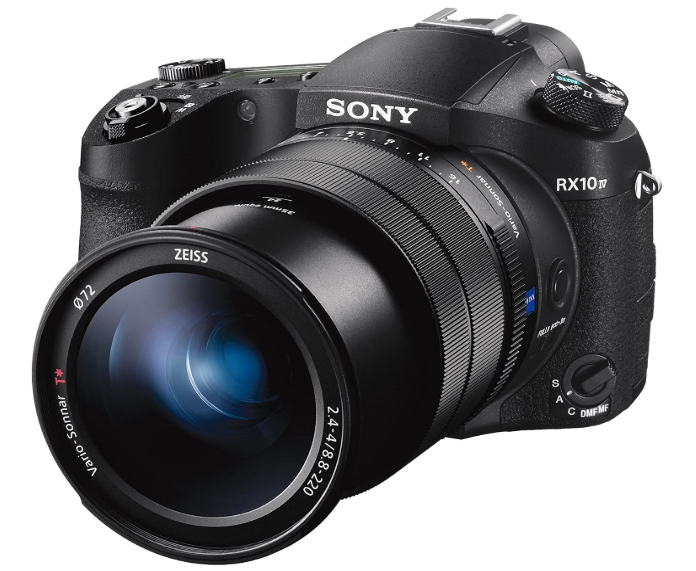
Choosing the best camera for safari means finding a model that can capture distant wildlife clearly while remaining easy enough for beginners to use. A good safari camera combines a long zoom range, fast autofocus, image stabilization, reliable low light performance, and useful continuous shooting capabilities, allowing you to photograph everything from wide savannah landscapes to fast moving animals.
In this guide, we’ll cover the important features to look for, highlight the top picks, provide a practical buying guide to help you choose the right camera for your needs, and answer common questions in the FAQs.
Best Camera for Safari
1)Sony HX400V Compact Digital Camera
Get it on Amazon
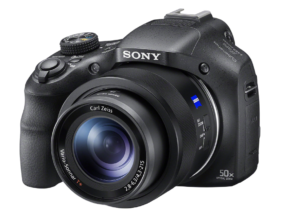
The Sony HX400V Compact Digital Camera is a practical option for beginners who want to enjoy wildlife photography on safari without carrying a collection of interchangeable lenses. Its 20.4MP Exmor R CMOS sensor works with the ZEISS lens to produce detailed images, while Clear Image Zoom helps bring distant animals closer in the frame. The camera also includes Lock On AF to help maintain focus on moving subjects, making it useful for photographing animals as they move through the bush.
For safari photography, the camera’s zoom capability is particularly useful because wildlife can often be too far away to approach. The lens offers a focus range from 0.39 inches to infinity at the wide end and 7.87 feet to infinity at the telephoto end, giving beginners flexibility when photographing both nearby scenery and distant wildlife. Clear Image Zoom can further extend the camera’s reach when you need a closer view of an animal without physically moving closer.
The 20.4MP Exmor R CMOS sensor is designed to capture detailed photographs and perform well in lower light. This can be helpful during early morning and late afternoon game drives when lighting conditions are changing. The 3.0 inch Xtra Fine TFT LCD screen with 921,600 dots provides a clear view for composing photographs and reviewing images while outdoors.
Lock On AF is another useful feature for safari beginners because wildlife rarely stays still. The autofocus system can help keep a selected subject in focus as it moves, which is useful for animals walking, running, or changing direction. Beginners can therefore spend more time observing and photographing wildlife rather than constantly adjusting focus manually.
The Sony HX400V also provides several creative options for travel photography. Intelligent Sweep Panorama supports 360 degree panoramic recording, making it suitable for capturing wide views of savannahs, mountains, and other safari landscapes. Motion Shot Video can trace subject movement, giving users an additional way to experiment with moving wildlife and action scenes.
Connectivity is convenient for travelers who want to share their photographs during or after a safari. Built in Wi Fi with NFC allows compatible smartphones to connect with the camera, making it easier to transfer images for sharing. GPS tagged photos can also record location information with your images, which can be useful when looking back at photographs from different areas of a safari trip.
The camera offers 4K quality still image output through HDMI and supports downloadable camera apps for additional functionality. These features give beginners some room to explore beyond basic point and shoot photography. Overall, the Sony HX400V combines a long reach, useful autofocus features, travel friendly connectivity, and straightforward controls in a compact camera body, making it well suited to beginners photographing wildlife and landscapes on safari.
Pros
• 20.4MP Exmor R CMOS sensor produces detailed photographs
• ZEISS lens provides useful reach for distant safari subjects
• Clear Image Zoom helps bring faraway wildlife closer
• Lock On AF helps maintain focus on moving subjects
• Intelligent Sweep Panorama supports 360 degree panoramic images
• Wi Fi and NFC make smartphone image sharing convenient
• GPS tagging adds location information to photographs
• 3.0 inch Xtra Fine LCD provides a clear composition and review screen
• Motion Shot Video offers creative options for recording subject movement
• Compact design is easier to carry on safari than a larger interchangeable lens setup
Cons
• Telephoto shooting requires a minimum focus distance of about 7.87 feet
2)Sony Cyber shot DSC HX200V
Get it on Amazon
The Sony Cyber shot DSC HX200V is a beginner friendly camera designed for photographers who want a straightforward way to capture wildlife, landscapes, and travel memories on safari. Its 18.2 megapixel Exmor R CMOS sensor is designed to provide good image quality in challenging lighting conditions, making it useful for early morning and late afternoon game drives when the available light can be limited.
The 30X optical zoom is particularly useful for safari photography because wildlife is often viewed from a considerable distance. It allows beginners to frame animals without needing to get physically closer, which is important when photographing subjects such as elephants, giraffes, zebras, and birds. Optical zoom also provides a more natural way of magnifying distant subjects while maintaining image detail compared with relying entirely on digital enlargement.
The 3.0 inch LCD screen provides a convenient way to compose photographs and review shots while traveling. Beginners can use the screen to frame distant animals, check exposure, and review their images during a game drive. Its simple design also makes the camera approachable for users who do not want to learn the more complicated controls associated with interchangeable lens cameras.
Location information is another useful addition for safari travelers. The built in GPS and compass can record the location and direction in which photographs were taken. This can help you remember where particular wildlife sightings occurred and add useful geographical context to photographs when reviewing a safari collection later.
The HX200V also includes Optical SteadyShot image stabilization with 3 way Active Mode. This helps reduce the effects of camera shake, which can become more noticeable when using the long 30X optical zoom. The stabilization can be especially helpful when photographing distant wildlife from a safari vehicle where holding the camera perfectly steady may be difficult.
The combination of a long optical zoom, low light capable sensor, stabilization, and location recording makes the Sony Cyber shot DSC HX200V a practical choice for beginners interested in safari photography. It gives new photographers the reach needed for wildlife while keeping the shooting experience relatively simple. However, its older technology means some photographers may find its screen, connectivity, and overall features less advanced than those found on newer cameras.
Pros
• 18.2 megapixel Exmor R CMOS sensor supports detailed images
• Exmor R sensor is designed for improved low light performance
• 30X optical zoom is useful for photographing distant wildlife
• Optical SteadyShot helps reduce camera shake
• 3 way Active Mode provides additional stabilization during shooting
• 3.0 inch LCD makes framing and reviewing photographs convenient
• Built in GPS records the location of photographs
• Compass records the direction in which shots were taken
• Simple design is suitable for beginners
Cons
• Older camera technology may lack features found on newer models
3)Sony Cyber shot RX10 IV
Get it on Amazon
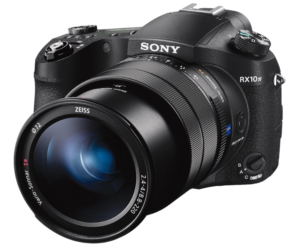
The Sony Cyber shot RX10 IV is a powerful bridge camera that can be a strong choice for beginners who want serious safari photography capabilities without carrying multiple interchangeable lenses. Its ZEISS Vario Sonnar T 24 600mm F2.4 F4 ultra zoom lens covers everything from wide landscape views to distant wildlife, allowing beginners to photograph animals from a safe distance while still getting close up framing.
One of the most useful features for safari photography is its extremely fast 0.03 second autofocus acquisition speed. The camera has 315 phase detection AF points covering approximately 65% of the frame, helping it quickly identify and track subjects. This is particularly useful when photographing animals that suddenly move, run, fly, or change direction during a game drive.
The 20.1MP 1 inch back illuminated Exmor RS stacked CMOS sensor with DRAM provides detailed images while supporting fast camera operation. The F2.4 to F4 aperture range also gives the lens useful light gathering ability, particularly at the wider end. For beginners, this combination provides room to capture wildlife in different lighting conditions without needing to change lenses.
The 600mm telephoto reach is especially valuable when photographing safari wildlife. Animals can often be hundreds of feet away, and the long end of the zoom makes it possible to fill more of the frame without approaching the subject. The 24mm wide angle end is useful for photographing landscapes, groups of animals, and larger subjects at closer distances.
Sony’s optical image stabilization technology can help reduce the effects of camera shake when shooting handheld. This becomes increasingly important when using the lens at its 600mm ultra telephoto end, where even small movements can make photographs appear blurred. Stabilization is also useful when recording movies or photographing in lower light.
The RX10 IV is also designed for fast action. It can shoot continuously at up to 24 frames per second for as many as 249 frames while maintaining AF and AE tracking. This gives beginners a much better opportunity to capture fleeting moments such as a bird taking flight, a cheetah running, or animals interacting.
Despite its impressive capabilities, the camera is relatively substantial for a bridge model, weighing approximately 2 pounds 6.7 ounces with the battery and SDXC card installed. Its dimensions and weight may be noticeable during long game drives or when carrying other travel equipment. However, the built in 24 600mm lens eliminates the need to carry several lenses, which can make the overall safari photography setup simpler.
The RX10 IV also provides several metering options, including multi pattern, centre weighted, spot, entire screen average, and highlight metering. These options give beginners opportunities to learn how exposure works as their photography skills develop. With its long zoom, fast autofocus, stabilization, high speed continuous shooting, and versatile lens, the Sony Cyber shot RX10 IV provides a comprehensive setup for beginners who want to photograph both safari landscapes and fast moving wildlife.
Pros
• 0.03 second autofocus acquisition speed is useful for fast moving wildlife
• 315 phase detection AF points cover approximately 65% of the frame
• ZEISS 24 600mm F2.4 F4 lens provides extensive zoom flexibility
• 600mm telephoto reach is useful for distant animals and birds
• 20.1MP 1 inch Exmor RS stacked CMOS sensor delivers detailed images
• Optical image stabilization helps reduce camera shake
• Up to 24 frames per second continuous shooting supports action photography
• AF and AE tracking can continue during high speed continuous shooting
• One built in lens eliminates the need to carry multiple lenses
• Multiple metering modes give beginners room to develop their photography skills
Cons
• Weighs approximately 2 pounds 6.7 ounces with battery and SDXC card
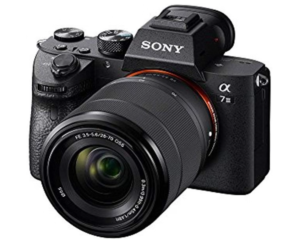
4)Sony Alpha a7 III Mirrorless Camera
Get it on Amazon
The Sony Alpha a7 III Mirrorless Camera is a full frame camera that offers beginners a more advanced setup for safari photography. It combines a 24.2MP back illuminated 35mm full frame Exmor R CMOS sensor with strong autofocus performance and high speed continuous shooting. With the included SEL2870 lens, it can handle general travel photography, landscapes, and closer wildlife subjects, while the interchangeable lens system allows beginners to expand into longer telephoto lenses as they gain experience.
The 24.2MP back illuminated sensor is designed to produce detailed photographs across different lighting conditions. Its 15 stop dynamic range provides considerable room for capturing details in bright skies and darker areas, which can be useful when photographing animals against strong African sunlight. The camera also supports 14 bit uncompressed RAW files, giving photographers more flexibility when editing exposure, highlights, shadows, and other image characteristics.
The ISO range of 50 to 204,800 gives the a7 III considerable sensitivity for changing light. This can be useful during early morning and late afternoon game drives, when wildlife may be active but available light is lower. Beginners can also use higher ISO settings when necessary to maintain faster shutter speeds for moving animals, although image quality can vary depending on the ISO setting and shooting conditions.
Autofocus performance is another useful aspect for safari photography. The camera has 693 phase detection AF points and 425 contrast detection AF points covering approximately 93 percent of the image area. This broad coverage can help beginners keep animals positioned away from the centre of the frame while maintaining focus, which is useful when composing more natural wildlife photographs.
The a7 III can shoot at up to 10 frames per second with either its mechanical or silent shutter while maintaining AE and AF tracking. This makes it suitable for capturing sequences of moving wildlife. Instead of relying on a single photograph, beginners can shoot a short burst when an animal is running, jumping, flying, or interacting with another animal and then select their preferred frame.
The included SEL2870 lens provides a useful starting point for safari trips, particularly for landscapes, camp scenes, larger animals that are relatively close, and general travel photography. However, its reach is limited for distant wildlife compared with a dedicated telephoto lens. Beginners who become more interested in birds or animals far from the safari vehicle may eventually want to add a longer lens.
The camera uses a 35mm full frame sensor measuring 35.6 by 23.8mm, giving photographers the benefits of a full frame system while retaining the flexibility of interchangeable lenses. This allows the camera to grow with the photographer. A beginner can start with the included lens and later choose lenses suited specifically to wildlife, landscapes, or low light photography.
The Sony Alpha a7 III also comes with a rechargeable NP FZ100 battery, AC adapter, shoulder strap, body cap, eyepiece cup, and other accessories. Its combination of detailed image output, broad autofocus coverage, fast continuous shooting, strong dynamic range, and interchangeable lens flexibility makes it a capable option for beginners who want a camera they can continue using as their safari photography skills develop.
Pros
• 24.2MP back illuminated full frame Exmor R CMOS sensor produces detailed images
• 15 stop dynamic range provides substantial exposure flexibility
• 14 bit uncompressed RAW supports extensive editing options
• ISO 50 to 204,800 provides flexibility across different lighting conditions
• Up to 10fps continuous shooting is useful for moving wildlife
• AE and AF tracking can operate during high speed continuous shooting
• 693 phase detection AF points provide broad autofocus coverage
• 425 contrast detection AF points complement the phase detection system
• Approximately 93 percent image coverage helps with off centre subjects
• Interchangeable lens system allows the camera to grow with the photographer
Cons
• The included SEL2870 lens has limited reach for distant wildlife
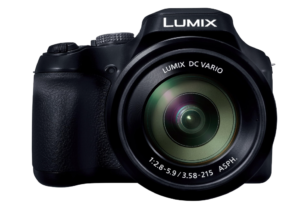
5)Panasonic Point and Shoot Digital Camera 4K
Get it on Amazon
The Panasonic Point and Shoot Digital Camera 4K, represented by the Lumix FZ80, is designed for beginners who want a simple camera with a powerful zoom for safari photography. Its point and shoot design makes it approachable for new photographers, while the long zoom range provides the reach needed to photograph wildlife from a safe distance. It also combines 4K video, 4K Photo, Post Focus, and optical image stabilization to give beginners several useful tools for capturing wildlife and safari landscapes.
One of the most useful features for outdoor safari photography is the 2,360K dot Large LVF with 0.74x magnification, based on a 35mm camera equivalent. The large electronic viewfinder helps provide a clear view when composing photographs, including in bright sunlight where viewing a conventional rear screen can be difficult. This allows beginners to keep track of their subjects and frame shots more comfortably during daytime game drives.
The 4K Video Mode gives beginners the ability to record video at up to four times the resolution of Full HD. This is particularly useful for capturing fast moving wildlife, changing scenery, and memorable moments during a safari. The 4K Photo feature adds another practical option by allowing an 8 megapixel still image to be extracted from 4K video, which can help when an animal moves too quickly to capture with a conventional single photograph.
The Post Focus function provides additional flexibility for beginners who are still learning how to control focus. After taking a photograph, users can select the area they want to be in focus by touching it. This can be useful when photographing animals among grass, branches, or other objects where achieving the desired focus point can sometimes be challenging.
The camera’s POWER O.I.S. optical image stabilization is particularly valuable when using its long zoom. At up to 60x zoom, even small hand movements can make a distant animal appear blurred or difficult to keep within the frame. The stabilization system is designed to suppress hand shake vibration at the telephoto end, helping beginners achieve steadier photographs when shooting handheld.
The combination of a long zoom, stabilization, 4K recording, and a large electronic viewfinder makes the Panasonic Lumix FZ80 a practical option for beginners who want to photograph safari wildlife without investing in an interchangeable lens system. The camera gives users the ability to experiment with photographs and video while keeping the shooting process relatively straightforward.
For safari travelers, its versatility is useful because one camera can cover distant wildlife, landscapes, action, and video without requiring multiple lenses. The 4K Photo function is especially helpful for unpredictable wildlife because beginners can record an action sequence and select a suitable frame afterward. Overall, the Panasonic Point and Shoot Digital Camera 4K offers a beginner friendly combination of reach, stabilization, and creative features for safari photography.
Pros
• Large 2,360K dot LVF provides a clear view in bright outdoor conditions
• 0.74x viewfinder magnification provides a comfortable viewing experience
• 4K Video Mode records at up to four times the resolution of Full HD
• 4K Photo allows users to extract an 8 megapixel still image from 4K video
• Post Focus allows the focus area to be selected after taking the photograph
• POWER O.I.S. helps suppress hand shake at the telephoto end
• Up to 60x zoom provides useful reach for distant safari wildlife
• Point and shoot design is approachable for beginners
• One camera can handle photographs, action sequences, and 4K video
Cons
• Very long zoom ranges require careful framing when photographing distant animals
You may also like to read best sony mirrorless camera for beginners
Best Camera for Safari Advantages
Long Zoom Range.
A powerful optical zoom is important for safari photography because wildlife often stays far from the vehicle. A long reach allows beginners to fill the frame with animals such as elephants, lions, giraffes, and birds without needing to move closer.
Fast Autofocus.
Fast and reliable autofocus makes it easier to photograph animals that are walking, running, flying, or suddenly changing direction. Beginners can concentrate on composing the photograph instead of constantly adjusting focus manually.
Image Stabilization.
Optical image stabilization helps reduce blur caused by hand movement, especially when using a long zoom. This is particularly useful when photographing distant wildlife handheld from a moving or stationary safari vehicle.
Good Low Light Performance.
Wildlife can be active during early morning and late afternoon when lighting is limited. A camera with a capable sensor and good low light performance can help beginners capture clearer and more detailed photographs without relying entirely on bright daylight.
Fast Continuous Shooting.
High continuous shooting speeds allow beginners to capture several frames of the same action. This increases the opportunity to get a useful photograph when an animal runs, jumps, takes flight, or interacts with another animal.
Simple Point and Shoot Operation.
A beginner friendly camera should allow users to start taking photographs without mastering complicated settings immediately. Automatic shooting modes can make safari photography less intimidating while still allowing users to learn more advanced controls over time.
Strong Outdoor Viewing.
A clear electronic viewfinder or bright, high resolution screen makes composing photographs easier under strong sunlight. This is especially helpful on open safari vehicles where glare can make a conventional screen difficult to see.
Video and Creative Features.
Safari trips involve more than still photographs, so features such as 4K video, panorama modes, focus options, and action photography settings provide additional ways to record the experience. These functions also give beginners opportunities to experiment and develop their photography skills.
Factors to Consider When Choosing Best Camera for Safari
1. Zoom Range.
Consider how much optical zoom the camera provides because safari animals are often observed from a considerable distance. A longer zoom makes it easier to capture detailed images of wildlife without approaching the animals, while a useful wide angle range helps with landscapes and larger subjects.
2.Autofocus Performance.
Look for a camera with fast and dependable autofocus that can track moving subjects. Wildlife can change direction or speed unexpectedly, so responsive autofocus can help beginners capture sharper photographs during fast paced moments.
3. Image Stabilization.
Image stabilization is important when using long focal lengths because even small hand movements can cause noticeable blur. Optical stabilization can help produce steadier photographs when shooting handheld, particularly at the telephoto end of the zoom range.
4. Low Light Performance.
Safari activities often take place during early morning and late afternoon when there may be less available light. Consider the sensor size, ISO capabilities, and overall low light performance to ensure the camera can handle changing conditions while retaining useful image detail.
5. Continuous Shooting Speed.
A camera with a fast burst shooting rate can capture multiple frames during a short wildlife encounter. This is useful when photographing animals running, birds taking flight, or other unpredictable movements where a single photograph may miss the desired moment.
6. Ease of Use.
Beginners should consider how straightforward the camera is to operate. Automatic modes, accessible controls, and simple menus can make it easier to begin taking photographs while still providing opportunities to learn manual settings as photography skills improve.
7. Viewfinder and Screen Quality.
A clear, high resolution viewfinder or LCD screen can make composing and reviewing photographs easier outdoors. Good visibility is particularly important on bright safari days when sunlight and glare can make it difficult to see a conventional screen.
8. Size and Weight.
Consider how comfortable the camera will be to carry and use throughout a safari. A lightweight camera can be convenient during long game drives, while a larger camera may offer additional controls and capabilities. The ideal balance depends on how much equipment you are willing to carry.
Best Camera for Safari FAQs
1. What type of camera is best for safari photography?
A camera with a long optical zoom, fast autofocus, image stabilization, and good low light performance is well suited to safari photography. These features help beginners capture distant and moving wildlife while also handling changing outdoor lighting conditions.
2. How much zoom do I need for a safari camera?
A longer optical zoom is generally useful because animals are often viewed from a safe distance. A camera offering around 30x to 60x optical zoom can provide considerable reach for wildlife, while a versatile lens covering both wide angle and telephoto ranges can also handle landscapes and closer subjects.
3. Is a mirrorless camera suitable for safari beginners?
Yes. A mirrorless camera can be suitable for beginners, particularly when paired with an appropriate telephoto lens. It provides opportunities to improve photography skills over time, although a point and shoot camera with a built in long zoom can be simpler and more convenient for someone who does not want to change lenses.
Conclusion
The best camera for safari should make it easier for beginners to capture distant wildlife, changing light, and fast moving moments without making photography unnecessarily complicated.
A useful combination of long zoom, fast autofocus, image stabilization, good low light performance, and simple controls can make a significant difference during a game drive. This finder brings together different camera styles and capabilities, helping you focus on the features that match your safari plans, photography experience, and preferred way of shooting.