
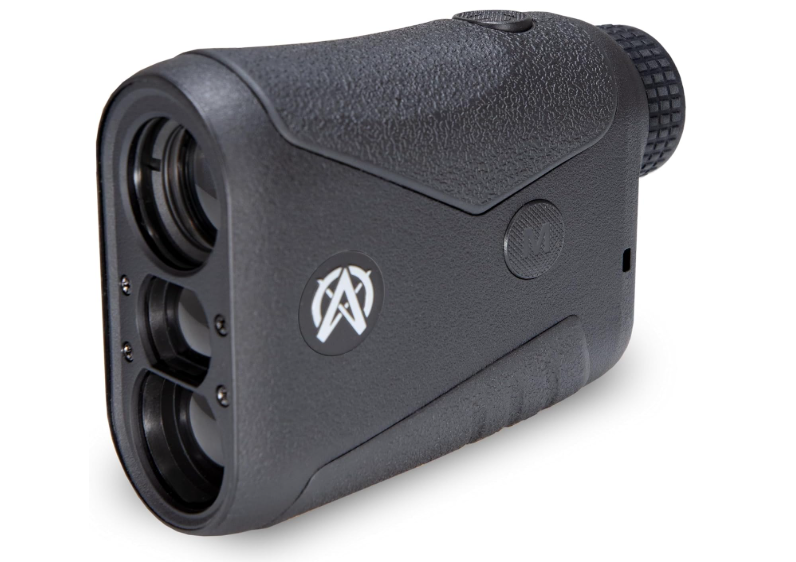
Finding the best range finder for deer hunting can make judging distance and terrain much easier, especially when hunting across open fields, forests, or uneven ground.
The right range finder combines accurate distance measurement, long range capability, fast target acquisition, clear displays, and useful features such as slope compensation to help hunters make more informed decisions.
In this guide, we will cover the important features to look for, highlight the top picks, explain the key factors to consider before buying, and answer frequently asked questions to help you choose a range finder that suits your hunting needs.
Best Range Finder for Deer Hunting
1)Bushnell Prime 1300 Hunting Laser Rangefinder
Get it on Amazon
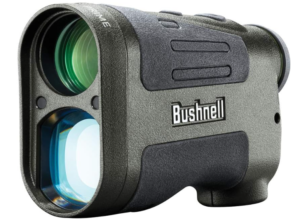
The Bushnell Prime 1300 Hunting Laser Rangefinder is a compact and lightweight option for deer hunters who want dependable distance readings without carrying bulky equipment. With a maximum range of up to 1,300 yards on reflective targets, it provides plenty of ranging capability for hunting applications, while its rated deer range reaches up to 600 yards on the 6x24mm LP1300SBL model. Its 6x magnification and 24mm objective lens help hunters locate and range targets clearly, while the integrated angle compensation can account for uphill and downhill shots.
For deer hunting, the Prime 1300 is particularly useful because it combines accurate readings with a portable design. Bushnell rates its ranging accuracy at approximately ±1 yard, giving hunters more confidence when judging the distance to a deer before taking a shot. The unit also offers Bow, Rifle and regular ARC modes, along with scan functionality, making it versatile for different hunting situations.
The optical system uses fully multi coated lenses and Bushnell’s EXO Barrier coating, which helps repel water, oil, fog, dust and debris from the external lenses. The rangefinder is also rated IPX4 for water resistance, so it can handle light rain and splashing, although it should not be submerged. With a weight of around 6 ounces, it is easy to carry in a hunting pack or pocket throughout a long day in the field.
Another advantage is its compact construction. The Prime 1300 measures roughly 4.3 inches long and uses a single CR2 lithium battery, keeping the overall package small and convenient for mobile hunting. Its combination of accurate ranging, angle compensation, useful magnification and lightweight construction makes it a practical choice for hunters looking for a capable deer hunting rangefinder without moving into a more expensive premium model.
Pros
• Accurate readings with approximately ±1 yard accuracy
• Ranges reflective targets up to 1,300 yards
• Deer ranging capability up to 600 yards on the 6x24mm model
• 6x magnification provides useful target visibility
• ARC angle compensation helps with uphill and downhill shots
• Lightweight 6 ounce design
• Fully multi coated optics with EXO Barrier protection
• IPX4 water resistance for light rain and splashes
• Compact and easy to carry
• Supports hunting and archery applications
Cons
• The 1,300 yard maximum applies to reflective targets rather than deer
2)OTX/HTX1600 1760yd Laser Rangefinder
Get it on Amazon
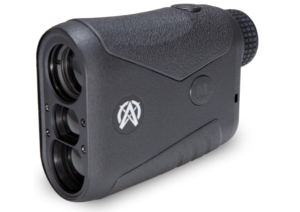
The OTX/HTX1600 1760yd Laser Rangefinder is a versatile choice for deer hunting, particularly for hunters who need fast readings and useful long distance performance. Its Standard Ranging Mode can provide readings in as little as 0.10 seconds, making it suitable for situations where a quick distance measurement is important. The rangefinder can measure reflective targets up to 1,760 yards, trees up to 1,000 yards, and deer up to 800 yards, giving hunters plenty of ranging capability for open terrain and longer shots.
For deer hunting, the 800 yard deer ranging capability is particularly useful. The rangefinder also includes Archery Mode and Gun Mode, allowing it to work for both bow hunting and firearm hunting. Its Horizontal Angle Corrected Mode and Angle Mode with Line of Sight readings help hunters account for changes in elevation when ranging targets on slopes or uneven terrain. Scan Mode is another useful addition when tracking or assessing multiple targets across an area.
The optical system is designed for clear viewing, using an all glass optical system with fully multi coated lenses. The 6x magnification brings distant targets closer, while the coatings are designed to improve light transmission and resolution. A rain repellent protective coating helps protect the lenses from dust, moisture and debris, which can be valuable during changing hunting conditions.
The reflective OLED display is another practical feature for hunters. It uses a red reticle and red distance readout with five brightness settings, allowing the display to be adjusted for different lighting conditions. This can make readings easier to see when hunting early in the morning, late in the evening or in shaded areas. The included CR2 lithium battery, soft carrying case, microfiber cleaning cloth and neck lanyard also make the rangefinder ready for use straight out of the box.
The OTX/HTX1600 is also backed by a lifetime fully transferable Handshake Warranty from the manufacturer. The warranty does have exclusions, including cosmetic damage, theft, unauthorized modifications and intentional misuse or damage. Overall, its fast ranging speed, 800 yard deer capability, angle compensation, 6x magnification and multiple hunting modes make it a strong option for hunters looking for a feature rich rangefinder for deer hunting.
Pros
• Very fast ranging speeds of as little as 0.10 seconds
• Deer ranging capability up to 800 yards
• Reflective targets can be ranged up to 1,760 yards
• Tree ranging capability up to 1,000 yards
• 6x magnification provides a closer view of distant targets
• All glass optical system offers improved light transmission
• Fully multi coated optics help improve resolution and light transmission
• Five brightness settings for the red OLED display
• Archery Mode is useful for bow hunting
• Gun Mode supports target shooting and firearm hunting
• Horizontal Angle Corrected Mode helps with elevated or downhill targets
• Scan Mode allows continuous ranging across different targets
• Rain repellent lens coating helps protect against moisture and debris
• Includes a CR2 lithium battery and carrying accessories
• Lifetime fully transferable manufacturer warranty
Cons
• The advertised 1,760 yard distance applies to reflective targets, not deer
3)Leupold RX 1400i TBR/W Gen 2 with Flightpath Rangefinder
Get it on Amazon
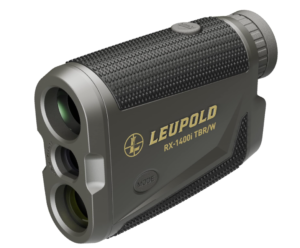
The Leupold RX 1400i TBR/W Gen 2 with Flightpath, Model #183727, is a sophisticated rangefinder designed for hunters who want more than a basic distance reading. It combines long range ranging capability with ballistic calculations, angle compensation and specialized archery functions. For deer hunting, these features can help hunters make more informed shot decisions, particularly when dealing with longer distances or uneven terrain.
The True Ballistic Range with Wind technology is particularly useful for hunters who need to account for environmental and shooting conditions. The system provides ballistically calculated ranges for longer distance shots and steeper angles. It can also generate a hold point for a 10 mph wind at a 90 degree angle out to 800 yards, giving hunters additional information when evaluating a shot in windy conditions.
For bow hunters, the selectable Bow Mode with Flightpath technology adds another layer of usefulness. It can show potential arrow obstructions along the arrow’s flight path and calculate angle compensated ranges. This can be valuable when hunting deer in wooded or uneven environments where branches and other obstacles may affect an arrow’s path. The combination of distance and angle information makes it particularly suitable for hunters who use a bow.
The RX 1400i also provides impressive ranging distances. It can range reflective objects up to 1,400 yards and trees up to 1,200 yards. While real world deer ranging distances can be affected by target size, color, lighting and weather conditions, the available range gives hunters considerable flexibility when scouting or preparing for a shot.
The selectable TOLED display is designed to remain readable as lighting conditions change. Bright red numbers and letters can be adjusted using the available brightness settings, allowing hunters to customize the display for different environments. This can be helpful when hunting during early morning or late evening periods when visibility can change quickly.
Overall, the Leupold RX 1400i TBR/W Gen 2 with Flightpath is a strong choice for deer hunters who want advanced ranging and ballistic information in a compact hunting tool. Its combination of TBR/W technology, wind information, Flightpath capabilities, long ranging distance and adjustable red display makes it especially appealing to hunters who want precise information for both rifle and bow hunting.
Pros
• TBR/W technology provides ballistically calculated ranges
• Wind hold information is available for a 10 mph wind at a 90 degree angle out to 800 yards
• Flightpath technology helps identify potential arrow obstructions
• Bow Mode provides angle compensated ranges for archery
• Ranges reflective objects up to 1,400 yards
• Ranges trees up to 1,200 yards
• Bright red TOLED display improves readability
• Adjustable display brightness helps accommodate changing light conditions
• Well suited for both bow and rifle hunting
• Useful for longer distance deer hunting situations
Cons
• Advanced ballistic and wind functions may take time for new users to learn
4)Nikon PROSTAFF 1000i 6×20 Laser Rangefinder
Get it on Amazon
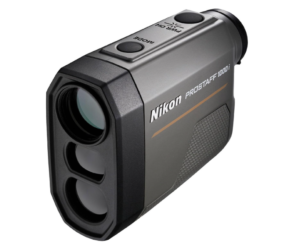
The Nikon PROSTAFF 1000i 6×20 Laser Rangefinder is a compact and capable option for deer hunters who need accurate distance readings in different types of terrain. Its advanced Incline/Decline Technology calculates the true horizontal distance to targets at angles of up to plus or minus 89 degrees. This is particularly useful when hunting from elevated positions or across steep slopes, where the straight line distance may not accurately represent the horizontal distance needed for a shot.
The rangefinder also includes Tru Target Technology, which gives hunters the choice between First Target Priority and Distant Target Priority. This can be especially helpful when hunting in dense vegetation or areas where several objects overlap. First Target Priority can help isolate a closer object, while Distant Target Priority can identify the farthest target in a group. These options give hunters greater control when ranging deer through complicated backgrounds.
The optical system combines 6x magnification with a 20mm objective lens and anti reflection multi coated optics. This provides a useful level of magnification for viewing distant targets while keeping the rangefinder small enough to carry comfortably. Measuring approximately 3.6 x 2.9 x 1.5 inches, its compact body can fit easily into a pocket or hunting pack, making it convenient for long days outdoors.
Distance measurement is another strong point. The PROSTAFF 1000i provides accuracy of plus or minus 1 yard up to 100 yards and plus or minus 2 yards beyond that distance. It can range reflective targets up to 1,000 yards and offers both single measurement and continuous measurement modes. Continuous measurement can provide readings for up to eight seconds, which is useful when scanning an area or trying to obtain a reading on a moving or partially obscured target.
The rangefinder is also designed for challenging outdoor conditions. Its IPX4 equivalent water resistant housing helps it handle rain, snow and general exposure during hunting trips. The 17mm maximum eye relief and 3.3mm exit pupil can make viewing more comfortable for hunters who wear glasses. Operation is straightforward with a simple two button design and selectable yards or meters, reducing the amount of time needed to operate the unit in the field.
Overall, the Nikon PROSTAFF 1000i is a practical choice for deer hunting because it combines angle compensation, target priority modes, useful optical performance and compact portability. It is particularly well suited to hunters who frequently deal with steep terrain, dense foliage or multiple objects around their target and want a rangefinder that remains simple to operate.
Pros
• Advanced Incline/Decline Technology works at angles up to plus or minus 89 degrees
• Provides true horizontal distance calculations for angled shots
• Tru Target Technology offers First Target and Distant Target Priority
• 6x magnification helps bring distant targets closer
• Anti reflection multi coated optics improve image quality and light transmission
• Compact design fits easily into a pocket or hunting pack
• Accuracy of plus or minus 1 yard up to 100 yards
• Accuracy of plus or minus 2 yards beyond 100 yards
• Maximum range of 1,000 yards on reflective targets
• Spot and continuous measurement modes
• Continuous readings can be maintained for up to eight seconds
• IPX4 equivalent water resistant construction
• 17mm maximum eye relief is suitable for eyeglass users
• Simple two button operation
• Yards and meters display options
Cons
• The 1,000 yard maximum range applies to reflective surfaces rather than deer
5)Gogogo Sport Vpro Magnetic Golf Rangefinder with Slope Switch 2500 Yards
Get it on Amazon
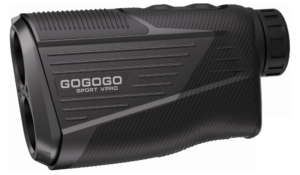
The Gogogo Sport Vpro Magnetic Golf Rangefinder with Slope Switch is a versatile distance measuring device that can also serve hunters looking for a long range option for deer hunting. Its TrueMeasure Technology provides ranging capability of up to 2,500 yards in Hunting Mode, giving it considerable reach for open hunting environments. It can also measure up to 1,500 yards in Golf and Disc Golf Modes, making it useful for multiple outdoor activities.
For deer hunting, the 2,500 yard Hunting Mode provides plenty of ranging capability, although actual deer ranging distance will depend on the size of the animal, visibility, lighting and surrounding conditions. The rangefinder is designed to provide enhanced sensitivity for thin targets, which can also help when ranging smaller or partially visible objects. This makes it useful when scouting open areas or determining distances between different points in a hunting environment.
The rangefinder also features slope compensation that can be switched on or off. When enabled, it adjusts measurements for uphill and downhill shots to provide an effective distance. The ability to disable the feature is useful when hunters need a standard straight line measurement. While the slope function is marketed with tournament legality in mind for golf, hunters can also benefit from having control over angle compensated readings when dealing with changing terrain.
Its display uses a high transmittance LCD and a redesigned screen intended to make readings and target acquisition easier. This can be helpful when quickly checking a distance in the field. The rangefinder also offers a 500 yard flag lock with vibration feedback, although this function is primarily designed around golf targets and is less relevant to deer hunting.
A magnetic design makes the unit convenient to attach to compatible golf carts, while its rechargeable lithium ion battery can be charged through a Type C connection. For hunters, the rechargeable design eliminates the need to regularly replace disposable batteries, although battery life and access to charging can become considerations during extended trips away from power sources.
Overall, the Gogogo Sport Vpro offers a combination of long range measurement, slope compensation, a rechargeable battery and a clear LCD display. While several of its features are geared toward golf, its dedicated Hunting Mode and 2,500 yard maximum ranging capability make it an interesting option for deer hunters who want a versatile rangefinder for both outdoor recreation and hunting.
Pros
• Hunting Mode provides ranging capability up to 2,500 yards
• TrueMeasure Technology provides enhanced ranging sensitivity
• Golf and Disc Golf Modes range up to 1,500 yards
• Slope compensation provides effective distance measurements on uphill and downhill terrain
• Slope function can be switched on or off
• High transmittance LCD helps make readings easier to view
• 500 yard flag lock with vibration feedback
• Magnetic design provides convenient attachment to compatible golf carts
• Type C rechargeable lithium ion battery eliminates frequent battery replacement
• Suitable for multiple outdoor activities
Cons
• The 2,500 yard maximum does not mean deer can be ranged at that distance
You may also like to read Best Bow Hunting Range Finder
Best Range Finder for Deer Hunting Advantages
Accurate Distance Measurement
A quality range finder provides accurate distance readings, helping hunters understand exactly how far the deer or target is from their position. This can make distance estimation easier, especially when hunting across open fields, valleys, or unfamiliar terrain.
Long Range Capability
A range finder with strong ranging capability allows hunters to measure distant targets and surrounding landmarks. Greater reach is particularly useful when scouting large hunting areas where deer may be positioned far away.
Slope Compensation
Slope compensation can account for uphill and downhill angles when determining an effective shooting distance. This is especially helpful in hilly or mountainous hunting areas where the straight line distance may differ from the practical distance needed for an accurate shot.
Fast Target Acquisition
Fast ranging helps hunters obtain distance information quickly without spending too much time trying to locate a target. This can be valuable when a deer is moving or when there is only a short opportunity to make a measurement.
Clear Display
A clear and easy to read display allows hunters to see distance information without unnecessary difficulty. Good visibility can be especially useful in changing lighting conditions when hunting early in the morning or later in the evening.
Target Lock and Feedback
Target lock functions can help confirm that the range finder has measured the intended object rather than the background. Vibration or other feedback can provide additional confirmation, making the ranging process easier and more confident.
Portable and Convenient Design
A compact range finder is easier to carry while walking through hunting terrain. A lightweight design can reduce the amount of equipment that hunters need to manage and allows the device to remain readily accessible when a distance needs to be checked.
Versatile Performance
A versatile range finder can be useful for more than simply measuring deer. Features such as multiple ranging modes, rechargeable power, and adjustable measurement settings can make the device practical for scouting, target practice, archery, and other outdoor activities.
Factors to Consider When Choosing Best Range Finder for Deer Hunting
Range Capability
Consider how far the range finder can accurately measure targets. A longer ranging capability is useful when hunting in open areas where deer may be positioned at considerable distances. However, maximum advertised range does not always represent the distance at which a deer can be reliably measured, so practical performance on animal sized targets is important.
Accuracy
Accuracy is essential because even a small distance error can affect shot placement. Look for a range finder that provides consistent measurements and maintains good accuracy at different distances. Reliable readings can help hunters make better decisions when determining the distance to a deer or nearby landmarks.
Slope Compensation
Hunters who regularly hunt on hills or uneven terrain should consider a range finder with slope compensation. This feature accounts for uphill and downhill angles and provides an angle adjusted distance that can be more useful when evaluating a shot across changing terrain. An on and off function is also helpful when standard distance measurements are preferred.
Target Detection
The ability to quickly identify and lock onto the intended target is another important consideration. A good range finder should be able to distinguish a deer from surrounding vegetation, trees, or the background. Target lock and confirmation feedback can make it easier to know that the displayed measurement belongs to the intended target.
Display Visibility
A clear display is important when ranging targets in different lighting conditions. Look for a screen that provides easy to read distance information without requiring excessive effort to focus on the numbers. Good display visibility can be especially useful during early morning and late evening hunting sessions.
Speed of Measurement
Fast measurement can be valuable when a deer is moving or when the hunter has limited time to prepare. A range finder that quickly provides a distance reading allows the hunter to spend less time waiting for the measurement and more time observing the animal and surrounding conditions.
Battery and Charging
Consider the type of power source and how long the range finder can operate between charges or battery replacements. Rechargeable models can be convenient because they reduce the need for disposable batteries, while traditional batteries may be easier to replace during extended trips where access to electricity is limited.
Size and Portability
A hunting range finder should be comfortable to carry and easy to access when needed. A compact and lightweight design can be more convenient when walking long distances through hunting terrain. Consider the overall size, weight, grip, and whether it can be carried securely without interfering with other hunting equipment.
Best Range Finder for Deer Hunting FAQs
1. What range should a deer hunting range finder have?
A good deer hunting range finder should offer enough range to measure deer and surrounding landmarks at the distances you expect to hunt. A longer maximum range can be useful in open terrain, but the practical ranging distance on deer is more important than the maximum distance advertised.
2. Is slope compensation important for deer hunting?
Yes. Slope compensation can be very useful when hunting in hilly or mountainous terrain because it accounts for uphill and downhill angles. This can provide a more useful distance reading when judging shots across uneven ground.
3. What features should I look for in a deer hunting range finder?
Important features include accurate distance measurement, fast target acquisition, reliable target lock, slope compensation, a clear display, good battery life, and a compact design. A range finder with dependable performance in different lighting and outdoor conditions can also make ranging more convenient during hunting.
Conclusion
Choosing the best range finder for deer hunting comes down to finding the right balance of accuracy, speed, range, visibility, and practical hunting features. A dependable model should provide clear distance readings, useful slope compensation, reliable target detection, and a design that is easy to carry and operate in the field.
Rather than focusing only on the highest advertised range, hunters should consider how consistently the device can measure deer sized targets in real hunting conditions. With the right combination of these features, a range finder can become a valuable part of hunting equipment, helping hunters judge terrain and distance with greater confidence before taking a shot.