
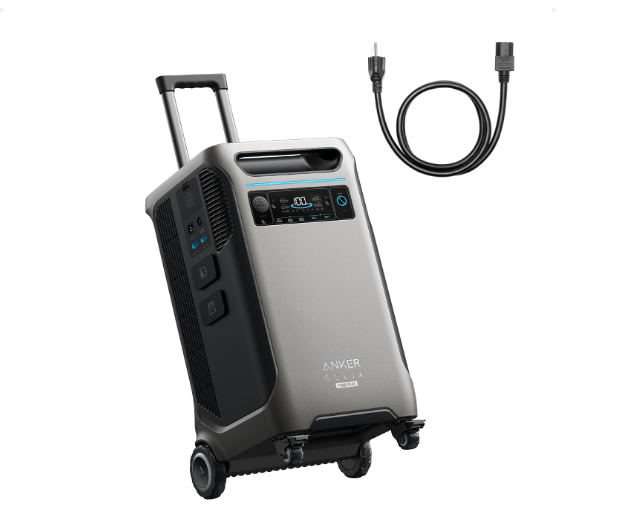
Choosing the best battery type for solar truck camping can make off grid travel more convenient by providing dependable power for refrigerators, lights, laptops, cooking equipment, and other essential devices.
Lithium iron phosphate (LFP) batteries are especially appealing because of their long cycle life, durability, safety features, and ability to work well with solar charging. The right battery can also provide substantial capacity, strong power output, fast recharging, and flexible charging options while remaining practical for truck camping. In this guide, we’ll cover the key features to look for, top picks, important buying factors, and frequently asked questions to help you choose a battery that matches your camping power needs.
Best Battery Type for Solar Truck Camping
1)Jackery HomePower 3600 Plus
Get it on Amazon
The Jackery HomePower 3600 Plus is a powerful option for truck camping when you need substantial, dependable energy away from the grid. Its 3,584Wh capacity and 3,600W output provide enough power for a wide range of camping equipment, including heaters, kitchen appliances, pumps, dryers, and other higher demand devices. For extended off grid trips, its expandable capacity also gives you more flexibility when basic portable power banks are not enough.
The battery uses LFP battery technology with high temperature resistant ceramic membrane cells designed to reduce the risk of thermal runaway from excessive heat or overcharging. Jackery rates the system for up to 6,000 cycles and a lifespan of up to 10 years, making it suitable for frequent camping and long term use. Its stated operating capability down to −4°F can also be useful for campers who travel in colder conditions.
For truck camping, charging flexibility is another practical advantage. The HomePower 3600 Plus supports four charging methods, including AC, solar, hybrid AC plus DC, and a gas generator. Hybrid AC plus DC charging can take the battery from 0% to 100% in about 2 hours, while AC charging takes about 2.5 hours and solar charging about 4 hours under the stated conditions. Solar charging is particularly useful for longer off grid trips because it allows you to replenish the battery without depending entirely on a fuel powered generator.
Its 3,600W output gives the HomePower 3600 Plus considerable capacity for camping applications. When two units are used in parallel, the system can deliver up to 7,200W and provide 120V and 240V power. This makes it much more capable than smaller camping power stations when you need to operate several demanding appliances or equipment at the same time.
Despite its large 3.6kWh capacity, Jackery has designed the unit to be easier to move than many similarly sized power stations. The company describes it as 34% smaller and 29.3% lighter than comparable models, with a luggage style design, wheels, and a telescopic handle. This is especially helpful for truck camping because you can roll it between the truck, campsite, garage, or other locations rather than carrying the entire unit.
The expandable storage is also useful for longer camping trips. A single unit can be expanded up to 21kWh, while multiple units can provide up to 43kWh according to the supplied specifications. That amount of storage is far beyond what most weekend campers need, but it can be valuable for extended off grid stays where refrigeration, heating, cooking, lighting, electronics, and other equipment need to operate for several days.
For anyone choosing the best battery type for solar truck camping, the HomePower 3600 Plus combines a large LFP battery, substantial output, multiple charging methods, and convenient portability. It is better suited to campers who need serious electrical capacity rather than someone looking only to charge phones, cameras, or small USB devices. Its solar charging capability also makes it a practical foundation for a truck camping setup designed around renewable off grid power.
Pros
• Large 3,584Wh battery capacity for extended truck camping
• 3,600W output handles many high demand appliances
• Up to 7,200W output when two units operate in parallel
• LFP battery technology with up to 6,000 cycles
• High temperature resistant ceramic membrane battery cells
• Four charging options including solar and hybrid AC plus DC
• Hybrid charging can reach 0% to 100% in about 2 hours
• Wheels and telescopic handle make transportation easier
• Expandable storage for longer off grid trips
• Supports 120V and 240V operation when configured in parallel
Cons
• Large capacity means it is still a substantial piece of equipment for smaller camping setups
2)Anker SOLIX F3800 Plus Portable Power Station
Get it on Amazon
The Anker SOLIX F3800 Plus Portable Power Station is a high capacity option for solar truck camping, especially for campers who need to run several appliances and spend extended periods away from the grid. It starts with a 3.84kWh battery capacity, providing substantial energy for a day of typical household or camping use. If more storage is needed, the system can be expanded with additional batteries up to 26.9kWh, while adding another F3800 Plus and additional batteries can provide enough stored power for much longer trips.
Its 6,000W AC output gives the F3800 Plus considerable power for demanding camping equipment. This allows you to operate multiple appliances simultaneously instead of having to switch devices on and off to stay within the power limit. For even greater output, two units can be paired to reach up to 12,000W of AC power, making the system suitable for large truck camping setups where cooking appliances, heating equipment, refrigeration, and other high wattage devices may be used together.
The 120V and 240V dual voltage capability adds flexibility for different types of equipment. This is useful for campers who want a power station that can handle more than small electronics and low wattage accessories. The ability to support 240V appliances gives the F3800 Plus a broader range of applications, particularly when a truck camping setup includes equipment that requires higher voltage.
Solar charging makes it particularly suitable for off grid use. The F3800 Plus accepts up to 3,200W of solar input, allowing a properly sized solar array to replenish the battery efficiently when sunlight is available. It can also be charged using a gas generator, a home power panel, or an AC outlet. According to the supplied specifications, solar and generator charging can provide an ultra fast recharge in as little as 63 minutes under the appropriate conditions.
For longer truck camping trips, the combination of solar input and expandable battery storage can reduce dependence on campground electrical hookups. You can use solar panels during the day to replenish the battery while using stored energy for appliances, refrigeration, lighting, electronics, and other equipment. The generator charging option provides another way to restore power when solar conditions are poor.
The F3800 Plus is built around EV grade LFP batteries and Anker’s InfiniPower system, along with smart temperature management and an impact resistant design. Anker states that the system is designed for a lifespan of 10 years or more with everyday use and includes a 5 year warranty. These characteristics make it suitable for campers who want a power station intended for frequent use rather than occasional emergency charging.
For solar truck camping, the Anker SOLIX F3800 Plus is designed for users who need considerably more capacity and output than a conventional portable power bank. Its 3.84kWh starting capacity, 6,000W output, 3,200W solar input, expandable storage, and dual voltage support make it capable of handling substantial off grid power requirements. However, its large capacity and expandable design are better suited to serious camping setups than lightweight weekend trips where only phones, lights, and small electronics need charging.
Pros
• Large 3.84kWh starting battery capacity
• Powerful 6,000W AC output
• Up to 12,000W AC output when two units are paired
• Expandable storage up to 26.9kWh with additional batteries
• 120V and 240V dual voltage support
• Supports up to 3,200W of solar input
• Four charging methods including solar, generator, home power panel, and AC outlet
• Very fast charging of up to 63 minutes under suitable conditions
• EV grade LFP battery technology
• Designed for a 10 year or longer lifespan
• 5 year warranty
• Impact resistant construction and smart temperature management
Cons
• Large capacity makes it less convenient for lightweight camping setups
3)Anker SOLIX C1000 Gen 2 Portable Power Station
Get it on Amazon
The Anker SOLIX C1000 Gen 2 Portable Power Station is a compact and capable choice for solar truck camping, particularly for campers who want a balance between useful battery capacity and easy portability. It provides 1,024Wh of energy and delivers up to 2,000W of continuous output with a 3,000W peak, giving you enough power for appliances, laptops, lights, cooking equipment, and other camping electronics without moving up to a much larger power station.
One of its most useful features for truck camping is its fast recharging capability. With HyperFlash technology enabled through the Anker app, the C1000 Gen 2 can recharge at up to 1,600W and reach a full charge in about 49 minutes under suitable conditions. This can be convenient when you have limited time to recharge before heading back off grid.
Solar charging makes the C1000 Gen 2 well suited to longer camping trips. It accepts up to 600W of solar input with a maximum 60V input and can fully recharge in approximately 1.8 hours under suitable conditions. This allows campers to replenish the battery during daylight hours and use the stored energy later for lighting, refrigeration, electronics, and other equipment.
The power station can supply up to 10 devices through its 10 ports, making it practical when several pieces of equipment need to operate simultaneously. Its 2,000W output gives it considerably more capability than small power banks, while the 3,000W peak rating provides additional support for devices that briefly require more power when starting.
Portability is another advantage for truck campers. Anker states that the C1000 Gen 2 is 14% smaller and 11% lighter than comparable models. Its more compact design makes it easier to store inside a truck, RV, or camping area while still providing over 1kWh of battery capacity.
The battery is designed for long term use through Anker’s InfiniPower technology. After 4,000 cycles, the battery is rated to retain at least 80% of its original capacity. This makes it suitable for campers who regularly use their power station for RV trips, truck camping, remote work, or emergency backup rather than only using it occasionally.
The C1000 Gen 2 also includes a 10ms UPS function, which can help keep compatible equipment such as laptops and CPAP machines running during a power interruption. The Anker app provides additional control through features such as TOU Mode, allowing users to monitor and manage power usage from a connected device.
For solar truck camping, the Anker SOLIX C1000 Gen 2 offers a practical middle ground between lightweight portable power banks and much larger 3kWh or 4kWh systems. Its 1,024Wh capacity may not be enough for campers running several high consumption appliances for multiple days, but the 2,000W output, fast solar charging, compact design, and long battery life make it useful for moderate off grid power needs.
Pros
• 1,024Wh battery capacity
• 2,000W continuous output with 3,000W peak power
• Up to 10 devices can be powered simultaneously
• Very fast 49 minute recharge at up to 1,600W
• Supports up to 600W of solar input
• Solar recharge time of about 1.8 hours under suitable conditions
• 14% smaller and 11% lighter than comparable models according to Anker
• Battery rated to retain at least 80% capacity after 4,000 cycles
• Designed for up to 10 years of use
• 10ms UPS backup for compatible equipment
• App control and TOU Mode for power management
Cons
• 1,024Wh capacity is considerably smaller than larger power stations designed for extended off grid use
4)Jackery HomePower 2000 Plus v2
Get it on Amazon
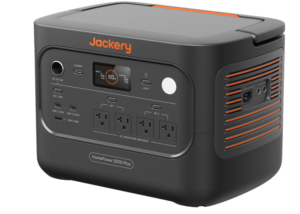
The Jackery HomePower 2000 Plus v2 is a practical battery option for solar truck camping when you need more capacity than a small portable power station but still want something relatively easy to move. It provides 2,048Wh of storage and 2,400W of output, giving campers enough power for a range of equipment such as refrigerators, cooking appliances, lights, laptops, and other electronics. Its expandable capacity can reach up to 12kWh, which is useful for extended off grid trips where additional energy storage is needed.
For truck camping, the 2,400W output provides enough power for many common appliances without requiring a much larger system. The 2,048Wh starting capacity can handle everyday camping needs, while the expandable design gives you the option of adding more storage as your power requirements increase. This makes the system suitable for both shorter camping trips and more demanding off grid setups.
The HomePower 2000 Plus v2 also focuses on managing available energy efficiently. Its smart energy management and Priority Routing features are designed to keep essential circuits supplied with power based on the priorities you set. For truck campers, this can help direct available battery power toward important equipment such as refrigeration, lighting, communication devices, or other essential electronics when stored energy becomes limited.
Battery longevity is another reason to consider this power station for regular camping. It uses LFP battery technology and is rated for more than 6,000 cycles. Jackery states that the system can provide up to 16 years of use, depending on usage conditions. A long cycle life can be particularly useful for people who frequently travel off grid and expect to recharge and discharge their power station regularly.
Portability is important when space inside a truck is limited, and Jackery describes the HomePower 2000 Plus v2 as the lightest expandable 2kWh system on the market. It is also 34% lighter than the previous generation. The reduced weight makes it easier to move between the truck, campsite, garage, or other locations while still providing a substantial amount of stored energy.
The 140W USB C output is useful for modern camping electronics. With AVS Protocol support, it can provide fast charging for compatible devices such as iPhones, MacBooks, and iPads. This reduces the need for additional charging adapters and makes the power station convenient for campers who rely on phones, tablets, computers, cameras, and other USB C equipment while traveling.
For solar truck camping, the Jackery HomePower 2000 Plus v2 offers a combination of useful battery capacity, strong output, expandable storage, long battery life, and relatively low weight. Its 2,048Wh capacity is suitable for moderate off grid use, while the ability to expand up to 12kWh provides room for longer trips. Campers who only need to charge small electronics may find it larger than necessary, but those running refrigeration, cooking equipment, lighting, and other appliances can benefit from its greater capacity.
Pros
• 2,048Wh battery capacity
• 2,400W output for a range of camping appliances
• Expandable storage up to 12kWh
• LFP battery technology
• More than 6,000 battery cycles
• Designed for up to 16 years of use
• 34% lighter than the previous generation
• Designed as a relatively portable 2kWh expandable system
• Smart Energy Management helps manage available power
• Priority Routing can prioritize essential circuits
• 140W USB C output
• Supports fast charging for compatible Apple devices
Cons
• 2,048Wh capacity may not be enough for very long off grid trips without expansion
5)EBL 2400W Portable Power Station
Get it on Amazon
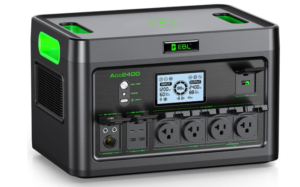
The EBL 2400W Portable Power Station is a capable option for solar truck camping, offering a substantial 1,843.2Wh battery capacity and 2,400W output. This combination gives campers enough stored energy to run a variety of everyday electronics and camping equipment, including laptops, smartphones, cameras, drones, small TVs, rice cookers, electric blankets, coffee makers, and other appliances. It can also handle higher wattage equipment such as electric kettles, hair dryers, and power tools, making it useful for campers who need more than basic device charging.
With support for up to 12 devices at the same time, the EBL 2400W is well suited to group camping or truck camping setups with several electronics. It includes four AC ports with a combined maximum output of 2,400W, two USB A ports, two fast charging USB C ports, a car port, two DC ports, and a wireless charging panel. This variety makes it possible to charge different types of equipment without constantly swapping cables or adapters.
The emergency power function adds another practical benefit. EBL states that the system can switch to backup power in as little as 0.1 seconds during an outage, which can help keep computers and other compatible equipment running. For truck camping, the clear display makes it easier to monitor remaining battery capacity and operating status. The four mode LED light can also provide illumination around the campsite or during emergencies.
Battery durability is another consideration for frequent off grid use. The EBL 2400W uses lithium iron phosphate batteries and is rated for more than 3,500 charge and discharge cycles, with a stated service life of more than 10 years. Its built in battery protection system is designed to guard against overcharging, over discharging, short circuits, and high temperatures. These protections can be useful when the power station is regularly used in outdoor environments.
Portability is reasonable for a power station in this capacity class. The unit weighs about 55 pounds and measures 16.9 by 11.8 by 11 inches. Dual side handles make it easier to lift and transport between a truck, campsite, home, or worksite. However, its weight means it is better suited to situations where you can place it in one location rather than repeatedly carrying it long distances.
For solar truck camping, the EBL 2400W Portable Power Station provides a useful balance of capacity, output, ports, durability, and portability. Its 1,843.2Wh capacity can support a range of camping equipment, while the 2,400W output allows it to operate demanding appliances that smaller power stations may not handle. It is particularly suitable for campers who need to power several devices at once, although those planning extended trips may want additional battery capacity or reliable solar charging to keep the system replenished.
Pros
• 1,843.2Wh battery capacity
• 2,400W maximum output
• Supports up to 12 devices simultaneously
• Four AC ports
• Two fast charging USB C ports
• Includes USB A, DC, car, and wireless charging options
• LFP battery technology
• More than 3,500 charge and discharge cycles
• Stated service life of more than 10 years
• 0.1 second emergency backup switching
• Four mode LED camping light
• Battery protection against overcharging, over discharging, short circuits, and high temperatures
• Dual side handles for transportation
Cons
• At about 55 pounds, it is relatively heavy for carrying over long distances
You may also like to read Best Solar for Camper Van
Best Battery Type for Solar Truck Camping
Advantages
1. High Battery Capacity
A high capacity battery provides more stored energy for truck camping, allowing you to run refrigerators, lights, laptops, cooking appliances, fans, and other equipment for longer periods without needing to recharge frequently. This is especially valuable when camping far from electrical hookups.
2. Long Battery Life
Choosing a battery with a long cycle life means it can be charged and discharged repeatedly without losing capacity too quickly. Lithium iron phosphate batteries are particularly useful for regular camping because they are designed to provide thousands of cycles and can remain useful for many years.
3. Strong Power Output
A powerful battery can operate more demanding camping equipment that smaller power stations may not handle. Higher output is useful when you need to run appliances such as kettles, coffee makers, cooking equipment, heaters, power tools, or other high wattage devices.
4. Fast Solar Recharging
Fast solar charging helps keep your battery ready for continued off grid use. A system that accepts substantial solar input can take better advantage of sunny conditions during the day, allowing you to replenish stored energy while continuing to use essential equipment.
5. Expandable Storage
Expandable battery capacity gives you the flexibility to increase your available energy as your camping needs grow. Instead of replacing the entire system, you can add compatible batteries to provide more storage for longer trips, multiple appliances, or extended stays away from the grid.
6. Multiple Charging Options
Having several charging methods makes a camping battery more versatile. Solar panels can provide renewable energy, while AC outlets, vehicle charging, or a generator can provide alternatives when sunlight is limited or when you need to recharge quickly.
7. Portable Design
A relatively compact and easy to move battery is convenient for truck camping because storage space is limited. Features such as wheels, handles, and a lighter construction can make it easier to move the power station between the truck, campsite, garage, or other locations.
8. Multiple Ports and Device Support
A battery with several AC, USB, DC, and vehicle charging ports allows multiple devices to operate simultaneously. This is useful for group camping or when you need to power phones, cameras, laptops, lighting, refrigeration, and camping appliances at the same time.
Factors to Consider When Choosing Best Battery Type for Solar Truck Camping
1. Battery Capacity
Consider how much energy you need to store for your truck camping trips. A smaller capacity may be sufficient for phones, lights, cameras, and laptops, while a larger capacity is better for refrigerators, cooking appliances, heating equipment, and multiple devices used over several days.
2. Battery Chemistry
Lithium iron phosphate (LFP) batteries are worth considering because they generally offer long cycle life, good thermal stability, and reliable performance for repeated charging and discharging. The battery chemistry can affect durability, weight, safety, and overall lifespan.
3. Power Output
Check both the continuous output and peak output before choosing a camping battery. Continuous output determines which appliances can run normally, while peak output helps accommodate equipment that briefly draws more power when starting. Make sure the ratings match the equipment you plan to use.
4. Solar Charging Capability
Look at the maximum solar input and charging speed. A battery that accepts higher solar input can potentially recharge faster when paired with an appropriately sized solar panel system. Also consider voltage and current limits to ensure your panels are compatible with the battery.
5. Portability and Size
Truck storage space can be limited, so consider the battery’s weight, dimensions, handles, wheels, and overall design. A high capacity system is useful, but it should still be practical to store and move around your truck and campsite.
6. Charging Options
Consider whether the battery can be charged through solar panels, an AC outlet, a vehicle, or a generator. Multiple charging methods give you more flexibility when weather conditions change or when you need an alternative source of power during an extended trip.
7. Expandability
If you expect your energy requirements to increase, look for a system that supports additional batteries or storage modules. Expandability allows you to increase capacity for longer trips without necessarily replacing the original power station.
8. Safety and Battery Lifespan
Consider features such as protection against overcharging, over discharging, short circuits, overheating, and excessive temperatures. A long cycle rating and a strong warranty can also provide useful information about how suitable the battery is for frequent truck camping and long term use.
Best Battery Type for Solar Truck Camping FAQs
1. What battery type is best for solar truck camping?
Lithium iron phosphate (LFP) batteries are a strong choice for solar truck camping because they offer a long cycle life, good durability, and stable performance. They are well suited to frequent charging and discharging during off grid trips.
2. How much battery capacity do I need for solar truck camping?
The required capacity depends on what you plan to power. Around 1,000Wh may be suitable for smaller electronics and basic camping equipment, while 2,000Wh or more is better for refrigerators, cooking appliances, and multiple devices used for longer periods.
3. Can a solar battery power appliances while camping?
Yes. A sufficiently powerful battery can run appliances such as refrigerators, lights, laptops, cooking equipment, coffee makers, and other camping devices. Check the appliance’s running and starting wattage and compare it with the battery’s continuous and peak output ratings.
Conclusion
Finding the best battery type for solar truck camping comes down to choosing a system that fits the way you actually camp rather than simply choosing the largest battery available. LFP batteries offer an appealing combination of long life, durability, safety, and dependable off grid performance, while sufficient capacity and power output ensure your essential equipment keeps running.
Solar charging, multiple charging options, portability, and expandable storage can further improve flexibility on longer trips. With the right balance of these factors, you can create a truck camping power setup that keeps your gear running, reduces reliance on hookups, and gives you greater freedom to explore remote locations.