
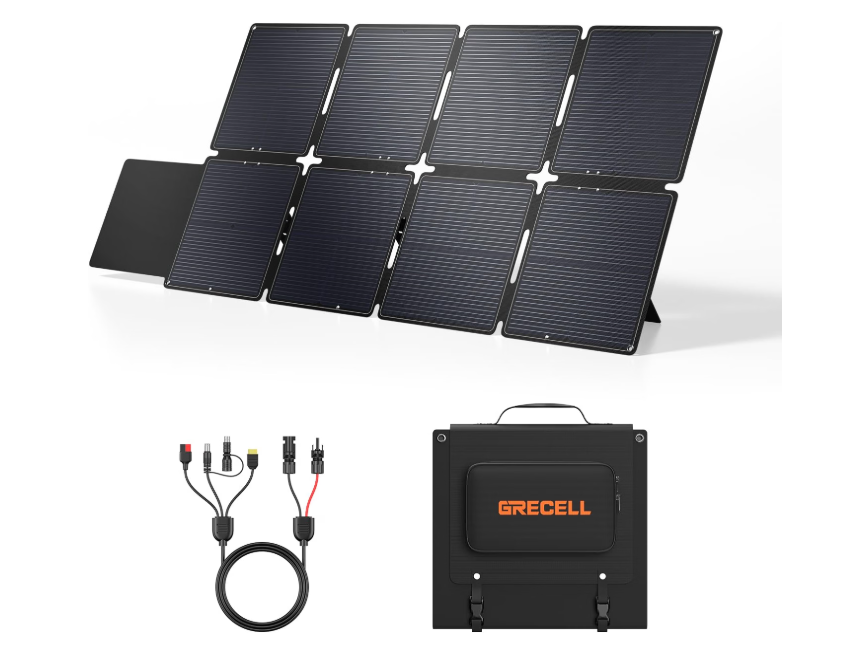
The best camping portable solar panels provide a convenient and reliable way to generate clean electricity while enjoying the outdoors. They are designed to combine useful power output, efficient solar conversion, portability, durability, and easy setup, making them suitable for charging portable power stations and keeping essential devices running away from traditional electricity.
Whether you are camping, traveling in an RV, hiking, or preparing for off grid adventures, the right solar panel can give you greater freedom and energy independence. In this guide, you will discover the important features to look for, explore the top picks, learn what to consider before buying, and find answers to frequently asked questions to help you choose the best camping portable solar panel for your needs.
Best Camping Portable Solar Panels
1)ZOUPW 450W Portable Solar Panel N-Type
Get it on Amazon
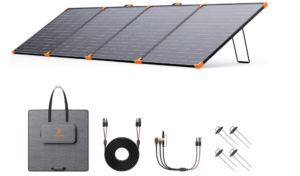
The ZOUPW 450W Portable Solar Panel is designed for campers, RV owners, overlanders, and anyone who needs substantial solar charging power away from the grid. With a rated 450W output and up to 25% efficiency, it is built to provide strong energy production for high capacity portable power stations. Its combination of N Type monocrystalline cells, a lightweight fiberglass structure, weather protection, and multiple connection options makes it a practical choice for camping setups that require more power than smaller portable panels can provide.
One of its main advantages is its N Type 16BB solar cell technology. The 16 busbar design is intended to reduce internal resistance and the risk of microcracks, while N Type cells are less affected by light induced degradation than traditional P Type technology. The panel is rated for up to 25% efficiency and is designed to maintain strong performance over time. The manufacturer also states that it can produce up to 10% more power in challenging conditions such as cloudy weather, early mornings, and late afternoons.
The 450W capacity makes this panel particularly suitable for high capacity solar generators. Its 45.9V open circuit voltage means it is designed for power stations accepting roughly 40 to 60V solar input. It works with several larger power stations, including EcoFlow Delta models and Anker Solix C1000 series units. However, compatibility needs to be checked carefully before purchase because it is not intended for low voltage systems below 30V, including certain Jackery 1000, 500, and 300 models and the Bluetti EB70S.
Despite its high output, the panel weighs about 29.5 pounds. Its aerospace grade fiberglass construction helps make it considerably lighter than many comparable rigid panels. Four reinforced kickstands can be adjusted up to 45 degrees, allowing the panel to be positioned toward the sun. This is useful when camping because one person can set it up without needing a permanent mounting system. The included ground stakes can also help keep the panel secure during outdoor use.
Weather resistance is another useful quality for camping. The ETFE coating and sealed construction provide an IP68 waterproof rating, helping the panel handle rain, dust, and marine spray. Smart bypass diodes are designed to help maintain energy production when part of the panel is affected by shade from trees or other objects. However, the connectors should not be submerged, so users should still take care when setting up the panel around water or during heavy rain.
The included connection kit makes the ZOUPW 450W more convenient for different power station setups. Its 4 in 1 adapter cable provides XT60, Anderson, DC7909, and DC8020 connections, allowing it to work with a range of compatible portable power stations. For users with 2kWh or larger power stations, the 450W capacity can provide a useful way to replenish battery capacity while camping, traveling, or during emergency power outages.
The package includes the 450W portable solar panel, a solar extension cable with multiple connectors, four ground stakes, a storage bag, and a user manual. ZOUPW also provides a 36 month warranty, a 30 day money back guarantee, and 24 hour customer support. Overall, this panel is best suited to campers who already have a compatible high voltage power station and want strong solar generation without moving to a large fixed solar installation.
Pros
• High 450W rated solar output for faster charging
• Up to 25% efficiency with N Type monocrystalline cells
• 16BB technology is designed to reduce resistance and microcrack risks
• Lightweight 29.5 pound fiberglass construction for a 450W panel
• Adjustable kickstands make positioning toward the sun easier
• IP68 waterproof construction provides strong outdoor protection
• Bypass diodes help reduce the effect of partial shading
• Multiple connectors support several compatible power stations
• Includes ground stakes, extension cable, and storage bag
• 36 month warranty and 30 day money back guarantee
Cons
• Not compatible with low voltae power stations below 30V input
2)ZOUPW 480W Bifacial Portable Solar Panel N Type
Get it on Amazon
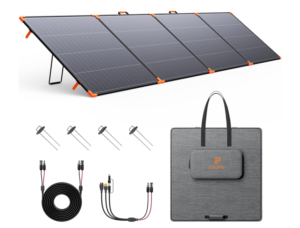
The ZOUPW 480W Bifacial Portable Solar Panel N Type is designed for campers, RV travelers, overlanders, and users who need substantial solar charging capacity from a portable setup. With a 480W rating, N Type 16BB cells, and a bifacial design, it is built to capture sunlight efficiently while remaining easier to transport than many traditional glass panels. Its high voltage architecture makes it especially suitable for larger portable power stations and off grid backup systems.
The panel uses N Type 16BB non destructive cutting cells with a claimed conversion efficiency of up to 25%. This technology is designed to reduce power degradation and maintain reliable energy production over time. ZOUPW also states that the panel can continue producing useful energy during lower light periods such as early morning and hazy evening conditions, making it a practical option when sunlight is less intense.
One of the most useful characteristics is its bifacial construction, which allows the panel to collect sunlight from both sides. The manufacturer claims up to 30% additional power from reflected light when the panel is placed over high albedo surfaces such as snow or sand. Integrated bypass diodes and anti shading protection can also help maintain energy production when portions of the panel experience partial shade. Actual gains will depend heavily on the surrounding surface, sunlight angle, and installation conditions.
Portability is another strong point. The panel weighs about 22.5 pounds and uses composite materials instead of heavy glass construction. Its foldable design makes it easier for one person to deploy at a campsite, RV site, or emergency location. The claimed 21.3W per pound power density is particularly useful for travelers who want substantial solar capacity without carrying several conventional glass panels.
The 42.5V high voltage architecture makes this panel better suited to larger solar generators and professional off grid systems. A single 480W panel can provide considerably more capacity than a typical 100W portable panel, potentially reducing the number of panels needed for a larger setup. However, buyers should confirm their power station’s solar input voltage, current, and connector requirements before purchasing because high output panels are not universally compatible.
For outdoor use, the ZOUPW 480W has an IP68 rating and a scratch resistant composite coating. It is designed to withstand rain, dust, and temperatures up to 140°F according to the manufacturer. This makes it suitable for camping, RV travel, backyard backup power, and other demanding environments. Even with its weather resistant construction, the panel should be handled carefully and kept free from dirt, grass, leaves, and other materials that can block sunlight or contribute to heat buildup.
The package includes the 480W bifacial solar panel, storage bag, user manual, 2 foot 12AWG 4 in 1 connector cable, 13 foot 12AWG solar extension cable, and four ground stakes. ZOUPW also provides a 36 month warranty and 24 hour customer support. The manufacturer advises against long term fixed, series, or parallel connections and warns users not to step on the panel, place heavy objects on it, or connect panels with significantly different ages or levels of degradation.
Overall, the ZOUPW 480W Bifacial Portable Solar Panel is a strong option for camping power stations when high solar capacity and portability are both important. Its 480W output, bifacial energy collection, lightweight construction, and high voltage design make it particularly attractive for larger power stations. The main consideration is compatibility and careful handling, since its high voltage architecture and usage limitations make it better suited to specific off grid systems than general purpose portable solar setups.
Pros
• High 480W rated solar output
• N Type 16BB technology with up to 25% conversion efficiency
• Bifacial design can capture reflected sunlight from the rear side
• Claims up to 30% additional bifacial gain on reflective surfaces
• Lightweight 22.5 pound composite construction
• Foldable design allows convenient single person setup
• 42.5V architecture is suitable for many larger power stations
• IP68 rated construction for demanding outdoor conditions
• Bypass diodes help manage partial shading
• Includes multiple cables, connectors, ground stakes, and storage bag
• 36 month warranty and 24 hour customer support
Cons
• Bifacial gains depend heavily on the ground surface and sunlight conditions
3)ZOUPW 350W Portable Solar Panel N Type
Get it on Amazon
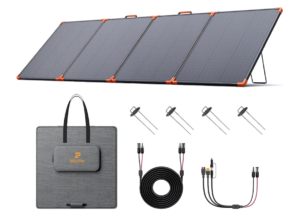
The ZOUPW 350W Portable Solar Panel N Type is designed for campers, RV owners, overlanders, and anyone who needs reliable solar charging without installing permanent rooftop panels. With a 350W output, N Type monocrystalline cells, and a compact folding design, it provides substantial charging capacity while remaining portable. Its high voltage configuration makes it particularly suitable for larger solar generators of 1kWh or more.
The panel uses N Type monocrystalline cells with a 16 busbar design, which is intended to reduce internal resistance and minimize degradation. ZOUPW states that the panel can maintain efficiency of up to 25% over time and capture more energy during cloudy or lower light conditions. This makes it useful for camping trips where sunlight may not always be strong enough for consistent charging from smaller panels.
A 50.2V open circuit voltage gives the ZOUPW 350W a high voltage design intended for compatible high capacity power stations. The included 4 in 1 cable provides XT60, Anderson, DC7909, and DC8020 connectors, supporting several models from EcoFlow, Bluetti, Anker Solix, and Jackery. Buyers should carefully check their power station’s solar input specifications because this panel is not designed for small 12V to 20V power stations.
Portability is one of the panel’s practical advantages. At approximately 22.2 pounds, it provides a substantial 350W output without the weight associated with many rigid glass panels. The panel folds into a briefcase style design and includes a magnetic handle, making transportation easier. Its reinforced kickstands can be adjusted up to 45 degrees, allowing users to position the panel toward the sun rather than laying it completely flat.
The panel is also designed for outdoor conditions. Its ETFE coating and IP68 waterproof rating provide protection against rain and dust, while the junction box has an IP67 rating. The manufacturer states that angling the panel correctly can provide more sunlight exposure compared with leaving it flat. This combination makes the panel suitable for RV boondocking, overlanding, camping, and emergency home backup applications.
The ZOUPW 350W also incorporates bypass diodes and anti shading protection. These features are intended to help manage the effects of partial obstruction, although the manufacturer still recommends avoiding shaded operation where possible. Keeping the panel clean and free of leaves, dust, grass, and other debris is important because blocked sections can reduce output and contribute to heat buildup.
The package includes the 350W solar panel, an extension cable, a 4 in 1 connector cable, a storage bag, and a user manual. ZOUPW backs the panel with a three year warranty and lifetime technical support. The manufacturer also advises against long term fixed, series, or parallel connections and warns users not to step on the panel, place heavy objects on it, or apply excessive pressure that could damage the solar cells.
Overall, the ZOUPW 350W Portable Solar Panel N Type is a strong option for camping solar generators when portability, high output, and fast charging are priorities. Its 350W capacity and 50.2V architecture make it particularly suitable for larger power stations, while the folding construction makes transportation and setup easier. Its biggest limitation is compatibility, so buyers should confirm that their power station can accept the panel’s high voltage input before purchasing.
Pros
• 350W rated output provides substantial solar charging capacity
• N Type monocrystalline cells offer up to 25% claimed efficiency
• 16 busbar design is intended to reduce internal resistance
• 50.2V open circuit voltage supports compatible high capacity power stations
• Weighs approximately 22.2 pounds for its power rating
• Folds into a compact briefcase style design
• Magnetic handle makes transportation easier
• Adjustable kickstands allow convenient positioning toward the sun
• IP68 waterproof panel construction provides strong outdoor protection
• Includes XT60, Anderson, DC7909, and DC8020 connections
• Three year warranty and lifetime technical support
Cons
• Not suitable for small 12V to 20V power stations
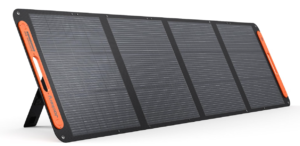
4)Jackery SolarSaga 200W Portable Solar Panel
Get it on Amazon
The Jackery SolarSaga 200W Portable Solar Panel is designed for campers, RV users, travelers, and anyone looking for a convenient way to recharge a portable power station using solar energy. With a 200W power rating, bifacial solar technology, and a portable design, it provides a practical balance between charging performance and easy outdoor use. It works especially well with compatible Jackery Explorer power stations for camping, emergency backup, and off grid power needs.
The SolarSaga 200W uses bifacial solar conversion combined with IBC technology to achieve a claimed conversion efficiency of up to 26.7%. This design allows the panel to capture solar energy from more than one surface, helping improve energy collection when lighting conditions are less than ideal. Compared with conventional PERC panels, the bifacial design is intended to deliver higher power generation without adding unnecessary weight or size.
For users who need faster solar charging, the 200W output provides a useful amount of charging capacity. Jackery states that six SolarSaga 200W panels can fully charge a 2042Wh E2000 Plus in approximately 2.5 hours under suitable conditions. Actual charging times will depend on sunlight intensity, panel positioning, weather, and the power station being used, but the 200W rating makes this panel suitable for larger portable power systems.
Compatibility is another practical advantage. The panel includes a DC8020 port as well as USB C and USB A connections, allowing it to support a variety of charging needs when paired with compatible Jackery power stations. It is designed for use with models such as the Explorer 1000 Plus, 2000 Pro, 2000 Plus, and 3000 Pro. The multiple charging connections also make it useful for keeping smaller devices such as smartphones and tablets powered while camping.
Setup is designed to be simple and quick. Jackery states that the panel can be deployed in about 10 seconds, making it convenient when you need to start charging without spending much time assembling equipment. The ergonomic handle also makes carrying the panel more comfortable, which is useful for camping trips where equipment may need to be moved between different locations.
Durability is well suited to outdoor use. The SolarSaga 200W has an IP68 rating for water and dust resistance and is designed to operate in temperatures from minus 4 degrees Fahrenheit to 149 degrees Fahrenheit, or approximately minus 20 degrees Celsius to 65 degrees Celsius. This gives it a broad operating range for different outdoor environments, from hot summer camping trips to colder conditions.
The package includes one SolarSaga 200W panel and a 9.8 foot multifunction charging cable with DC8020, DC7909, USB A, and USB C connections. The cable itself is not weatherproof, so it should be protected from rain and moisture during outdoor use. Jackery also provides a five year limited warranty, giving buyers additional coverage for long term ownership.
The Jackery SolarSaga 200W is a strong choice for campers who want a portable solar panel that combines useful charging power, efficient solar technology, easy setup, and outdoor durability. Its main limitation is that users should check compatibility with their specific power station before purchasing, especially if they plan to use the USB connections or pair the panel with a particular Jackery Explorer model.
Pros
• 200W solar output provides useful charging capacity
• Bifacial solar conversion can improve energy collection
• IBC technology delivers claimed efficiency of up to 26.7%
• Designed to perform in lower light conditions
• Compatible with several Jackery Explorer power stations
• Includes USB C and USB A charging ports
• Includes DC8020 and DC7909 connections
• Quick setup takes approximately 10 seconds
• Ergonomic handle makes transportation easier
• IP68 rating provides strong water and dust resistance
• Wide operating temperature range from minus 20 degrees Celsius to 65 degrees Celsius
• Five year limited warranty provides long term coverage
Cons
• Actual solar output depends heavily on sunlight and weather conditions
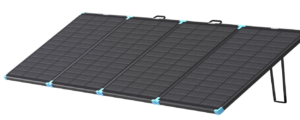
5)Renogy 300W Portable Solar Panel is designed for campers
 Get it on Amazon
The Renogy 300W Portable Solar Panel is designed for campers, RV owners, travelers, and anyone who needs dependable solar charging without installing permanent panels. With N Type technology, 16BB cells, a 25% conversion efficiency, and a foldable design, it provides strong charging performance while remaining easy to transport. Its combination of power, portability, and outdoor durability makes it suitable for camping, RV trips, emergency backup, and off grid power needs.
The panel uses premium N Type solar cells with a 16BB design to achieve a claimed 25% conversion efficiency. Renogy states that this is higher than the 22.5% efficiency offered by standard 9BB 300W panels. The improved efficiency allows the panel to generate more usable energy from the same sunlight exposure, which can be particularly useful when space is limited or weather conditions are less than ideal.
Portability is another major advantage of this solar panel. At approximately 18.74 pounds, Renogy states that it is 17% lighter than a standard 300W portable solar panel. It folds down to approximately 23.2 by 29.3 by 3.2 inches, making it easier to store in an RV, vehicle, or camping setup. Renogy also states that the panel can generate up to 960Wh of energy per day depending on available sunlight.
The Renogy 300W is built for demanding outdoor conditions. Its IP67 waterproof rating helps protect against water and dust, while the ETFE coating provides additional durability and resistance to hail. The panel is designed to operate in temperatures ranging from minus 40 degrees Fahrenheit to 185 degrees Fahrenheit, making it suitable for a wide range of weather conditions. This makes it useful for camping trips, RV adventures, and other outdoor applications where equipment may be exposed to changing weather.
Setting up the panel is straightforward and does not require tools. Users can unfold the panel, position the rust resistant kickstands, and begin charging in approximately one minute. The IP68 connectors are designed to work with most compatible portable power stations and batteries, giving users more flexibility when creating a portable solar charging system.
The panel is also designed to maintain more consistent performance when partial shading occurs. Its parallel wiring helps prevent shadows affecting one section of the system from significantly reducing the overall efficiency of interconnected panels. This can be useful when camping in areas where trees, clouds, or other objects may temporarily block part of the sunlight.
Renogy includes a three year warranty covering output, materials, and workmanship. This provides additional confidence for users who plan to rely on the panel regularly. While actual solar production will depend on sunlight, weather, positioning, and shading, the combination of 300W output and claimed 25% efficiency gives this panel a strong balance between charging capacity and portability.
The Renogy 300W Portable Solar Panel is a practical choice for campers and RV users who want substantial solar power without carrying a bulky rigid panel. Its lightweight folding design makes transportation easier, while N Type cells, strong weather protection, quick setup, and partial shading performance add to its versatility. For users who need a portable panel for larger power stations and outdoor backup power, it offers a useful combination of efficiency and convenience.
Pros
• 300W rated output provides substantial charging capacity
• N Type technology provides a claimed 25% conversion efficiency
• Premium 16BB cells improve energy collection
• Approximately 18.74 pounds for easier transportation
• Folds into a compact design for storage
• Can produce up to 960Wh daily depending on sunlight
• IP67 waterproof construction provides outdoor protection
• ETFE coating offers resistance to hail and harsh conditions
• Designed to operate from minus 40 degrees Fahrenheit to 185 degrees Fahrenheit
• Tool free setup takes approximately one minute
• IP68 connectors provide broad compatibility with portable power stations
• Parallel wiring helps reduce the impact of partial shading
• Three year warranty covering output, materials, and workmanship
Cons
• Actual daily energy production depends heavily on sunlight and weather
6)Renogy 220W Portable Solar Panel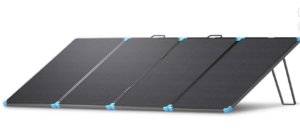
Get it on Amazon
The Renogy 220W Portable Solar Panel is designed for campers, RV owners, overlanders, and anyone who wants dependable solar power without dealing with bulky permanent panels. Its 220W output provides useful charging capacity while the foldable design makes it convenient to transport and store. With durable materials, high efficiency, quick setup, and weather protection, it is well suited for camping trips, RV travel, emergency backup, and off grid power needs.
Portability is one of the strongest advantages of this panel. Weighing approximately 15.87 pounds, it is relatively lightweight for a 220W solar panel and folds down to about 27.17 by 18.11 by 3.15 inches. Renogy states that the folded panel is four times more compact than a rigid 200W solar panel. The included carry case also makes it easier to transport between campsites, vehicles, and storage areas.
The panel uses A+ monocrystalline solar cells with a claimed efficiency of up to 23%. Its fiberglass reinforcement and ETFE coating are designed to provide durability while protecting the panel from ultraviolet exposure and changing weather conditions. Renogy states that the construction is intended for long term use in rugged environments, while the five year warranty covering output, materials, and workmanship provides additional reassurance.
Setting up the Renogy 220W is simple and does not require tools. Users can unfold the panel, position the rust resistant kickstands, and begin charging in approximately one minute. The IP68 waterproof connectors are designed to connect with most compatible portable power stations, making the panel useful for RVs, vans, camping setups, and emergency backup systems.
Weather resistance is another useful quality for outdoor use. The panel has an IP67 waterproof rating and an ETFE coating designed to resist hail and harsh weather. It is built to handle rain, snow, and high temperatures, while the aluminum backsheet helps manage heat and prevent excessive temperature buildup. These features make it suitable for outdoor charging where the panel may be exposed to changing environmental conditions.
The Renogy 220W also uses parallel wiring to help maintain more consistent performance when partial shading occurs. Shadows from trees or passing clouds can still affect solar production, but the wiring design helps prevent one shaded section from significantly reducing the overall efficiency of interconnected panels. This can be useful when camping in areas where completely unobstructed sunlight is difficult to find.
The foldable construction makes the panel particularly convenient for people who move frequently. Instead of requiring a permanent roof installation, it can be deployed when needed and packed away afterward. Its compact folded size also makes it easier to fit into an RV, van, vehicle, or camping storage area without taking up excessive space.
The Renogy 220W Portable Solar Panel offers a practical combination of charging capacity, portability, efficiency, and durability. Its 220W rating is suitable for many portable power stations, while the 23% claimed efficiency helps maximize energy collection from available sunlight. For campers and RV users who want a solar panel that is easy to carry, quick to deploy, and built for outdoor conditions, this model provides a well balanced solution.
Pros
• 220W rated output provides useful solar charging capacity
• 23% claimed conversion efficiency
• Weighs approximately 15.87 pounds
• Folds into a compact design for easier storage
• Includes a carry case for transportation
• A+ monocrystalline solar cells provide efficient energy collection
• Fiberglass reinforcement improves durability
• ETFE coating provides UV and weather resistance
• IP67 waterproof construction
• IP68 waterproof connectors
• Rust resistant kickstands provide stable positioning
• Sets up in approximately one minute without tools
• Parallel wiring helps reduce the impact of partial shading
• Aluminum backsheet helps manage heat
• Five year warranty covering output, materials, and workmanship
Cons
• Actual solar production depends on sunlight, weather, positioning, and shading
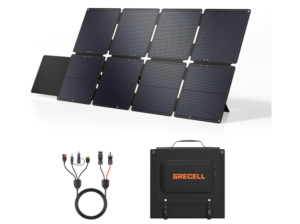
7)GRECELL 240W Portable Solar Panel
Get it on Amazon
The GRECELL 240W Portable Solar Panel is designed for campers, RV owners, hikers, travelers, and anyone who needs portable solar power for a compatible power station. With 240W of output, high efficiency monocrystalline cells, a foldable design, and broad connector compatibility, it provides a convenient way to generate electricity during outdoor trips or emergencies. Its combination of portability and charging capacity makes it a useful option for camping power systems.
The panel uses premium monocrystalline silicon cells with a claimed conversion efficiency of more than 25%. This allows the GRECELL 240W to produce substantial power from a relatively compact panel size. The high conversion rate can be particularly useful when sunlight is limited, although actual performance will vary depending on sunlight intensity, weather, positioning, and other environmental conditions.
Portability is another practical advantage. Weighing approximately 16.3 pounds, the panel is light enough to carry between campsites and can be folded down to about 16.14 by 16.33 by 3.54 inches for easier storage. It can fit into a car trunk or backpack more conveniently than many rigid solar panels. The adjustable bracket also allows users to position the panel toward the sun for better energy collection.
The panel is designed for simple outdoor setup. Its adjustable bracket helps maintain a suitable angle when placed on the ground, while reinforced eyelets provide additional mounting options on RVs, tents, or uneven ground. A built in zipper pouch provides a convenient place to keep the included cables, helping reduce clutter during transportation and setup.
Compatibility is another useful quality of this solar panel. It comes with XT60, Anderson, DC7909, and DC8020 connectors, allowing it to work with many portable power stations from brands such as Jackery, EcoFlow, Bluetti, and EBL. This broad connector selection gives users more flexibility when integrating the panel into an existing portable power system.
The GRECELL 240W is also built for outdoor conditions. Its ETFE surface provides durability while the IP67 rating offers protection against water and dust. This makes it suitable for camping, hiking, RV travel, and off grid applications. However, the panel should not be immersed in water, so users should still take care when using it around heavy rain or standing water.
For users who need more charging capacity, the panel supports both series and parallel wiring. This allows multiple compatible panels to be connected to increase total output and potentially reduce charging time for larger power stations. The inclusion of MC4 ports and reverse charging protection also adds flexibility and safety when expanding a solar charging setup.
The GRECELL 240W Portable Solar Panel offers a useful combination of power, efficiency, portability, and compatibility. Its 240W rating and claimed efficiency above 25% make it suitable for charging portable power stations, while its compact folding design makes transportation easier. For camping and emergency backup applications, it provides a flexible solar charging solution without the bulk of a traditional rigid panel.
Pros
• 240W rated solar output
• Claimed conversion efficiency of more than 25%
• Premium monocrystalline solar cells
• Weighs approximately 16.3 pounds
• Folds down to a compact size for transportation and storage
• Adjustable bracket helps optimize the panel angle
• Reinforced eyelets provide flexible mounting options
• Built in zipper pouch keeps cables organized
• Includes XT60, Anderson, DC7909, and DC8020 connectors
• Compatible with many popular portable power stations
• IP67 water and dust resistance
• Durable ETFE surface
• Supports series and parallel connections
• MC4 ports provide additional connection flexibility
• Reverse charging protection improves charging safety
Cons
• Actual power output depends on sunlight and weather conditions
You may also like to read Best Camping Solar Lights
Best Camping Portable Solar Panels Advantages
1. High Charging Efficiency
The best camping portable solar panels use efficient solar cells to convert more available sunlight into usable electricity. Higher efficiency can provide better energy production from a smaller panel area, which is especially helpful when camping in limited spaces or when sunlight is not at its strongest.
2. Portable and Foldable Design
A lightweight, foldable panel is much easier to carry, store, and transport than a traditional rigid panel. This makes it convenient for camping, RV trips, hiking, overlanding, and emergency situations where the solar equipment needs to be moved frequently.
3. Strong Power Output
Portable panels with outputs around 200W to 350W can provide substantial charging power for portable power stations. This allows campers to recharge larger batteries more effectively and keep important equipment such as phones, lights, laptops, and other devices running during outdoor trips.
4. Quick and Simple Setup
Many quality camping solar panels are designed for fast deployment without requiring complicated tools or permanent installation. Adjustable stands and straightforward connections allow users to position the panel toward the sun and begin generating power within a short time.
5. Wide Compatibility
Panels with multiple connector options can work with a wider range of portable power stations and batteries. This flexibility makes it easier to integrate a solar panel into an existing camping power system without being restricted to one type of connection.
6. Durable Weather Protection
Water and dust resistance is important when using solar equipment outdoors. Strong weather protection helps panels continue operating during rain, dusty conditions, and changing temperatures, making them more suitable for camping trips where exposure to the elements is unavoidable.
7. Better Performance in Changing Conditions
Advanced solar technology can help panels continue producing useful electricity when sunlight is weaker or partially blocked by clouds and other objects. This can provide more dependable charging during outdoor trips where perfect sunlight is not always available.
8. Expandable Charging Capacity
Some portable solar panels support series or parallel connections, allowing users to connect additional panels when more power is required. This provides greater flexibility for larger power stations and makes it possible to increase charging capacity as energy needs grow.
Factors to Consider When Choosing Best Camping Portable Solar Panels
1. Solar Conversion Efficiency
Consider the panel’s solar conversion efficiency because it determines how effectively available sunlight is turned into usable electricity. Higher efficiency can provide more power from a smaller surface area, which is especially useful when camping space is limited or sunlight is less consistent.
2. Power Output
The wattage should match your energy requirements and portable power station capacity. Lower wattage panels may be suitable for phones, lights, and small devices, while higher wattage options are better for recharging larger power stations and running several devices during longer camping trips.
3. Weight and Portability
A camping solar panel should be easy to carry, transport, and store. Foldable designs with manageable weights are particularly useful for campers who frequently move between locations, while a compact folded size makes storage inside a vehicle, tent, or camping bag much easier.
4. Build Quality and Durability
Outdoor equipment needs to withstand regular handling and changing environmental conditions. Look for strong materials, reinforced construction, durable surfaces, and sturdy stands that can handle repeated setup and packing without becoming difficult to use.
5. Water and Dust Resistance
Since camping equipment can be exposed to rain, moisture, dirt, and dust, weather resistance is an important consideration. A suitable protection rating can help the panel withstand outdoor conditions, although water resistance does not necessarily mean the panel should be submerged.
6. Connector Compatibility
Check that the panel has connectors that match your portable power station or battery system. Multiple connection options can provide greater flexibility, while compatible MC4, DC, XT60, Anderson, or other connections can make setup easier and reduce the need for additional adapters.
7. Setup and Positioning
Consider how easily the panel can be unfolded, positioned, and adjusted toward the sun. Adjustable brackets or kickstands can make it easier to find a productive angle, while simple setup is valuable when you need to move or reposition the panel throughout the day.
8. Expansion Capability
If your electricity needs may increase in the future, check whether the panel supports series or parallel connections. Expandable systems allow additional panels to be connected when compatible, giving you more charging capacity without replacing your entire solar setup.
Best Camping Portable Solar Panels FAQs
1. What wattage is best for camping portable solar panels?
The ideal wattage depends on your energy needs and the size of your portable power station. Panels between 200W and 350W offer a useful balance of portability and charging power for many camping setups, while higher wattage can be beneficial when you need to recharge larger batteries more quickly.
2. Are portable solar panels suitable for cloudy weather?
Yes, portable solar panels can still generate electricity in cloudy conditions, although their output will usually be lower than in direct sunlight. Choosing efficient solar cells and positioning the panel toward the brightest available part of the sky can help improve energy production.
3. Can portable solar panels charge different power stations?
Many portable solar panels can work with different power stations when the voltage, current, and connector requirements are compatible. Before purchasing, check the panel’s output specifications and available connectors to ensure they match your power station.
Conclusion
The best camping portable solar panels stand apart by combining efficient solar charging, useful power output, easy portability, durable construction, weather resistance, and flexible compatibility in one practical setup.
Unlike basic solar panels that may be difficult to transport or limited in their connections, quality portable models are designed for quick setup, convenient storage, and reliable outdoor use. Their ability to support different power stations and expand charging capacity also makes them suitable for a wide range of camping needs.
By choosing a panel that matches your power requirements, available space, weather conditions, and equipment, you can enjoy dependable renewable energy and greater freedom wherever your outdoor adventures take you.