
Choosing the best camera for hiking and backpacking means finding a balance between image quality, portability, durability, and versatility. The right camera should be lightweight enough to carry on long trails while offering reliable autofocus, image stabilization, weather resistance, and strong photo and video performance for landscapes, wildlife, and everyday adventure moments. The cameras discussed above are great choices because they combine capable sensors, versatile lenses, fast focusing, creative features, and outdoor friendly designs without requiring a bulky setup. In this guide, we’ll cover the key features, top picks, advantages, factors to consider when buying, and FAQs to help you choose a camera that fits your hiking and backpacking needs.
Best Camera for Hiking and Backpacking
1)Nikon Z50 II with Two Lenses
Get it on Amazon
The Nikon Z50 II with Two Lenses is a practical choice for hikers and backpackers who want better image quality than a smartphone without carrying a bulky camera system. Its 20.9 megapixel DX format sensor captures lifelike colors and detailed images from early morning through evening while keeping the camera compact enough for a small hiking bag. The included NIKKOR Z DX 16 50mm f/3.5 6.3 VR lens works well for landscapes, trails, campsites, and everyday travel scenes, while the NIKKOR Z DX 50 250mm f/4.5 6.3 VR lens gives you extra reach for wildlife, birds, distant mountain features, and other subjects you encounter along the trail.
For outdoor photography, the two lens setup provides useful flexibility without requiring a large collection of equipment. The 16 50mm lens is particularly convenient when you want to keep your pack light and capture wide scenery, while the 50 250mm lens allows you to photograph distant subjects without getting physically closer. Both lenses include VR, which can help produce sharper handheld images when shooting on the move. This combination makes the Z50 II suitable for different parts of a hiking trip, from expansive landscapes to wildlife encounters.
Autofocus is another useful feature when hiking takes you into areas with unpredictable subjects. The Nikon Z50 II can automatically detect and track nine distinct types of subjects, including people, dogs, cats, birds, and vehicles. Dedicated bird and airplane modes provide additional autofocus accuracy for specific subjects. For hikers who enjoy photographing birds or wildlife along a trail, this tracking capability can make it easier to keep moving subjects in focus.
The camera also offers useful creative controls for photographers who want to develop a particular visual style. A dedicated Picture Control button provides access to 31 built in presets, allowing you to change the look of photos and videos while shooting. You can also create and save your own Picture Control presets or download additional Cloud Picture Controls through Nikon Imaging Cloud. Seeing the results in real time can be helpful when you want to create finished looking images without relying heavily on editing later.
Video performance adds another reason to consider the Z50 II for outdoor adventures. It can record 4K UHD at 60p and Full HD slow motion at 120p, giving hikers the option to capture everything from smooth trail footage to dramatic slow motion scenes. Built in electronic VR can also help stabilize video while walking. Product review mode is included as well, although it is more useful for creators who occasionally record themselves or demonstrate equipment during their trips.
The built in flash gives the camera additional versatility when conditions become darker. It can help with indoor photography, evening scenes, and nighttime portraits, while Night Portrait mode combines a slow shutter speed with flash to create more natural looking portraits. For backpackers who spend evenings around campsites or stay in lodges and cabins, having a built in flash means there is no need to carry a separate flash unit.
Connectivity is convenient when you want to share your hiking photographs quickly. Through the free Nikon SnapBridge app, you can send photos and videos to a smart device shortly after capturing them. This makes it easier to share landscapes, wildlife sightings, and memorable moments while traveling rather than waiting until you return home. For backpackers who document their trips on social media, this can be particularly useful.
The main consideration is that the Z50 II and its two lenses still require more space and care than a smartphone, even though the camera itself is compact. The 50 250mm lens also has a relatively narrow maximum aperture, so low light performance will depend more heavily on the camera’s settings and available light. Nevertheless, the combination of a 20.9 megapixel DX sensor, two versatile VR lenses, subject detection, creative controls, and strong video capabilities gives hikers a well rounded system for photographing varied outdoor scenes.
Pros
• 20.9 megapixel DX format sensor delivers detailed images and lifelike colors
• Compact camera body is suitable for hiking and backpacking
• Includes both 16 50mm and 50 250mm VR lenses
• Wide zoom range covers landscapes, travel scenes, wildlife, and distant subjects
• Nine subject detection types help track people, animals, birds, and vehicles
• Dedicated bird and airplane autofocus modes
• 4K UHD 60p video and Full HD 120p slow motion
• Built in electronic VR helps stabilize video
• 31 built in Picture Control presets provide creative options
• Custom and downloadable Cloud Picture Controls are supported
• Built in flash is useful for low light and indoor photography
• SnapBridge makes transferring photos and videos to a smart device convenient
Cons
• Carrying two lenses takes more space than using a smartphone or compact camera
2)Canon EOS R10 Mirrorless Camera Kit

Get it on Amazon
The Canon EOS R10 Mirrorless Camera Kit is a versatile option for hikers and backpackers who want a lightweight camera system that can handle landscapes, wildlife, portraits, and video. Its 24.2MP APS C CMOS sensor produces sharp, colorful images with plenty of detail, while the included RF S 18 150mm lens provides a broad focal range for outdoor photography. This makes it possible to capture wide mountain views, trails, campsites, and closer details without constantly changing lenses.
The RF S 18 150mm lens is particularly useful for hiking because of its flexibility. At the wide end, it can capture expansive landscapes and scenery, while the longer end provides additional reach for distant subjects. For backpackers who want to keep their equipment relatively simple, having this range in one lens can reduce the need to carry several lenses during a long trek.
The EOS R10 also offers capable autofocus for unpredictable outdoor subjects. Its Dual Pixel CMOS AF II system uses intelligent subject detection to recognize and track people, animals, and vehicles. This can be helpful when photographing wildlife encountered along hiking trails or capturing companions while they are walking, climbing, or exploring. Quick and accurate tracking can also make it easier to maintain focus when subjects are moving through changing environments.
Video performance gives the R10 added versatility for documenting outdoor adventures. It can record 4K UHD video at up to 60p, with 4K footage oversampled from 6K for improved detail. Full HD recording at 120p is also available for slow motion footage. Whether you are recording a scenic trail, wildlife, or a short hiking vlog, these options provide plenty of flexibility for creating high quality travel videos.
The included RF 50mm f/1.8 STM lens gives the kit another useful option for photographers who want better low light capability. Its bright f/1.8 aperture can allow more light into the camera compared with the slower zoom lens, making it useful around camp in the evening, indoors, or during other low light situations. It can also create a shallower depth of field, which is useful for portraits and close subjects where you want the background to appear softer.
For backpacking trips, the additional accessories in this kit can also be convenient. The 64GB memory card provides storage for photos and video, while the Canon EOS 200ES shoulder bag offers a dedicated way to carry and protect the camera equipment. Having a bag included means you do not necessarily need to purchase a separate camera carrying solution before heading out.
One consideration is that carrying both lenses and accessories takes more room than carrying a smartphone or a single compact camera. You may also need to switch between the 18 150mm zoom and 50mm prime when lighting or shooting requirements change. Still, the combination of a 24.2MP APS C sensor, flexible zoom range, fast prime lens, intelligent autofocus, and detailed 4K video makes the Canon EOS R10 kit well suited to hikers and backpackers who want a camera that can handle different types of outdoor photography.
Pros
• 24.2MP APS C sensor produces sharp and colorful images
• RF S 18 150mm lens provides a versatile range for landscapes and distant subjects
• Dual Pixel CMOS AF II tracks people, animals, and vehicles
• 4K UHD video up to 60p
• 4K footage is oversampled from 6K for improved detail
• Full HD 120p slow motion recording
• RF 50mm f/1.8 STM lens provides strong low light capability
• Bright f/1.8 aperture can create attractive background blur
• Includes a 64GB memory card
• Includes a Canon EOS 200ES shoulder bag for carrying the camera
Cons
• Carrying two lenses adds weight and takes up additional space in a backpack
3)Canon EOS R7 Mirrorless APS-C Camera
Get it on Amazon
The Canon EOS R7 Mirrorless APS C Camera is a capable option for hikers and backpackers who want high resolution photography, fast autofocus, and strong stabilization in a relatively compact camera system. Its 32.5MP CMOS sensor and DIGIC X processor produce detailed images while the APS C format provides useful telephoto reach for subjects that are farther away. For outdoor adventures where scenery and wildlife may both be part of the experience, the R7 offers the versatility needed to handle different shooting situations.
The included RF S 18 150mm F3.5 6.3 IS STM lens makes the camera particularly practical for hiking. Its broad zoom range covers wide angle views for mountains, forests, trails, and campsites while extending into telephoto territory for wildlife and distant details. Being able to cover these perspectives with one lens can reduce the need to carry and change multiple lenses while walking or backpacking.
Wildlife and fast moving subjects are another area where the EOS R7 performs well. It can shoot at up to 15 frames per second using the mechanical shutter and up to 30 frames per second with the electronic shutter. RAW Burst Mode adds 0.5 second pre shooting, which can help capture unpredictable moments such as a bird taking flight or an animal suddenly moving through the scene. This makes the camera useful for hikers who regularly encounter wildlife on the trail.
Autofocus is designed to keep up with moving subjects. Dual Pixel CMOS AF II covers up to approximately 100 percent of the image area and provides up to 651 autofocus zones, with subject detection for people, animals, and vehicles. This can make tracking wildlife, hiking companions, or other moving subjects more convenient, particularly when there is little time to manually adjust focus.
Image stabilization is also valuable when photographing outdoors without a tripod. The camera’s 5 axis IBIS can provide up to 7 stops of shake correction with compatible lenses, helping produce steadier handheld photographs and video. This can be especially useful when hiking light and leaving a tripod behind, as well as when shooting in lower light or recording video while exploring a trail.
The EOS R7 is also equipped for hikers who want to create video content. It can record 4K video at up to 60p, along with detailed 4K Fine footage oversampled from 7K at supported frame rates. Full HD recording up to 120p provides slow motion options. Canon Log 3 and HDR PQ give creators additional options for video workflows, while Movie Servo AF helps maintain focus during recording.
The 3 inch vari angle touchscreen adds convenience for outdoor filming and photography from different positions. It can be useful when composing shots close to the ground, above obstacles, or when recording yourself during a hiking trip. The included 128GB SanDisk Ultra SDXC card provides additional storage, while the padded Deco Essentials camera bag gives you a practical way to carry the camera and lens.
For backpackers, the main tradeoff is that a high resolution camera with advanced stabilization and burst shooting can be more equipment than someone needs for simple travel snapshots. The RF S 18 150mm lens also has a relatively slow maximum aperture, particularly at the telephoto end, so low light photography may require higher ISO settings or slower shutter speeds. Overall, the Canon EOS R7 combines high resolution, a versatile one lens setup, fast subject tracking, strong stabilization, and advanced video capabilities for hikers who want a camera capable of handling landscapes and wildlife on the same trip.
Pros
• 32.5MP APS C sensor provides highly detailed images
• DIGIC X processor supports responsive performance
• RF S 18 150mm lens covers wide angle through telephoto perspectives
• One lens can handle landscapes, travel, portraits, and wildlife
• Mechanical shutter shooting up to 15 fps
• Electronic shutter shooting up to 30 fps
• RAW Burst Mode includes 0.5 second pre shooting
• Dual Pixel CMOS AF II covers up to approximately 100 percent of the image area
• Up to 651 autofocus zones
• Detects and tracks people, animals, and vehicles
• 5 axis IBIS provides up to 7 stops of shake correction with compatible lenses
• 4K video recording up to 60p
• 4K Fine footage can be oversampled from 7K at supported frame rates
• Full HD recording up to 120p
• Vari angle touchscreen is useful for creative shooting angles
• Includes a 128GB SanDisk Ultra SDXC card and padded camera bag
Cons
• RF S 18 150mm lens has a relatively slow maximum aperture
4)OM SYSTEM OM-5 Mark II
Get it on Amazon
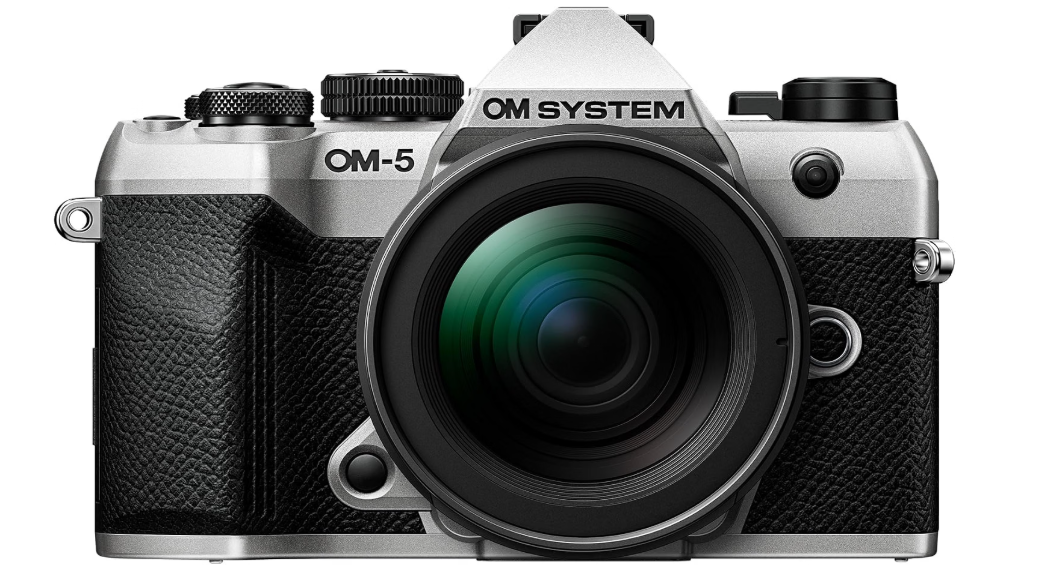
The OM SYSTEM OM 5 Mark II SLV is designed for photographers who want a lightweight camera that can keep up with hiking and backpacking adventures. It combines sharp image quality, image stabilization, weather ready construction, fast autofocus, and computational photography features in a compact body. For outdoor travelers who want to capture landscapes, wildlife, changing weather, and spontaneous moments without carrying a large camera system, its small size can be particularly convenient.
Image quality is a major reason to consider the OM 5 Mark II for outdoor photography. It is designed to produce sharp, stable, and vibrant photographs in different environments, making it suitable for capturing mountain scenery, forests, waterfalls, trails, and campsites. Image stabilization is also useful when photographing handheld, particularly when traveling light and avoiding the need for a tripod.
Durability is important when a camera is being taken onto trails and remote locations. The OM 5 Mark II has a compact and durable design intended to handle outdoor conditions, including changing weather. This gives hikers more flexibility when photographing nature during different conditions rather than limiting photography to clear and dry days. Its compact construction also makes it easier to fit into a hiking or backpacking setup where space and weight matter.
The computational photography button adds creative options for photographers who enjoy experimenting with their images. Instead of relying solely on traditional camera settings, computational photography can provide additional ways to capture and process scenes inspired by the surrounding environment. This can be useful for hikers who want to create more distinctive images of landscapes, light, and natural scenery while exploring.
Autofocus performance is another useful feature for outdoor photography. Hiking can present unpredictable opportunities, from birds suddenly appearing on a branch to wildlife moving across a trail. The OM 5 Mark II is designed to provide high autofocus performance, helping photographers react quickly when a fleeting moment appears. This can be especially useful when there is little time to compose and focus manually.
For backpackers who also create travel videos, unlimited 4K video recording provides flexibility for documenting longer portions of an adventure. You can record trails, landscapes, campsites, wildlife encounters, and personal travel stories in 4K quality. Having video capabilities alongside still photography means hikers can use one compact camera for both photographs and moving footage.
The combination of compact construction, durability, stabilization, autofocus, and computational photography makes the OM 5 Mark II suitable for photographers who prioritize portability on the trail. It is easier to incorporate into a lightweight backpacking setup than a larger camera system, while still providing features aimed at serious outdoor photography and video.
One consideration is that photographers looking for the highest level of professional customization or extensive lens options may need to look beyond the basic capabilities described here. The camera’s appeal is more focused on combining portability, durability, image quality, and creative outdoor features in a small package. For hikers and backpackers who value carrying less while still having a dedicated camera for photographs and 4K video, the OM SYSTEM OM 5 Mark II SLV offers a practical combination of features.
Pros
• Compact design is well suited to hiking and backpacking
• Durable construction is designed for outdoor use
• Produces sharp and vibrant images
• Image stabilization helps with handheld photography
• Computational photography button provides creative shooting options
• High autofocus performance helps capture fast moving moments
• Unlimited 4K video recording
• Suitable for both still photography and video
• Designed for changing outdoor conditions
• Convenient option for photographers who want to minimize camera weight
Cons
• Compact design may provide fewer physical controls than larger camera systems
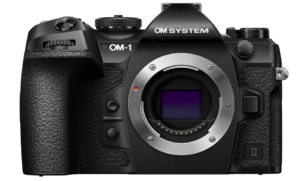
5)OM SYSTEM Olympus OM 1 Mark II
Get it on Amazon
The OM SYSTEM Olympus OM 1 Mark II is a strong option for hikers and backpackers who need a camera that can handle demanding outdoor conditions while remaining focused on portability and performance. It combines a 20MP stacked BSI Live MOS sensor, advanced autofocus, fast processing, and computational photography functions in a rugged body. Its IP53 protection also makes it suitable for photographers who expect to encounter dust, splashes, and freezing temperatures while exploring trails and remote landscapes.
The 20MP stacked BSI Live MOS sensor is designed to produce detailed images while helping reduce noise, making the OM 1 Mark II suitable for a wide range of outdoor scenes. Hikers can use it to photograph landscapes, forests, mountains, wildlife, and changing light conditions. The sensor’s stacked design also works alongside the camera’s fast processing system to support responsive shooting when outdoor subjects move unexpectedly.
Autofocus performance is particularly useful for wildlife and action photography. The Cross Quad Pixel AF system provides 1,053 autofocus points, with all points using a cross type design for high precision focusing across the frame. This gives hikers a useful tool when photographing birds, animals, or people moving through a scene. Having autofocus coverage across the entire image area can also make it easier to compose subjects away from the center of the frame.
The TruePic X engine provides up to three times faster processing power, supporting the camera’s demanding shooting and computational photography functions. For hikers, this can be helpful when moving quickly between different subjects and lighting conditions. Fast processing also contributes to the camera’s ability to handle advanced image creation features without requiring photographers to rely entirely on traditional exposure and composition techniques.
Computational photography provides several useful tools for outdoor shooting. Handheld High Res Shot can help create high resolution images without requiring a tripod, while Live GND can assist with scenes containing strong differences between bright skies and darker foregrounds. Live ND and Handheld Live Composite provide additional creative options for photographing flowing water, movement, and changing light. Focus Stacking and HDR shooting can also be useful when photographing detailed landscapes and close subjects.
Weather resistance is especially valuable for hiking and backpacking. The OM 1 Mark II has an IP53 rating and is designed to provide dustproof, splashproof, and freeze proof performance down to minus 10 degrees Celsius. This makes it better suited to challenging outdoor environments where dust, rain, splashes, and cold temperatures can become part of the photography experience.
The combination of rugged construction and computational photography makes the camera useful for photographers who want to travel light while still having advanced tools available on the trail. Features such as Handheld High Res Shot and Handheld Live Composite can reduce the need for additional equipment in some situations. This can be beneficial for backpackers who want to keep their packs manageable while retaining creative flexibility.
One consideration is that the camera’s 20MP resolution may not appeal to photographers who prioritize extremely high resolution files for very large prints or extensive cropping. The number of advanced computational features can also require some time to learn and use effectively. However, for hikers who prioritize durability, autofocus precision, fast processing, and creative handheld photography, the OM SYSTEM Olympus OM 1 Mark II offers a well equipped camera system for outdoor adventures.
Pros
• 20MP stacked BSI Live MOS sensor provides detailed images and low noise
• Cross Quad Pixel AF provides 1,053 autofocus points
• All autofocus points are cross type for high precision focusing
• TruePic X engine delivers up to three times faster processing power
• Handheld High Res Shot supports high resolution photography without a tripod
• Live GND provides additional control for scenes with challenging exposure differences
• Live ND creates creative long exposure effects
• Handheld Live Composite provides additional options for capturing light and movement
• Focus Stacking and HDR shooting expand creative possibilities
• IP53 rated for dustproof and splashproof protection
• Freeze proof performance down to minus 10 degrees Celsius
• Well suited to challenging hiking and backpacking environments
Cons
• 20MP resolution may be less appealing for photographers who regularly make very large prints
You may also like to read Best Camera for Landscape Photography
Best Camera for Hiking and Backpacking Advantages
Lightweight and Compact Design.
A camera for hiking and backpacking should be easy to carry over long distances without adding unnecessary weight to your pack. A compact system takes up less space while still giving you better image quality and creative control than a typical smartphone.
High Image Quality.
A larger sensor and good resolution allow you to capture sharp, detailed, and vibrant photographs of mountains, forests, wildlife, trails, and changing landscapes. This is especially useful when you want to preserve fine details or crop images later.
Versatile Lens Options.
A camera that can work with wide angle, standard, and telephoto perspectives gives you greater flexibility outdoors. Wide views are useful for expansive scenery, while longer focal lengths help you photograph distant wildlife, birds, and landscape details without getting closer to the subject.
Reliable Autofocus.
Fast and accurate autofocus is valuable when photographing unpredictable subjects on the trail. Advanced subject detection and tracking can help keep people, animals, birds, and other moving subjects sharp, allowing you to react quickly when an interesting moment appears.
Effective Image Stabilization.
Strong stabilization helps reduce camera shake when shooting handheld, particularly in low light or when using longer focal lengths. This can be particularly useful for backpackers who prefer to leave a tripod behind to save space and weight.
Weather and Outdoor Durability.
Hiking can expose camera equipment to dust, rain, splashes, and cold temperatures. A weather resistant camera provides greater protection in changing outdoor conditions, allowing you to continue photographing without being as restricted by the weather.
Strong Video Capabilities.
A camera capable of high quality 4K video and slow motion recording can document an entire adventure in addition to taking photographs. This is useful for creating hiking videos, recording wildlife encounters, capturing scenic trails, or sharing travel experiences online.
Creative Photography Features.
Computational photography, high resolution shooting, HDR, focus stacking, long exposure functions, and customizable image controls can give hikers more ways to capture challenging or creative scenes. These features can also reduce the need for carrying additional equipment for certain types of photography.
Factors to Consider When Choosing Best Camera for Hiking and Backpacking
Weight and Size.
Consider how much space and weight the camera will add to your backpack. For long hikes and multi day trips, a compact and lightweight camera can be easier to carry, especially when you already have food, water, clothing, and other essential equipment.
Image Quality.
Look at the sensor size, resolution, and overall image performance when choosing a camera. A good camera should produce sharp, detailed, and vibrant photographs across different lighting conditions, from bright daytime landscapes to darker forest trails and evening campsites.
Lens Versatility.
Consider the focal range available for the type of hiking photography you enjoy. A wide angle view is useful for mountains and expansive scenery, while telephoto reach can help you photograph birds, wildlife, and distant subjects. A versatile zoom can also reduce the number of lenses you need to carry.
Autofocus Performance.
Fast and reliable autofocus is important when photographing wildlife, birds, hiking companions, or other moving subjects. Subject detection and tracking can make it easier to capture unpredictable moments while keeping the subject properly focused.
Image Stabilization.
Check whether the camera and lenses provide effective image stabilization. Stabilization can help reduce camera shake when shooting handheld, particularly in low light or when using a longer focal length, and can be especially useful when you want to avoid carrying a tripod.
Weather Resistance.
Hiking often involves exposure to rain, dust, moisture, and changing temperatures. A camera with appropriate dustproof, splashproof, and cold weather protection can provide greater reliability when photographing in challenging outdoor conditions.
Battery Life and Storage.
Consider how many photographs and how much video you can capture before needing to recharge or replace the battery. Longer trips may take you far from power sources, so good battery endurance and sufficient memory card capacity are important for backpacking.
Video and Creative Features.
If you plan to record your adventures as well as take photographs, check the available video resolutions, frame rates, stabilization, and slow motion options. Creative features such as HDR, high resolution shooting, focus stacking, long exposure functions, and customizable image controls can also expand your photography options on the trail.
Best Camera for Hiking and Backpacking FAQs
1. What type of camera is best for hiking and backpacking?
The best type is a lightweight, durable mirrorless camera with good image stabilization, reliable autofocus, and a versatile lens. A weather resistant design is also valuable because hiking can expose your equipment to dust, rain, splashes, and changing temperatures.
2. Is a mirrorless camera good for hiking and backpacking?
Yes. Mirrorless cameras can provide excellent image quality while offering relatively compact bodies compared with many larger camera systems. Models with APS C or similar sensors can provide a useful balance between image quality, portability, and lens versatility for landscapes, wildlife, and travel photography.
3. What lens should I take hiking and backpacking?
A versatile zoom lens is often the most practical choice because it can cover wide angle scenery as well as more distant subjects without requiring frequent lens changes. If wildlife and birds are a priority, adding a telephoto lens can provide additional reach, while a fast prime lens can be useful for low light photography and portraits.
Conclusion
Finding the best camera for hiking and backpacking is less about choosing the most advanced camera and more about finding the right balance for the trail. A good hiking camera should be comfortable to carry, dependable in changing weather, quick enough to capture wildlife and spontaneous moments, and capable of producing high quality photos and video.
Whether you prioritize lightweight portability, versatile zoom coverage, rugged construction, fast autofocus, or creative shooting features, the right choice should complement the way you explore. The best camera is ultimately the one that gives you confidence to leave it in your backpack, take it out when the scenery changes, and capture the adventure without getting in the way of experiencing it.