
Best Budget Fish Finder with Side Imaging
Get it on Amazon
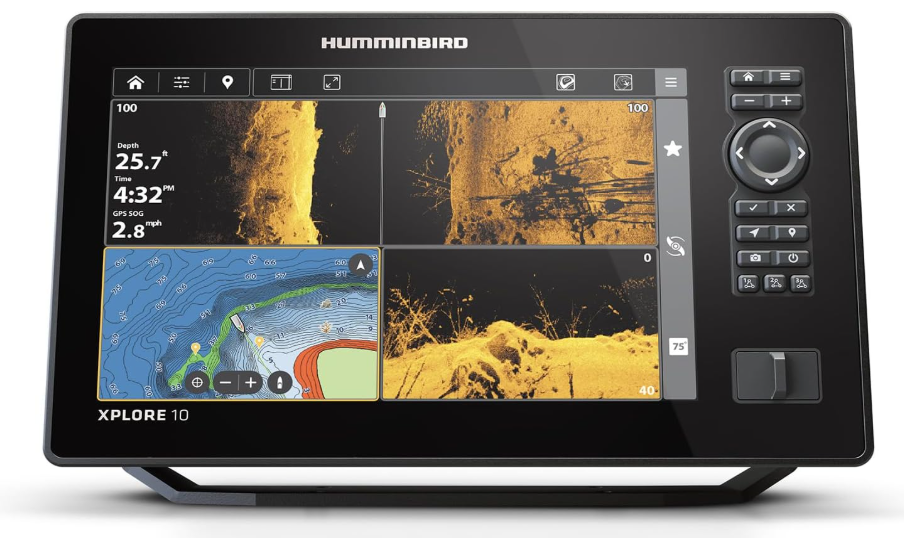
The Garmin STRIKER Vivid 4cv is a compact, easy to use fish finder designed for anglers who want clear sonar images and essential navigation features without investing in an expensive fish finding system. Its 4 inch color display uses vivid scanning sonar color palettes to help distinguish fish from underwater structures, making it easier to understand what is happening beneath the boat. The included GT20 transducer supports Garmin CHIRP traditional sonar and CHIRP ClearVü scanning sonar, providing useful information about fish locations and underwater terrain.
The CHIRP traditional sonar helps anglers identify fish and monitor underwater activity, while ClearVü scanning sonar delivers detailed views of structures beneath the boat. However, the STRIKER Vivid 4cv does not provide true side imaging, so anglers specifically looking for sonar views extending to both sides of their boat will need to consider another model. Its strength lies in providing useful downward scanning capabilities in a budget friendly package.
The built in high sensitivity GPS adds further value by allowing anglers to mark waypoints, create routes, and monitor boat speed. These functions are helpful when returning to productive fishing locations or navigating familiar waters. The Quickdraw Contours mapping feature also allows users to create and save their own fishing maps, helping them build a better understanding of underwater terrain over time.
Installation is straightforward thanks to the included tilt and swivel bail mount bracket, which allows the display to be positioned for convenient viewing. The color screen is compact, making the unit suitable for smaller boats and anglers who prefer a simple setup. Although the 4 inch display may feel limited when viewing detailed sonar information, its combination of GPS, mapping, and scanning sonar makes it a practical option for recreational fishing.
Overall, the Garmin STRIKER Vivid 4cv is worth considering for anglers who want an affordable fish finder with dependable core features, easy operation, and useful navigation tools. It offers good functionality for its class, particularly for locating fish and identifying underwater structures directly below the boat. However, it should not be mistaken for a true side imaging fish finder, as its ClearVü technology focuses on scanning beneath the boat.
Pros
• Clear color display: The vivid sonar color palettes make it easier to distinguish fish and underwater structures.
• CHIRP sonar technology: Includes Garmin CHIRP traditional sonar and CHIRP ClearVü scanning sonar through the GT20 transducer.
• Built in GPS: Allows anglers to mark waypoints, create routes, and monitor boat speed.
• Quickdraw Contours mapping: Enables users to create their own fishing maps to identify potentially productive areas.
• Easy installation: The included tilt and swivel bail mount bracket allows convenient positioning of the display.
• Simple operation: The compact design and accessible features make it suitable for anglers who prefer an uncomplicated fish finding system.
Cons
• No true side imaging: ClearVü scans beneath the boat rather than providing dedicated views to the left and right.
2)Humminbird XPLORE Series Fish Finder
Get it on Amazon
The Humminbird XPLORE Series is an advanced fish finding system designed for anglers who want detailed underwater imaging, reliable navigation, and efficient fishing spot mapping. For those searching for the best budget fish finder with side imaging, it offers impressive sonar capabilities, although its premium features and large display may place it above the price range of entry level models. Its suitability as a budget option depends on the specific model and the price available.
The XPLORE Series features MEGA Side Imaging+ with a range of up to 200 feet on each side of the boat, allowing anglers to examine underwater structures and identify potential fishing areas beyond the boat’s immediate path. MEGA Down Imaging+ provides coverage to depths of up to 200 feet, helping users examine submerged structures beneath the boat. Dual Spectrum CHIRP sonar adds fish detection capabilities and helps distinguish fish from underwater objects. However, the Control Head Only model does not include a transducer, so anglers must account for the cost of obtaining a compatible transducer when planning their setup.
Navigation is another important part of the XPLORE Series. Its built in GPS works with Humminbird Basemap, which covers more than 10,000 lakes and coastal waters and includes terrain information, markers, hazards, and marina locations. The system also includes a LakeMaster and CoastMaster VX map card for regions in the United States and Canada, making it particularly useful for anglers fishing in those areas. Buyers should confirm regional map compatibility before purchasing if they fish elsewhere.
The AutoChart Live technology allows anglers to create real time maps of their fishing locations. It can record depth contours, bottom hardness, and vegetation, helping users identify underwater environments that may attract fish. With eight hours of built in recording time, anglers can map productive areas directly on the water without immediately needing additional recording storage.
The 10 inch interface combines touchscreen controls with keypad operation, giving users flexibility when navigating menus and adjusting settings. Bluetooth connectivity supports wireless anchor control and smartphone notifications, while One Boat Network integration allows the fish finder to work with compatible Minn Kota trolling motors and Cannon products. High speed Ethernet connectivity and built in NMEA 2000 networking also support integration with other compatible marine electronics.
Overall, the Humminbird XPLORE Series is a strong option for anglers who prioritize detailed side imaging, underwater mapping, and advanced navigation. Its 200 foot side imaging range on each side and extensive connectivity make it suitable for serious fishing applications. However, its premium capabilities mean it may not be the most affordable choice for beginners. Anglers should also remember that the Control Head Only version requires a separately obtained transducer, which can increase the total setup cost.
Pros
• Wide side imaging coverage: MEGA Side Imaging+ provides a range of up to 200 feet on each side of the boat for exploring underwater structures.
• Detailed down imaging: MEGA Down Imaging+ offers coverage to depths of up to 200 feet for examining underwater terrain.
• Effective fish detection: Dual Spectrum CHIRP sonar helps anglers locate fish and distinguish underwater structures.
• Advanced GPS navigation: Built in GPS and Humminbird Basemap provide useful navigation information across thousands of lakes and coastal waters.
• Custom mapping capabilities: AutoChart Live records depth contours, bottom hardness, and vegetation to help anglers map productive fishing locations.
• Large display: The 10 inch touchscreen and keypad interface provide convenient access to sonar and navigation functions.
• Wireless connectivity: Bluetooth supports smartphone notifications and compatible wireless anchor control.
• Marine electronics integration: Ethernet and NMEA 2000 networking support connections with compatible devices, including products in the One Boat Network.
Cons
• May exceed a tight budget: Its advanced imaging and navigation capabilities may make it more expensive than basic fish finders.
3)Garmin Striker 7SV with Transducer
Get it on Amazon
The Garmin Striker 7SV with Transducer is a versatile fish finder designed for anglers who want detailed sonar imaging, reliable navigation, and useful mapping features without necessarily investing in a high end marine electronics system. Its 7 inch sunlight readable display provides a clear view of sonar readings, while the intuitive user interface makes it easier to navigate the available functions. For anglers searching for the best budget fish finder with side imaging, this model is worth considering, provided its price fits their budget.
The included transducer supports Garmin CHIRP traditional sonar and CHIRP ClearVü scanning sonar, helping anglers locate fish and examine underwater structures. The STRIKER 7SV platform is also associated with SideVü scanning sonar, which allows users to explore underwater areas to either side of the boat. This combination of traditional sonar and scanning technology can help anglers identify promising fishing locations more efficiently. However, buyers should confirm the exact sonar capabilities supported by their specific package and transducer before purchasing.
Another useful feature is the built in Quickdraw Contours mapping software. It allows anglers to create and store custom maps with 1 foot contours for up to 2 million acres, making it possible to record underwater depth changes and revisit productive fishing locations. These maps can be particularly useful for anglers who regularly fish the same lakes and want a better understanding of the underwater terrain.
The built in GPS makes navigation and fishing spot management more convenient. Anglers can mark waypoints, create routes, and monitor boat speed, allowing them to return to locations where they previously found fish. Built in Wi Fi also provides access to the ActiveCaptain app, where users can receive smart notifications, access the Quickdraw Contours community, transfer waypoints, and receive software update notifications.
The 7 inch display is designed to remain readable in sunlight, which is helpful when fishing outdoors for extended periods. The package includes the STRIKER Plus 7sv unit, a CV52HW TM transducer, a 4 pin to 12 pin transducer adapter cable, transom and trolling motor mounts, a power and data cable, a tilt and swivel mount, and documentation. These accessories help simplify installation, although buyers should verify package contents and compatibility with their particular boat.
Overall, the Garmin Striker 7SV with Transducer offers a useful combination of sonar imaging, custom mapping, GPS navigation, and wireless connectivity. Its larger display and included transducer make it an appealing option for anglers who want more capability than a basic fish finder provides. While it may not be the cheapest model available, it can offer good value for those who want side scanning capabilities alongside practical navigation and mapping tools.
Pros
• Side scanning capability: SideVü technology helps anglers examine underwater structures to either side of the boat, making it easier to explore potential fishing areas.
• CHIRP sonar technology: Garmin CHIRP traditional sonar and CHIRP ClearVü scanning sonar support fish detection and underwater structure identification.
• Large, sunlight readable display: The 7 inch screen provides a clear viewing area for sonar information and navigation data.
• Custom contour mapping: Quickdraw Contours allows anglers to create and store maps with 1 foot depth contours for up to 2 million acres.
• Built in GPS: Waypoints, routes, and boat speed information help anglers navigate and return to productive fishing spots.
• Wi Fi connectivity: ActiveCaptain integration supports smart notifications, waypoint transfers, community access, and software update notifications.
• Useful installation accessories: The included transducer, adapter cable, mounting options, and power and data cable help simplify setup.
Cons
• Not the cheapest option: Its larger display and additional sonar functions may cost more than basic budget fish finders.
4)Lowrance Eagle Fish Finder
 Get it on Amazon
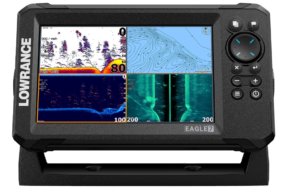
The Lowrance Eagle Fish Finder is a practical option for anglers looking for an affordable fish finder with side imaging, detailed underwater views, and straightforward operation. Equipped with TripleShot HD technology, it combines SideScan, DownScan Imaging, and CHIRP sonar to help locate fish and identify underwater structures both beside and beneath the boat. These capabilities allow anglers to explore a wider area and make more informed decisions about where to fish without necessarily investing in a more expensive marine electronics system.
The TripleShot HD transducer provides three complementary sonar technologies. SideScan helps anglers examine areas to either side of the boat, while DownScan Imaging produces detailed views of underwater structures. CHIRP sonar helps detect fish throughout the water column. Together, these technologies are useful for identifying submerged vegetation, rocky areas, and other structures where fish may gather. For anglers comparing budget fish finders with side imaging, this combination offers useful versatility in one system.
The 7 inch IPS display provides a balanced viewing area for sonar images and charts without taking up as much space as a larger 9 inch unit. Its display is designed to make underwater details easier to interpret, while the FishReveal feature combines CHIRP fish targets with detailed DownScan images. This helps anglers distinguish fish from nearby structures, making it easier to identify potential fishing opportunities in areas with complex underwater terrain.
Navigation and mapping add further value to the Lowrance Eagle. Its C MAP inland charts cover more than 17,000 lakes in the United States, helping anglers navigate familiar waters and identify promising locations. The system also supports Genesis Live mapping, allowing users to create custom maps of fishing areas. However, anglers fishing in Kenya or other regions outside the United States should verify the availability and compatibility of local maps before purchasing, as the advertised inland chart coverage is focused on American lakes.
The Auto Tuning Sonar feature automatically optimizes sonar settings to help users obtain useful readings without making frequent manual adjustments. This is especially helpful for beginners who may not yet understand how to configure sonar for different fishing conditions. The twist lock connector also simplifies transducer installation and removal, making setup and maintenance more convenient.
Overall, the Lowrance Eagle Fish Finder is worth considering for anglers who want side scanning, down scanning, fish detection, and mapping in one accessible system. Its 7 inch display, FishReveal technology, and automatic sonar adjustments make it suitable for both newer anglers and experienced users seeking a straightforward setup. Its value as a budget choice will depend on the price of the specific model, included transducer, and availability of suitable regional maps.
Pros
• Wide area side imaging: TripleShot HD SideScan helps anglers search for fish holding structures on both sides of the boat.
• Extensive lake mapping: C MAP inland charts cover more than 17,000 American lakes, helping anglers navigate supported waters.
• Custom mapping support: Genesis Live lets users create detailed depth contour maps of lakes and other fishing locations.
• Automatic sonar adjustment: Auto Tuning Sonar helps optimize settings, reducing the need for frequent manual adjustments.
• Easy installation: The twist lock connector simplifies connecting and removing compatible equipment.
Cons
• Regional chart limitations: The advertised detailed C MAP inland coverage focuses on American lakes, so anglers in other countries should check local map availability.
5)Humminbird HELIX 7 G4 GPS Fish Finder
Get it on Amazon
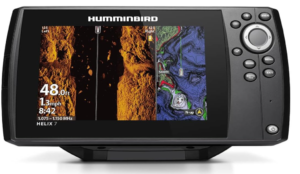
The Humminbird HELIX 7 G4 GPS is a versatile fish finder designed for anglers who want detailed underwater imaging, reliable navigation, and useful mapping features in one system. For those searching for the best budget fish finder with side imaging, this model is worth considering because it combines MEGA Side Imaging, MEGA Down Imaging, and Dual Spectrum CHIRP sonar. Although its advanced imaging technology may cost more than entry level fish finders, it offers useful capabilities for anglers who want to explore underwater terrain and locate fish more effectively.
The MEGA Side and Down Imaging technology allows anglers to view fish, underwater structures, and depth contours up to 125 feet on either side of the boat and 125 feet directly beneath it. According to the supplied specifications, this imaging provides three times more detail than standard imaging sonar. The included transducer makes it possible to use the supported sonar functions without purchasing a separate transducer, although buyers should confirm the exact package contents before ordering.
The Dual Spectrum CHIRP sonar provides two scanning options to suit different fishing conditions. Wide Mode covers a larger area, helping anglers search for fish across broader sections of water, while Narrow Mode focuses on a smaller area for more detailed scanning. The Low Q transducer supports precise target separation, helping anglers distinguish individual fish and identify structures that may hold them. These features make the HELIX 7 G4 GPS useful for fishing in unfamiliar waters as well as revisiting known locations.
Navigation is another useful part of this fish finder. Its built in GPS works with Humminbird Basemap, which includes coverage of more than 10,000 lakes and continental United States coastlines. The unit is also compatible with premium LakeMaster, CoastMaster, and Navionics charts, giving anglers additional mapping options depending on their location and needs. However, buyers fishing outside the United States should verify local chart coverage and compatibility before purchasing.
The AutoChart Live feature allows anglers to create real time maps while boating. It records depth contours, bottom hardness, and vegetation, helping users develop a better understanding of underwater environments and identify potentially productive fishing spots. The system includes eight hours of built in recording time and supports AutoChart Zero Line SD cards for expanded mapping capacity. This is particularly useful for anglers who regularly fish the same waters and want to build detailed maps over time.
The 7 inch display uses a keypad operated menu system with softkey controls. Rather than relying entirely on touchscreen operation, the HELIX 7 G4 GPS provides physical buttons for navigating menus and accessing preloaded views and settings. This approach can be convenient in changing weather conditions, especially when anglers need dependable controls while operating the boat.
Overall, the Humminbird HELIX 7 G4 GPS is a strong option for anglers who prioritize side imaging, down imaging, fish detection, and custom mapping. Its included transducer, flexible CHIRP sonar modes, and built in GPS make it a capable fishing tool. While it may not be the cheapest choice for beginners, it offers a useful combination of features for those seeking a more detailed view of underwater environments.
” target=”blank” style=”circle” background=” #f58c1c” size=”9″ center=”yes” radius=”10″ icon=”” class=”checkOnAmazon”] Check Price on Amazon [/su_button]Pros
• Detailed side imaging: MEGA Side Imaging provides views up to 125 feet on either side of the boat, helping anglers locate underwater structures and potential fishing areas.
• Clear down imaging: MEGA Down Imaging provides detailed views of underwater terrain directly beneath the boat.
• Dual Spectrum CHIRP sonar: Wide Mode provides broader coverage, while Narrow Mode supports more focused scanning and precise fish target separation.
• Included transducer: The supplied transducer supports the fish finder’s sonar capabilities without requiring a separate initial purchase.
• Built in GPS navigation: Humminbird Basemap provides coverage of more than 10,000 lakes and continental United States coastlines.
• Real time mapping: AutoChart Live records depth contours, bottom hardness, and vegetation to help anglers map productive locations.
• Expandable chart compatibility: Support for LakeMaster, CoastMaster, and Navionics charts provides additional mapping options.
• Reliable physical controls: The keypad interface allows anglers to operate the menu system and access settings without depending on touchscreen controls.
Cons
• May exceed a tight budget: Its advanced MEGA imaging technology may make it more expensive than basic fish finders.
You may also like to read Best Fish Finder and Gps
Best Budget Fish Finder with Side Imaging Advantages
1. Wider Underwater Coverage
A fish finder with side imaging allows anglers to scan areas on both sides of the boat instead of relying only on sonar readings directly beneath it. This wider coverage helps identify submerged rocks, vegetation, drop offs, and other underwater structures where fish may gather. By examining a larger area, anglers can locate promising fishing spots more efficiently and spend less time searching unproductive waters.
2. Improved Fish Detection
Modern fish finders combine side imaging with traditional sonar and other scanning technologies to help anglers identify fish and understand their surroundings. These capabilities make it easier to distinguish fish targets from underwater structures and vegetation. Better fish detection can help anglers make informed decisions about where to cast their lines and which areas deserve more attention.
3. Better Value for Money
Choosing a budget friendly fish finder with side imaging allows anglers to access useful underwater imaging technology without necessarily paying for the most expensive marine electronics. Many affordable models combine sonar, GPS navigation, and mapping features in one device. This helps anglers balance performance and cost while selecting equipment that suits their fishing needs.
4. Easier Identification of Underwater Structures
Underwater structures such as submerged trees, rocky formations, weed beds, and ledges can attract fish by providing shelter and feeding opportunities. Side imaging produces detailed views of these features beyond the boat’s immediate path. Understanding the underwater environment helps anglers select better casting locations and adjust their fishing techniques according to the conditions.
5. More Efficient Fishing Trips
Searching for fish manually can take considerable time, especially in unfamiliar lakes and reservoirs. A fish finder with side imaging helps anglers scan larger areas and identify locations that appear promising. This can reduce time spent searching empty water and allow more time for casting, experimenting with different techniques, and targeting likely fish holding areas.
6. Convenient GPS Navigation and Waypoint Marking
Many budget fish finders include built in GPS, allowing anglers to mark productive fishing spots and return to them on future trips. Some models also support route creation and boat speed monitoring. These functions are especially useful when fishing large lakes, navigating unfamiliar waters, or revisiting locations where previous fishing sessions were successful.
7. Custom Mapping Capabilities
Fish finders with mapping features can help anglers understand changes in underwater depth and identify potentially productive areas. Depending on the model, custom mapping tools may record depth contours, bottom hardness, and underwater vegetation. These maps provide useful information for planning future trips and developing a better understanding of familiar fishing locations.
8. Greater Convenience and Ease of Use
Many modern fish finders offer color displays, intuitive controls, automatic sonar adjustments, and straightforward installation options. These features make them accessible to beginners while still providing useful functions for experienced anglers. Choosing a model with a suitable screen size, a compatible transducer, and easy to understand controls can improve the fishing experience without requiring an unnecessarily complicated setup.
Factors to Consider When Choosing the Best Budget Fish Finder with Side Imaging
Budget and Overall Cost
Price is one of the most important factors when choosing a budget fish finder with side imaging. Compare the available models based on their sonar capabilities, display quality, GPS functions, and mapping features rather than choosing the cheapest option automatically. Remember to consider additional expenses such as compatible transducers, mounting accessories, chart cards, and installation equipment. The best choice should provide the features you need while remaining within your budget.
Side Imaging Range and Clarity
Side imaging range determines how far the fish finder can scan areas to the left and right of your boat. A wider scanning range can help you explore more underwater terrain, while image clarity affects how easily you can distinguish fish, rocks, vegetation, and submerged structures. Consider your usual fishing environment and choose a system that provides sufficient coverage and detail for the waters you frequent.
Sonar Technology
Different sonar technologies serve different purposes, so it is important to understand what each system offers. Side imaging helps examine underwater areas beside the boat, down imaging provides detailed views beneath it, and traditional CHIRP sonar helps detect fish and separate targets. Some fish finders combine these technologies to provide a more complete picture of underwater conditions. Choose a model with sonar functions that match your fishing style and experience level.
Display Size and Readability
The display determines how comfortably you can view sonar images, depth readings, and navigation information while fishing. Larger screens generally provide more room for examining detailed images and viewing multiple information panels, but they can increase the cost and require more mounting space. Look for a screen with clear colors, good sunlight readability, and controls that are easy to operate while on the water.
GPS and Navigation Features
Built in GPS can make fishing trips more efficient by allowing you to mark waypoints, create routes, and return to productive fishing locations. Some models also provide boat speed information and support navigation charts. Consider whether you need basic waypoint marking or more advanced navigation capabilities. Reliable GPS features can be particularly useful when exploring unfamiliar lakes or fishing in large bodies of water.
Mapping and Chart Compatibility
Mapping features help anglers understand underwater depth changes and identify potentially productive fishing areas. Some fish finders allow you to create custom contour maps, record bottom hardness, or map underwater vegetation. Others support preloaded charts or separately purchased mapping cards. Check whether the available maps cover your fishing locations, especially if you fish outside the United States, and determine whether additional storage or chart purchases are necessary.
Transducer and Installation Requirements
The transducer is essential because it sends and receives sonar signals to produce underwater images. Before purchasing, confirm that the required transducer is included and supports the advertised side imaging capabilities. Some packages sell only the display unit, meaning you must purchase a compatible transducer separately. Also consider mounting options, cable connections, power requirements, and whether the installation suits your boat or trolling motor.
Ease of Use, Durability, and Connectivity
A fish finder should be simple enough to operate without constant adjustments or complicated setup procedures. Features such as automatic sonar tuning, intuitive menus, physical buttons, and clear instructions can make operation easier for beginners. Consider the unit’s suitability for regular outdoor use and check its weather resistance specifications. Wi Fi, Bluetooth, and marine networking can provide additional convenience, but make sure these features are genuinely useful for your fishing needs before paying extra for them.
Best Budget Fish Finder with Side Imaging FAQs
1. What is the best budget fish finder with side imaging?
The best budget fish finder with side imaging is one that offers clear underwater images, reliable fish detection, and useful features such as GPS and mapping at an affordable price. Consider the side imaging range, display quality, and included transducer when comparing options. The right choice should provide the essential features you need without exceeding your budget.
2. Is side imaging worth it on a budget fish finder?
Yes, side imaging is useful because it allows anglers to examine underwater areas to the left and right of their boat. This helps locate submerged structures, vegetation, rocks, and potential fish holding areas that may not be visible with traditional sonar alone. For anglers who want to explore larger areas efficiently, side imaging can be a worthwhile investment.
3. What features should I look for in a budget fish finder with side imaging?
Look for genuine side imaging technology, a compatible transducer, clear display quality, and reliable sonar performance. GPS and waypoint marking are valuable for returning to productive fishing locations, while mapping features can help you understand underwater depths and structures. Also consider ease of installation, durability, and the total cost of any accessories needed to operate the device.
Conclusion
The best budget fish finder with side imaging is one that combines clear underwater imaging, reliable fish detection, practical GPS navigation, and useful mapping features at a price that suits your budget. While some models offer wider scanning coverage and more advanced sonar technology, others provide a larger display, simpler controls, or better value for beginners.
The main difference comes down to the balance between imaging performance, ease of use, included accessories, and overall cost. Before making your final choice, compare the side imaging range, transducer compatibility, chart coverage, and additional features to ensure the device meets your fishing needs. Ultimately, the right budget fish finder will help you explore underwater structures more efficiently, identify promising fishing locations, and make every fishing trip more productive without paying for features you do not need.