
Choosing the best camera for landscape photography means finding a model that can capture fine details, handle changing outdoor light, and work well with lenses suited to expansive scenery. The cameras discussed above offer a combination of high resolution sensors, strong low light performance, image stabilization, wide angle lens compatibility, reliable autofocus, and advanced video capabilities, making them useful for photographing mountains, forests, coastlines, waterfalls, and other scenic locations.
In this guide, we’ll cover the important features to look for, review the top picks, explain the key factors to consider before buying, and answer common questions in the FAQs.
Best Camera for Landscape Photography
1)Canon EOS 5D Mark IV
Get it on Amazon
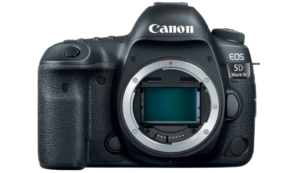
The Canon EOS 5D Mark IV is a strong option for landscape photography because it combines a high resolution full frame sensor with dependable performance and flexible shooting capabilities. Its 30.4 megapixel CMOS sensor captures detailed images with rich tonal information, making it suitable for expansive landscapes, mountain scenes, forests, coastlines, and other subjects where fine details matter. The camera also performs well across a broad range of lighting conditions, giving landscape photographers useful flexibility when shooting from bright daylight into lower light.
The DIGIC 6+ image processor helps the EOS 5D Mark IV deliver responsive operation and continuous shooting speeds of up to 7 frames per second. While landscape photography does not always require fast burst shooting, this speed can be useful when photographing moving elements such as waves, wildlife, clouds, or changing weather conditions. The ISO range of 100 to 32000, expandable from 50 to 102400, also provides flexibility when working in different lighting situations, although landscape photographers will often prefer lower ISO settings when maximum image quality is the priority.
For photographers who also want video capabilities, the EOS 5D Mark IV records 4K Motion JPEG video at 30 or 24 frames per second. It can also record Full HD at up to 60 fps and HD at up to 120 fps. This makes the camera useful for creating videos of scenic locations, travel experiences, and outdoor adventures alongside still landscape photographs.
The advanced Dual Pixel CMOS AF system provides responsive and smooth autofocus during Live View and video shooting. The full touchscreen LCD makes it easier to select the autofocus area and navigate the camera’s controls. For landscape photography, the touchscreen can be particularly convenient when composing images from different positions or using Live View on a tripod.
Built in Wi Fi provides another practical advantage for photographers who want to review and transfer images without immediately connecting the camera to a computer. Through the Canon Camera Connect app, images can be transferred to a compatible mobile device for browsing and sharing. This can be useful for photographers who want to share landscape images while traveling rather than waiting until they return home.
The EOS 5D Mark IV also offers the flexibility expected from a full frame DSLR, making it suitable for photographers who want to build a landscape photography system around interchangeable lenses. Pairing it with an appropriate wide angle lens can provide a broad perspective for dramatic scenery, while other focal lengths can be used for distant mountains, compressed landscapes, and detailed elements within a scene.
Another benefit is its versatility beyond landscape photography. The 30.4 megapixel sensor, fast processor, broad ISO range, strong autofocus system, and video capabilities allow the camera to handle a variety of photographic situations. This makes it a practical choice for someone who wants one camera for landscapes as well as travel, nature, portraits, and general photography.
For landscape photographers, the EOS 5D Mark IV is particularly useful when image detail, full frame performance, interchangeable lenses, and overall versatility are important. Its combination of a 30.4 megapixel sensor, DIGIC 6+ processor, broad ISO range, touchscreen operation, 4K recording, and Wi Fi connectivity gives photographers plenty of flexibility for both still photography and video.
Pros
• 30.4 megapixel full frame CMOS sensor delivers detailed landscape images
• Broad ISO range provides flexibility in changing lighting conditions
• DIGIC 6+ processor supports responsive performance and up to 7 fps continuous shooting
• Full touchscreen LCD makes Live View composition and AF area selection convenient
• Dual Pixel CMOS AF provides smooth autofocus during Live View and video recording
• 4K video recording adds versatility for landscape and travel content
• Built in Wi Fi makes wireless image transfer and sharing more convenient
• Interchangeable lens system allows photographers to choose lenses suited to different landscape scenes
Cons
• DSLR design is larger and heavier than many modern mirrorless alternatives
2)Fujifilm X-T50
Get it on Amazon
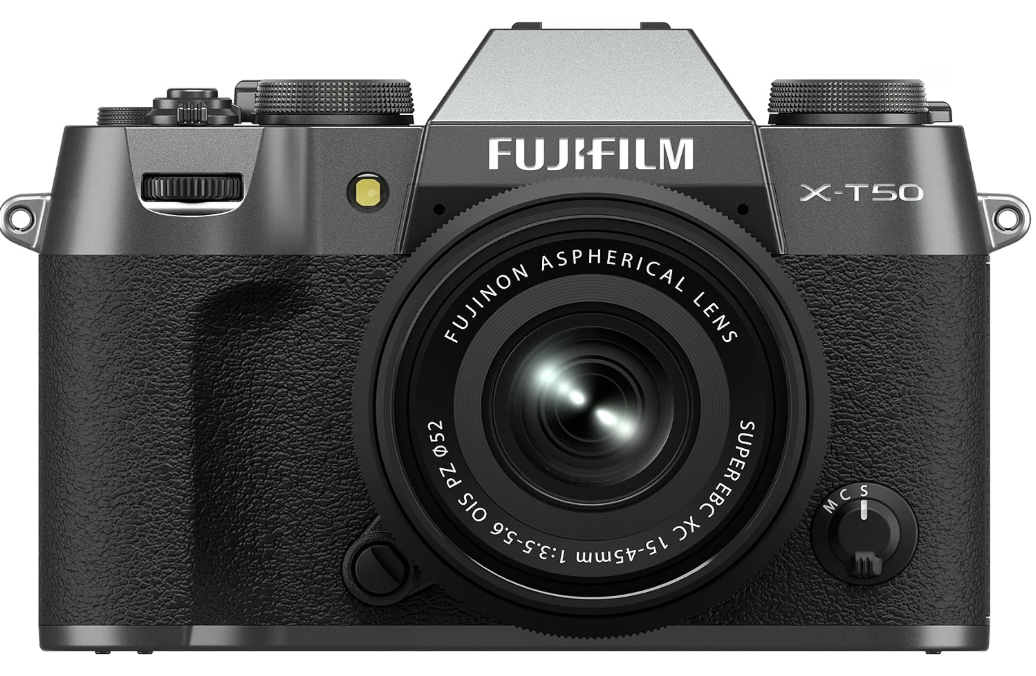
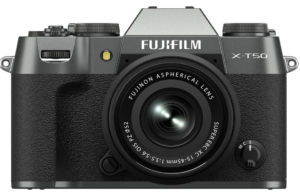
The Fujifilm X-T50 is a compact mirrorless camera that can be a strong choice for landscape photography, particularly for photographers who want high resolution in a relatively portable body. Its 40.2 megapixel X-Trans CMOS 5 HR sensor provides plenty of detail for capturing mountain ranges, forests, coastlines, architecture, and other expansive scenes. The high resolution also gives photographers more flexibility when cropping images while retaining useful detail.
One of the most useful features for creative landscape photography is the dedicated Film Simulation dial. It provides quick access to 20 Film Simulations, including the REALA ACE mode, allowing photographers to change the appearance of their images directly in the camera. This can be convenient when photographing landscapes in different conditions and when you want a particular color or tonal style without spending as much time editing afterward.
The X-T50 supports all X Series lenses, giving landscape photographers considerable flexibility when choosing their setup. A wide angle lens can be used to emphasize dramatic foregrounds and expansive scenery, while telephoto options can isolate distant mountains, trees, or other landscape details. The camera also includes 1.4x and 2x Digital Teleconverter options, providing additional framing flexibility when getting physically closer to a distant subject is not practical.
For photographers who want to combine still photography with video, the X-T50 offers extensive recording options. It can capture 6.2K video at 30P, 4K at 60P, and Full HD at up to 240P. Its 4:2:2 10 bit video capability also provides greater flexibility for editing and color grading. This makes the camera suitable for creating scenic travel videos, nature footage, and other landscape related content alongside still photographs.
The X-T50 also supports native Frame.io Camera to Cloud integration without requiring additional accessories. This can simplify workflows for photographers and content creators who need to move their work into a cloud based production environment. For landscape photographers who frequently travel and work with others remotely, this feature can make transferring footage into a production workflow more convenient.
The combination of high resolution and the X Series lens system makes the X-T50 adaptable to different landscape photography styles. Photographers can use the 40.2 megapixel sensor for detailed wide scenes or crop into portions of an image when a particular mountain, building, or natural feature needs more emphasis. This flexibility can be especially useful when the shooting location does not allow much time to change lenses or reposition.
Its mirrorless design also makes the X-T50 appealing for photographers who want a capable camera without carrying a larger DSLR body. When paired with a suitable X Series lens, it can provide a practical setup for hiking, travel, and outdoor photography where portability matters. The camera’s creative controls also make it easy to experiment with different looks while photographing changing landscapes.
For landscape photographers who value resolution, creative image processing, lens flexibility, and video capabilities, the Fujifilm X-T50 offers a well rounded package. The 40.2 megapixel X-Trans CMOS 5 HR sensor provides substantial detail, while the 20 Film Simulations, digital teleconverter options, extensive video modes, and Frame.io integration add flexibility for both photography and content creation.
Pros
• 40.2 megapixel X-Trans CMOS 5 HR sensor captures highly detailed landscape images
• Dedicated Film Simulation dial provides quick access to 20 Film Simulations
• REALA ACE Film Simulation offers another creative option for landscape images
• Compatible with the full range of Fujifilm X Series lenses
• 1.4x and 2x Digital Teleconverter options provide additional framing flexibility
• Supports 6.2K/30P, 4K/60P, and Full HD/240P video recording
• 4:2:2 10 bit video provides flexibility for post production and color grading
• Native Frame.io Camera to Cloud integration works without additional accessories
Cons
• The extensive features may be more than some landscape photographers need
3)Canon EOS RP Mirrorless Camera

Get it on Amazon
The Canon EOS RP Mirrorless Camera paired with the RF 24 105mm lens is a versatile option for landscape photography, especially for photographers who want a compact full frame setup with a flexible focal range. The 24 105mm zoom range covers useful perspectives for landscapes, from wider scenes at 24mm to more tightly framed mountains, buildings, trees, and distant details at 105mm. This flexibility can reduce the need to carry several lenses when traveling or hiking.
The RF 24 105mm lens is designed to provide high image quality while maintaining a compact and lightweight design. Its 24mm wide angle setting can be useful for capturing expansive landscapes where you want to include more of the foreground and surrounding scenery. Moving toward 105mm allows you to isolate individual elements within a landscape, making the lens suitable for photographers who want both broad views and more focused compositions.
Optical Image Stabilization provides up to 5 stops of shake correction, which can be helpful when photographing landscapes handheld. Stabilization can make it easier to capture sharp images when shooting in lower light or when a tripod is not convenient to carry. For photographers exploring trails, viewpoints, and other outdoor locations, this added flexibility can be particularly useful.
The lens also offers useful close focusing capabilities. In autofocus mode, it provides a maximum magnification of 0.4x with a minimum focusing distance of 0.66 feet. When using Center Focus Macro, magnification increases to 0.5x with a minimum focusing distance of 0.43 feet. This gives landscape photographers the option to photograph smaller natural details such as flowers, leaves, rocks, and textures alongside wider scenic views.
The EOS RP can also be used for video, with 4K UHD 2160p video capture. This makes the camera useful for photographers who want to document landscapes through both still images and video. Scenic locations, travel footage, and outdoor experiences can be recorded without needing a separate camera for basic video work.
Another practical feature is the ability to use the EOS Utility Webcam Beta Software on Mac and Windows to turn the Canon camera into a high quality webcam. Alternatively, a clean HDMI output can be used for compatible setups. While this is not directly related to landscape photography, it adds versatility for photographers who also use their camera for online meetings, streaming, or content creation.
The combination of the EOS RP and RF 24 105mm lens provides a practical setup for travel and outdoor photography. Rather than relying on a single fixed focal length, photographers can adjust the composition quickly as the landscape changes. The relatively compact lens design and image stabilization also make the combination convenient for photographers who spend long periods carrying their equipment outdoors.
For landscape photography, this Canon setup is suited to photographers who value versatility and portability. The 24 105mm zoom range, up to 5 stops of optical image stabilization, close focusing capabilities, 4K video, and webcam functionality give the EOS RP with RF 24 105mm lens a broad range of uses beyond traditional landscape photography.
Pros
• Versatile 24 105mm zoom range covers wide and telephoto landscape compositions
• Compact and lightweight RF lens design is convenient for travel and outdoor photography
• Optical Image Stabilization provides up to 5 stops of shake correction
• 0.4x maximum magnification provides useful close focusing capability
• Center Focus Macro increases maximum magnification to 0.5x
• Minimum focusing distance can be as close as 0.43 feet in Center Focus Macro
• Supports 4K UHD 2160p video recording
• Can be used as a high quality webcam through EOS Utility Webcam Beta Software or clean HDMI output
Cons
• The 24mm wide end may not be wide enough for photographers who prefer extremely expansive landscape compositions
5)Canon EOS R5
Get it on Amazon
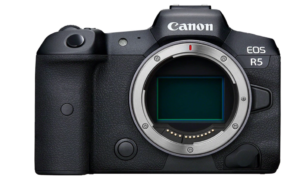
The Canon EOS R5 is a high resolution full frame mirrorless camera that offers the image quality and performance needed for demanding landscape photography. Its 45 megapixel full frame CMOS sensor captures a high level of detail, making it well suited to expansive mountain ranges, forests, coastlines, waterfalls, and other scenes where fine textures are important. The sensor is also designed to provide strong low light performance, giving photographers flexibility when shooting during early morning, late evening, or changing weather conditions.
The DIGIC X image processor works with the 45 megapixel sensor to provide fast processing, detailed images, and improved noise management. Its ISO range of 100 to 51200, expandable to 102400, gives landscape photographers flexibility when working across different lighting conditions. For the highest image quality, photographers can still choose lower ISO settings when conditions allow, particularly when using a tripod for carefully composed landscape images.
The EOS R5 also offers fast continuous shooting, with speeds of up to 12 fps using the mechanical shutter and up to 20 fps using the electronic shutter. While landscapes are often photographed at a slower pace, this speed can be useful when the scene includes moving elements such as waves, flowing water, birds, wildlife, or rapidly changing clouds. It gives photographers more opportunities to capture a particular moment when the landscape is constantly changing.
Its Dual Pixel CMOS AF system provides 1,053 autofocus points covering approximately 100 percent of the image area. Subject tracking can recognize and follow people, animals, and vehicles using deep learning technology. For landscape photographers who also photograph wildlife or outdoor subjects, this autofocus system adds considerable flexibility without requiring a separate camera.
The EOS R5 also includes Eye Control AF, allowing photographers to select focus points by looking at them. This provides another method of controlling autofocus and can make focus selection more intuitive in certain shooting situations. Combined with the camera’s subject tracking capabilities, it gives photographers several ways to manage focus when moving between landscapes, people, animals, and other subjects.
For photographers who create both photographs and video, the EOS R5 provides extensive high resolution recording capabilities. It can internally record 8K RAW as well as 4K video at up to 120 fps in all formats with autofocus. This makes it suitable for producing detailed landscape footage, slow motion sequences, travel videos, and other outdoor content alongside high resolution still images.
The camera’s high resolution sensor also gives landscape photographers additional flexibility when cropping. A large scene can contain several interesting areas, and the 45 megapixel resolution allows photographers to reframe an image during editing while retaining substantial detail. This can be useful when a photographer cannot easily change position or move closer to a distant landscape feature.
Overall, the Canon EOS R5 is designed for photographers who want high resolution still images, advanced autofocus, fast performance, and professional level video capabilities in one mirrorless camera. Its 45 megapixel full frame sensor, DIGIC X processor, broad ISO range, fast continuous shooting, extensive autofocus system, and 8K recording make it a versatile option for landscape photography and other demanding outdoor subjects.
Pros
• 45 megapixel full frame CMOS sensor captures highly detailed landscape images
• Strong low light performance provides flexibility for sunrise, sunset, and evening photography
• DIGIC X processor provides fast image processing and noise reduction
• ISO range of 100 to 51200 provides broad shooting flexibility
• Up to 12 fps mechanical and 20 fps electronic continuous shooting
• Dual Pixel CMOS AF provides extensive autofocus coverage
• Subject tracking supports people, animals, and vehicles
• Eye Control AF provides an additional way to select focus points
• 8K RAW and 4K up to 120 fps internal video recording provide extensive video capabilities
Cons
• The extensive professional features may be more than a casual landscape photographer needs
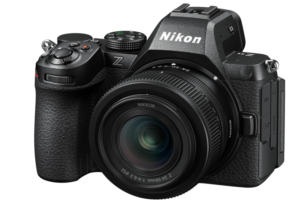
5)Nikon Z5 II with Wide-Angle Zoom Lens
Get it on Amazon
The Nikon Z5 II with a wide angle zoom lens is a capable full frame mirrorless setup for landscape photographers who want a combination of image quality, stabilization, autofocus, and versatile focal lengths. Its 24.5 megapixel BSI CMOS FX format sensor provides detailed images while maintaining flexibility for shooting in different lighting conditions. Paired with a wide angle zoom lens, the camera can capture expansive mountain ranges, coastlines, forests, cityscapes, and other scenic locations while allowing photographers to adjust the composition without changing lenses.
The EXPEED 7 processing engine supports high speed performance and continuous shooting of up to 30 fps. Although landscape photography often involves carefully composed single images, fast shooting can be useful when photographing moving elements such as waves, waterfalls, wildlife, birds, or rapidly changing weather. The processing system also contributes to the camera’s ability to handle demanding photography and video tasks efficiently.
Low light performance is another useful capability for landscape photography. The Nikon Z5 II can autofocus in near total darkness, with AF detection down to -10EV. This can be particularly helpful when photographing landscapes around dawn, dusk, or in other low light conditions. Built in image stabilization provides up to 7.5 stops of correction, helping photographers capture sharper handheld images when shutter speeds need to be slower.
The camera’s autofocus system can automatically detect nine types of subjects, including people, birds, dogs, cats, cars, bicycles, motorcycles, trains, and airplanes. This gives the Z5 II versatility for photographers who combine landscape photography with nature, wildlife, travel, and outdoor photography. When a scenic location includes a bird or another moving subject, the autofocus system can help maintain focus without requiring the photographer to switch to a completely different focusing setup.
The electronic viewfinder provides a detailed shooting experience with a maximum brightness of 3000 nits. This can be particularly useful when composing images outdoors under bright sunlight, where viewing a camera screen can sometimes be difficult. The bright EVF also gives photographers a clear way to assess compositions before capturing landscapes.
Nikon Imaging Cloud adds another convenient workflow option. The camera can support downloadable Picture Controls, automatic image transfers to preferred storage sites, and automatic firmware updates. For landscape photographers who travel frequently, these features can reduce the amount of manual work involved in transferring and maintaining camera files.
Nikon SnapBridge provides another way to manage images while traveling. Photos and short video clips can be transferred wirelessly to a compatible smartphone or tablet, and the smart device can also be used as a wireless remote release with Live View. This can be useful for tripod based landscape photography when the photographer wants to trigger the camera without physically touching it.
The Z5 II also provides strong video capabilities for photographers who want to create landscape content beyond still images. It supports 4K/60p recording and in camera 12 bit N RAW recording, providing options for high resolution video and more advanced post production. This makes the camera suitable for scenic videos, travel content, outdoor projects, and other forms of visual storytelling.
For landscape photographers, the Nikon Z5 II combines a full frame sensor, wide angle zoom flexibility, strong low light autofocus, substantial image stabilization, a bright electronic viewfinder, wireless connectivity, and advanced video recording. It is a versatile setup for photographers who want to capture detailed landscapes while also having the flexibility to photograph wildlife, travel subjects, and video content.
Pros
• 24.5 megapixel full frame BSI CMOS sensor provides detailed landscape images
• EXPEED 7 processing engine supports fast performance and up to 30 fps shooting
• Autofocus detection down to -10EV is useful for low light landscape photography
• Up to 7.5 stops of built in image stabilization helps with handheld shooting
• Wide angle zoom lens provides flexibility for expansive and varied landscape compositions
• Detects nine subject types including birds, dogs, cats, cars, trains, and airplanes
• Bright 3000 nit electronic viewfinder can make outdoor composition easier
• Nikon Imaging Cloud supports automatic transfers, Picture Controls, and firmware updates
• SnapBridge enables wireless photo transfers and remote shooting with a compatible device
• Supports 4K/60p and in camera 12 bit N RAW video recording
Cons
• 24.5 megapixels provides less resolution for heavy cropping than some higher resolution cameras
You may also like to read Best Mirrorless Zoom Lens
Best Camera for Landscape Photography Advantages
High Image Resolution.
A high resolution sensor allows you to capture fine details in mountains, forests, coastlines, buildings, and other landscape subjects. More megapixels can also provide greater flexibility when cropping an image while retaining useful detail.
Full Frame Image Quality.
A full frame sensor can provide excellent image quality, strong dynamic range, and good performance in different lighting conditions. This is particularly useful for landscapes photographed during sunrise, sunset, overcast weather, or other challenging conditions.
Wide Angle Lens Flexibility.
A wide angle lens allows you to capture expansive scenery while including more of the foreground and surrounding environment. A zoom lens can provide additional flexibility by allowing you to move between broad compositions and more focused views without changing lenses.
Low Light Performance.
Good low light capability is valuable when photographing landscapes during early morning, late evening, or in shaded environments. A camera that performs well at higher ISO settings can help maintain image quality when there is less available light.
Image Stabilization.
Built in image stabilization can help reduce camera shake when shooting handheld at slower shutter speeds. This is especially useful when traveling or hiking where carrying and setting up a tripod is not always convenient.
Accurate Autofocus.
Reliable autofocus can help maintain sharpness when landscapes include moving subjects such as birds, wildlife, people, vehicles, or flowing water. Advanced subject detection can also make the camera more versatile for photographers who capture more than static scenery.
High Quality Video.
Strong video capabilities allow photographers to record landscapes as well as still photographs. Features such as 4K or higher resolution recording and high frame rates can be useful for travel videos, scenic footage, and outdoor content creation.
Portable and Convenient Design.
A relatively compact and manageable camera setup is valuable for landscape photography because photographers often travel long distances or hike to viewpoints. Wireless image transfer, remote shooting, bright electronic viewfinders, and other convenient features can also make outdoor photography easier.
Factors to Consider When Choosing Best Camera for Landscape Photography
Sensor Resolution.
Consider the camera’s megapixel count because landscape photography often benefits from capturing fine details across large scenes. Higher resolution can also give you more freedom to crop distant subjects while maintaining good image quality.
Sensor Size.
Sensor size affects image quality, low light performance, dynamic range, and lens characteristics. A full frame sensor is often useful for landscape photography because it can provide detailed images and a broad field of view when paired with suitable wide angle lenses.
Lens Selection.
Consider the range of lenses available for the camera system. A wide angle lens is useful for expansive scenery, while a zoom lens provides flexibility for photographing distant mountains, wildlife, architectural details, and smaller elements within a landscape.
Low Light Performance.
Landscapes are frequently photographed during sunrise, sunset, and overcast conditions, so good low light performance is important. Look for a camera that can maintain image quality at higher ISO settings while controlling noise effectively.
Image Stabilization.
Built in image stabilization can help reduce camera shake when shooting handheld at slower shutter speeds. This is particularly useful when hiking or traveling, where carrying a tripod may not always be practical.
Dynamic Range.
A camera with good dynamic range can retain more detail in both bright skies and darker foreground areas. This is especially important for landscapes with strong contrasts between sunlight, shadows, and clouds.
Weather Resistance and Durability.
Landscape photography often takes place outdoors in changing conditions, so consider how well the camera and lens can handle dust, moisture, and general outdoor use. A durable setup can provide greater confidence when photographing in challenging environments.
Portability and Battery Life.
Consider the overall weight and size of the camera, lenses, and accessories, especially if you plan to hike or travel with your equipment. Good battery life is also important because landscape photography sessions can last several hours and may take place far from convenient charging points.
Best Camera for Landscape Photography
1. What type of camera is best for landscape photography?
A camera with a high resolution sensor, good dynamic range, strong low light performance, and compatibility with wide angle lenses is well suited to landscape photography. Full frame mirrorless and DSLR cameras can both produce excellent results when paired with an appropriate lens.
2. How many megapixels do I need for landscape photography?
There is no specific megapixel requirement, but higher resolution can be useful for capturing fine landscape details and allowing greater flexibility when cropping. A camera with around 24 megapixels or more can provide plenty of resolution for many landscape photography needs.
3. Do I need image stabilization for landscape photography?
Image stabilization is not essential, particularly when using a tripod, but it can be very useful for handheld landscape photography. It helps reduce camera shake when using slower shutter speeds, especially in low light or when photographing landscapes during sunrise and sunset.
Conclusion
The best camera for landscape photography finder should make choosing the right camera simpler by looking beyond megapixel counts and focusing on what actually matters outdoors. From high resolution sensors and dynamic range to low light performance, image stabilization, lens flexibility, portability, and weather resistance, each factor can affect how confidently you capture changing landscapes.
Whether you prefer expansive views, detailed distant scenes, sunrise photography, or landscape video, the right choice depends on matching these capabilities to your photography style, shooting conditions, and travel needs.