
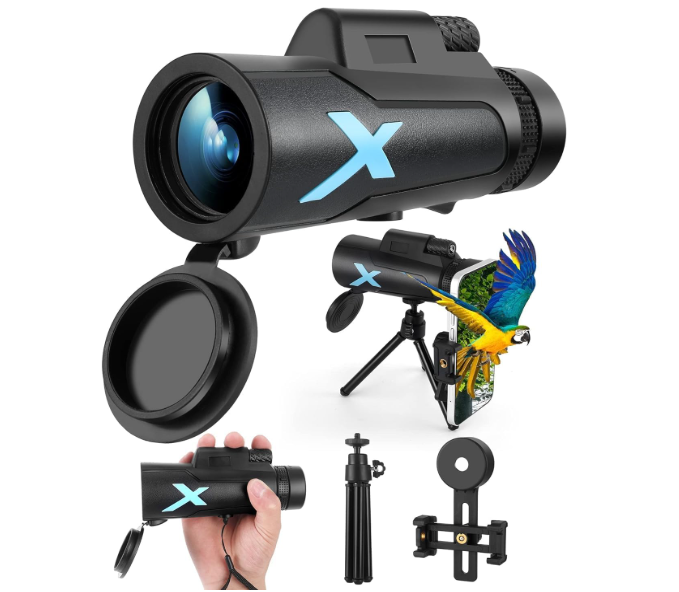
Choosing the best monocular telescope for smartphone can make it easier to enjoy distant views while also capturing them as photos and videos. The top options combine quality optics, useful magnification, bright objective lenses, smartphone compatibility, and stable tripod support to deliver clear and detailed viewing for birdwatching, wildlife, sports, travel, concerts, and sightseeing. They also offer features such as multi-coated lenses, BAK4 prisms, waterproof construction, and comfortable designs for dependable outdoor use. In this guide, we’ll explore the key features, top picks, buying factors, and FAQs to help you choose a monocular that offers the right combination of optical performance, portability, smartphone functionality, and value.
Best Monocular Telescope for Smartphone
1)HuaZiChok 12×50 High Power HD Monocular Telescope
Get it on Amazon
The HuaZiChok 12×50 High Power HD Monocular Telescope is designed for users who want powerful magnification and convenient smartphone compatibility in a compact optical device. With 12X magnification, a 6.5° wide field of view, and a large 53mm objective lens, it is well suited to activities such as hiking, camping, bird watching, sports, concerts, travel, and sightseeing. The included smartphone holder and tripod also make it easier to capture and share distant views.
The monocular uses Fully Multi-Coated optics and a BAK4 prism to improve light transmission, contrast, and color accuracy. These features help produce brighter and clearer images, particularly when viewing distant subjects. The 20mm large eyepiece is designed to provide a comfortable viewing experience, whether you wear glasses or not, and can make extended viewing sessions more pleasant.
Its 12X magnification and 6.5° wide field of view offer a useful balance between detail and viewing area. You can observe wildlife, landscapes, sporting events, and other distant subjects without relying on a narrow field of view. The large objective lens also helps the monocular gather more light, which can be useful when viewing scenes in changing outdoor conditions.
One of the most useful additions is the smartphone adapter and tripod. The phone holder is compatible with a wide range of smartphones, including iPhone, Samsung, Sony, Google, LG, and HTC models. The included tripod can be adjusted to two different angles and three different lengths, providing additional stability when photographing or recording distant subjects through the monocular.
The portable carrying bag adds another layer of practicality. It helps protect the monocular from scratches, bumps, and everyday handling while making it easier to transport. For someone looking for a monocular telescope that combines optical performance with smartphone photography, the HuaZiChok 12×50 offers a versatile package without requiring a separate phone adapter or tripod.
Pros
• 12X magnification provides detailed views of distant subjects
• 53mm objective lens helps provide brighter images and improved light transmission
• Fully Multi-Coated optics enhance contrast and color accuracy
• BAK4 prism contributes to clear and sharp viewing
• 6.5° wide field of view is useful for wildlife, sports, travel, and scenic viewing
• 20mm large eyepiece offers comfortable viewing for users with or without glasses
• Includes a smartphone holder for taking photos and videos
• Compatible with many popular smartphone brands
• Includes an adjustable tripod for steadier viewing and photography
• Portable carrying bag helps protect the monocular during transport
Cons
• 12X magnification can make handheld viewing less steady, especially when observing very distant subjects
2)PONKOO 12×60 HD Monocular Telescope
Get it on Amazon
The PONKOO 12×60 HD Monocular Telescope for Adults is a high-powered optical device designed for users who want detailed long-distance viewing while also having the option to capture images with a smartphone. With 12X magnification, a large 60mm objective lens, and a 6.5° wide field of view, it is suitable for activities such as hiking, climbing, bird watching, ball games, concerts, travel, and scenic viewing. The combination of magnification and a wide viewing angle makes it easier to observe distant subjects while still maintaining a useful field of view.
The 60mm objective lens is particularly useful for gathering light, helping produce brighter and more visible images in suitable outdoor conditions. The monocular provides a field of view of approximately 325 feet at 1,000 yards, giving users a broad perspective when observing landscapes, wildlife, sporting events, or other distant scenes. The 12X magnification also provides enough reach to examine subjects that are far away without needing to carry a full-size spotting scope.
The optical system features a 21mm BAK4 prism and fully multi-coated (FMC) lenses. The larger BAK4 prism is designed to reduce light loss caused by refraction and improve light transmission through the optical system. Combined with the FMC glass surfaces, these features help produce bright, sharp, and vivid images with good contrast and reduced color distortion. This makes the PONKOO a practical choice for users who prioritize image clarity during outdoor viewing.
Comfort is also considered in the design. The monocular has a fully rubber-armored exterior, which provides a non-slip grip and adds protection against everyday bumps and handling. Its adjustable eyecup can be twisted into different positions, allowing users to customize the viewing setup. This is especially useful for people who wear glasses because the eyecup can be adjusted for a more comfortable viewing position.
Another useful feature is its smartphone compatibility. The PONKOO comes with a quick-alignment smartphone holder and a tripod, allowing users to connect their phones and photograph distant subjects through the monocular. The holder is designed to work with different types of smartphones, while the tripod provides additional stability when taking pictures or recording videos. This makes the monocular more versatile for people who want to share wildlife, scenery, sporting events, or concert views with friends and family.
The included accessories also make the PONKOO 12×60 a convenient package for beginners and casual outdoor enthusiasts. Rather than purchasing a phone adapter and tripod separately, users receive both with the monocular. The manufacturer also offers a 30-day money-back guarantee, providing an additional level of reassurance for buyers who want to try the product before committing to it.
Pros
• 12X magnification provides detailed views of distant subjects
• Large 60mm objective lens helps gather more light for brighter viewing
• 6.5° wide field of view provides approximately 325 feet at 1,000 yards
• 21mm BAK4 prism is designed to improve light transmission
• Fully multi-coated lenses help produce bright and clear images
• Rubber-armored exterior provides a secure, non-slip grip
• Adjustable eyecup accommodates users with or without eyeglasses
• Includes a smartphone holder for taking photos and videos
• Comes with a tripod for more stable smartphone photography
• Suitable for hiking, bird watching, sports, concerts, travel, and sightseeing
• 30-day money-back guarantee offers additional purchase reassurance
Cons
• 12X magnification can be difficult to hold completely steady without the tripod
3)Gosky 12×55 HD Monocular Telescope
Get it on Amazon
The Gosky 12×55 HD Monocular Telescope is designed for users who want strong long-range magnification without sacrificing a practical field of view. With 12X magnification and a 352-foot field of view at 1,000 yards, it brings distant subjects closer while providing enough visual coverage to locate and track them. This makes it suitable for bird watching, wildlife observation, sporting events, sightseeing, and travel.
The 55mm objective lens is an important part of the optical setup. It gathers more available light, while the 4.58mm exit pupil provides a fuller beam of light to the eye. This combination can help maintain brightness and visible detail during daylight, cloudy weather, shaded areas, and suitable dawn or dusk conditions. Rather than depending solely on high magnification, the Gosky uses a relatively large objective lens to support a more comfortable viewing experience.
For image quality, the monocular features an 18mm BAK4 prism and fully multi-coated (FMC) optics. The BAK4 prism is designed to improve light transmission, while the fully multi-coated optical surfaces help reduce reflections and enhance contrast. Together, these optical components help produce clearer details and more natural-looking colors, making the Gosky useful for observing wildlife, landscapes, and sporting events where fine details matter.
Outdoor durability is another advantage. The IPX7 waterproof construction helps protect the internal optics from rain, splashes, and moisture, while nitrogen filling helps reduce internal fogging when temperatures change. The rubber armor adds another layer of protection against everyday impacts while providing a secure, non-slip grip. These features make the monocular particularly practical for outdoor activities where changing weather conditions are a possibility.
The Gosky 12×55 also caters to smartphone users by including a tripod and adjustable phone adapter. Handheld use is convenient when quickly locating a subject, but 12X magnification can make even small hand movements noticeable. Mounting the monocular on the included tripod provides greater stability for extended viewing and smartphone photography. The adjustable adapter is designed to align most smartphones with the eyepiece, allowing users to capture photos and videos of distant subjects.
Overall, the Gosky 12×55 HD Monocular is a well-rounded option for someone looking for a smartphone-friendly monocular with long-range magnification, a large objective lens, and outdoor protection. Its combination of 12X power, 55mm optics, BAK4 prism, FMC coatings, waterproof construction, tripod, and phone adapter gives it versatility for both casual observation and more serious outdoor use.
Pros
• 12X magnification provides detailed long-range viewing
• 352-foot field of view at 1,000 yards helps with locating and tracking subjects
• Large 55mm objective lens helps gather more available light
• 4.58mm exit pupil supports a fuller and more comfortable view
• 18mm BAK4 prism helps improve light transmission
• Fully multi-coated optics enhance contrast and reduce reflections
• IPX7 waterproof construction provides protection against rain and splashes
• Nitrogen filling helps reduce internal fogging during temperature changes
• Rubber armor provides a secure, non-slip grip
• Included tripod helps stabilize the monocular at 12X magnification
• Adjustable smartphone adapter makes it possible to capture photos and videos
Cons
• The 55mm objective lens makes the monocular larger than compact alternatives
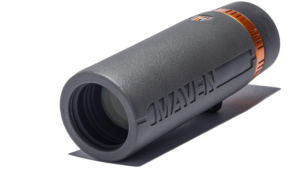
5)Maven CM.1 8x32mm ED Monocular
Get it on Amazon
The Maven CM.1 8x32mm ED Monocular is a compact and lightweight optical device designed for users who want clear, detailed views without carrying a bulky monocular. With 8X magnification and a 32mm objective lens, it offers a practical balance between magnification, field of view, and handheld stability. It is well suited to hiking, birdwatching, wildlife observation, camping, travel, and sporting events.
Image quality is one of the strongest aspects of the CM.1. It features premium glass, fully multi-coated lenses, and Extra-Low Dispersion (ED) glass. The ED glass helps minimize chromatic aberration, which can appear as unwanted color fringing around high-contrast objects. Combined with the multi-coated optics, the design helps produce bright, sharp images with accurate colors across the field of view.
The 8X magnification and 32mm objective lens are well matched for handheld use. While higher magnification can provide more detail, it can also make hand movements more noticeable. The 8X configuration offers enough power for observing wildlife and distant subjects while remaining relatively easy to hold steady. This makes the Maven CM.1 particularly appealing to users who value portability and comfortable everyday viewing.
Portability is another major advantage. At only 8.7 ounces, the CM.1 is light enough to carry during long hikes or travel without adding much weight to your gear. Its compact design makes it convenient to keep within reach when exploring the outdoors, attending sporting events, or simply sightseeing. The rubber-armored body also provides a secure, non-slip grip, helping make the monocular comfortable to use for extended periods.
The CM.1 is built to handle challenging outdoor conditions, with waterproof and fogproof construction. This makes it suitable for rainy, humid, or cold environments where moisture and temperature changes can affect optical equipment. The protective rubber armor adds durability while making the monocular easier to hold securely in wet or rough conditions.
The Maven CM.1 also comes with useful accessories for storage and transport. Protective lens caps help keep the optics covered when the monocular is not in use, while the double-layered microfiber storage bag provides additional protection during transportation and storage. These accessories complement the compact design and make the CM.1 convenient for outdoor enthusiasts who want a reliable monocular that can easily accompany them on different adventures.
For users specifically interested in smartphone photography, the Maven CM.1’s compact size makes it an appealing optical companion, although the supplied information does not indicate that a smartphone adapter or tripod is included. Its main strength is instead its high-quality optics, lightweight construction, ED glass, and handheld usability, making it particularly attractive for direct observation rather than a smartphone-focused setup.
Pros
• Premium glass and fully multi-coated lenses provide bright and clear images
• ED glass helps minimize chromatic aberration and improve color accuracy
• 8X magnification provides detailed views while remaining stable for handheld use
• 32mm objective lens offers a practical balance between size and optical performance
• Weighs only 8.7 ounces for excellent portability
• Compact design is convenient for hiking, travel, camping, and birdwatching
• Waterproof and fogproof construction supports use in challenging weather
• Rubber-armored body provides a secure, non-slip grip
• Comfortable design makes extended viewing easier
• Suitable for wildlife observation, sports, sightseeing, and outdoor exploration
• Protective lens caps help protect the optics
• Double-layered microfiber storage bag provides convenient protection during transport
Cons
• 8X magnification provides less reach than 10X or 12X monoculars
You may also like to read Best Scopes for 22LR Target Shooting
Best Monocular Telescope for Smartphone Advantages
High-Quality Image Clarity
Choosing a high-quality monocular telescope provides sharper, brighter, and more detailed images of distant subjects. Features such as fully multi-coated optics, premium glass, and BAK4 prisms can improve light transmission, contrast, and color accuracy. This is particularly important when using a smartphone, as clearer optical images generally produce better photos and videos through the phone camera.
Powerful but Practical Magnification
A good monocular for smartphone use should provide enough magnification to bring distant subjects closer without becoming excessively difficult to hold steady. Magnifications such as 8X or 12X can be useful for wildlife, birdwatching, sports, concerts, sightseeing, and travel. Choosing the right magnification helps provide detailed views while keeping the image manageable for handheld observation or smartphone photography.
Better Smartphone Photography
One of the biggest advantages is the ability to connect the monocular to a smartphone and capture distant scenes. A compatible phone adapter allows the smartphone camera to record what you see through the eyepiece, making it possible to photograph wildlife, landscapes, sporting events, and other distant subjects. This adds functionality beyond simply looking through the monocular.
Improved Stability
A tripod can make a significant difference when using higher magnification. Even small hand movements can become noticeable at 12X, potentially resulting in blurry photographs or shaky videos. A monocular that works with a tripod allows for steadier observation and more precise smartphone alignment, especially during longer viewing sessions.
Greater Light Transmission
A larger objective lens can collect more available light, helping produce brighter and more visible images in conditions such as cloudy weather, shaded areas, or early morning and evening. Good optical coatings can further improve light transmission. This gives users greater flexibility when observing subjects in different outdoor lighting conditions.
Wide Field of View
A wide field of view makes it easier to locate and follow moving subjects. This is especially beneficial for birdwatching, wildlife observation, sporting events, and other activities where subjects may move quickly. A wider viewing area also provides a more natural perspective when observing landscapes and scenery.
Compact and Lightweight Portability
A lightweight monocular is easier to carry than larger optical equipment, making it convenient for hiking, travel, camping, and sightseeing. Compact designs can fit easily into a backpack or travel bag, allowing users to keep their optical equipment readily available without adding significant weight to their gear.
Comfortable Extended Viewing
Comfort is important when using a monocular for extended periods. Features such as adjustable eyecups can make viewing more comfortable for people who wear glasses, while ergonomic and rubber-armored bodies provide a secure grip. A comfortable design can reduce hand fatigue and make it easier to enjoy longer observation sessions.
Waterproof and Fogproof Protection
Outdoor activities often involve unpredictable weather, so waterproof and fogproof construction can provide valuable protection. Waterproofing helps protect the internal optics from rain and moisture, while fogproof construction helps reduce internal condensation caused by temperature changes. This makes the monocular more dependable for outdoor use.
Durability and Secure Handling
A rubber-armored exterior can protect the monocular from minor impacts while also providing a non-slip grip. This is particularly useful when using the device outdoors, where wet hands, rough terrain, or frequent movement can make handling more difficult. A durable design can also help the monocular withstand regular travel and outdoor use.
Versatility for Different Activities
A quality smartphone-compatible monocular can be used for a wide range of activities rather than being limited to one purpose. Birdwatching, wildlife observation, hiking, travel, sports, concerts, camping, and sightseeing can all benefit from portable long-range optics. This versatility makes the investment more useful for people with varied outdoor interests.
Easy Smartphone Setup
A quick-alignment smartphone adapter can make the process of connecting a phone to the monocular considerably easier. When the adapter is adjustable and compatible with different smartphone models, users can spend less time struggling with alignment and more time viewing or recording their subjects. This is particularly helpful for beginners who may be new to smartphone digiscoping.
Factors to Consider When Choosing Best Monocular Telescope for Smartphone
1. Magnification and Field of View
Consider the magnification and field of view together rather than focusing on magnification alone. Higher magnification brings distant subjects closer, but it can also make handheld viewing less stable and reduce the viewing area. A wider field of view makes it easier to locate and track moving subjects, making the right balance important for birdwatching, wildlife observation, sports, concerts, and sightseeing.
2. Objective Lens Size
The size of the objective lens affects how much light the monocular can collect. Larger objective lenses can provide brighter and more detailed images, particularly in cloudy, shaded, or lower-light conditions. However, they can also make the monocular heavier and less compact. Choose an objective lens size that provides the desired brightness without making portability inconvenient.
3. Optical Quality and Coatings
Optical quality is essential for producing sharp, bright, and natural-looking images. Look for features such as fully multi-coated lenses, premium glass, and BAK4 prisms, which can improve light transmission, contrast, clarity, and color accuracy. High-quality optics are particularly important when the monocular will be paired with a smartphone because optical imperfections can become more noticeable in photographs and videos.
4. Smartphone Compatibility
A smartphone-compatible monocular should have a reliable and adjustable phone adapter that can align the phone’s camera with the eyepiece. Check whether the adapter can accommodate your smartphone model and case size. Easy alignment is especially useful for beginners because it reduces the time and effort required to capture clear photographs and videos through the monocular.
5. Tripod Compatibility and Stability
Stability becomes increasingly important as magnification increases. A tripod or tripod-compatible design can reduce hand shake and produce steadier views, photographs, and videos. If you plan to observe distant subjects for extended periods or frequently use your smartphone with the monocular, choosing a model that offers dependable tripod support can significantly improve the experience.
6. Portability and Weight
Consider how and where you intend to use the monocular before choosing its size and weight. A compact, lightweight model is convenient for hiking, travel, camping, and sightseeing because it is easier to carry for long periods. Larger optical systems may offer greater light-gathering ability, but they can be less convenient when portability is a priority.
7. Waterproof, Fogproof, and Durable Construction
For outdoor use, protection against moisture and changing weather conditions can be an important consideration. Waterproof construction helps protect the internal optics from rain and splashes, while fogproof designs help reduce internal condensation caused by temperature changes. Rubber armor can also provide impact protection and a more secure grip when the monocular is being used in wet or rugged environments.
8. Comfort and Ease of Use
A monocular should be comfortable and straightforward to operate, particularly when used for extended viewing sessions. Adjustable eyecups can provide a better viewing position for users with or without glasses, while an ergonomic rubberized body can make the device easier to hold securely. Simple focusing controls and an easy-to-adjust smartphone adapter can further improve usability and make the monocular suitable for both beginners and experienced users.
Best Monocular Telescope for Smartphone FAQs
1. What magnification is best for a smartphone monocular telescope?
For smartphone use, 8X to 12X magnification offers a good balance between detail and stability. Lower magnification is generally easier to hold steady, while 12X provides more reach for distant wildlife, sports, and scenery. A tripod can be especially helpful when using higher magnification for smartphone photography.
2. What objective lens size is best for a monocular telescope?
A 32mm to 60mm objective lens can work well depending on your priorities. Smaller lenses are lighter and more portable, while larger lenses gather more light and can produce brighter views. For smartphone use, consider the balance between optical brightness, overall size, and how easily you can carry the monocular.
3. Can a monocular telescope take clear photos with a smartphone?
Yes. A monocular equipped with a compatible smartphone adapter and tripod can allow you to capture photos and videos of distant subjects. The quality of the results depends on the monocular’s optics, smartphone camera, stability, and how accurately the phone is aligned with the eyepiece.
Conclusion
Ultimately, the best monocular telescope for smartphone is one that fits the way you plan to use it rather than simply offering the highest magnification or largest lens. A good choice should combine sharp optics, practical magnification, a comfortable design, reliable smartphone compatibility, and enough stability to capture clear photos and videos.
Whether your priority is wildlife, birdwatching, travel, sports, or scenic viewing, choosing the right balance of optical quality, portability, durability, and accessories can make a noticeable difference. With the right monocular, your smartphone becomes more than just a camera—it becomes a convenient way to bring distant subjects closer and preserve the moments you discover.