
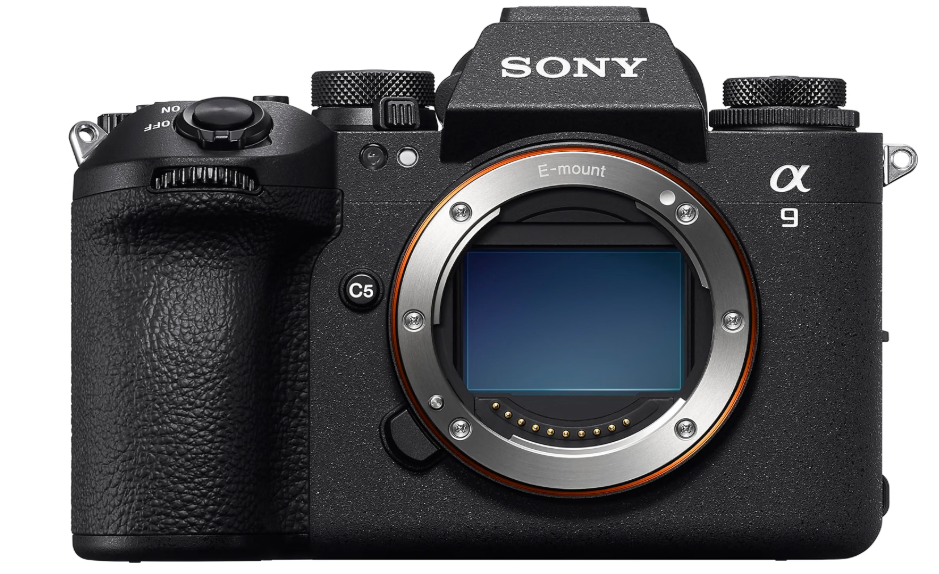
Choosing the best Sony mirrorless full frame camera means finding a model that matches your photography or video needs while offering the image quality, autofocus, speed, and versatility you expect from a modern full frame system.
These cameras are great for capturing detailed photographs, handling challenging lighting, tracking moving subjects, and producing high quality 4K or 8K video. With options ranging from high resolution models to cameras designed for fast action or low light shooting, there is a suitable choice for different creative needs. In this guide, we will cover the important features to look for, highlight the top picks, provide a practical buying guide to help you compare your options, and answer common questions in the FAQs section.
Best Sony Mirrorless Full Frame Cameras
1)Sony Alpha A7R VI Full Frame Mirrorless Camera
Get it on Amazon
The Sony Alpha A7R VI Full Frame Mirrorless Camera is designed for photographers who want extremely high resolution without sacrificing speed and autofocus performance. Its 66.8MP fully stacked Exmor RS image sensor is the first of its kind in the α7R series, providing readout speeds up to 5.6 times faster than previous designs. This allows the camera to combine detailed still images with fast continuous shooting, making it suitable for wildlife, sports, portraits, landscapes, commercial photography, and demanding travel work.
Image quality is one of the camera’s biggest strengths. The 66.8MP sensor captures a remarkable amount of detail, while up to 16 stops of dynamic range at low sensitivities gives photographers considerable flexibility when recovering highlights and shadows during HDR processing. The ISO 100 to 32000 range also supports shooting in challenging lighting conditions, with improved noise reduction helping preserve detail in night scenes and other low light situations.
The BIONZ XR2 processing engine works alongside an integrated AI processing unit to improve overall responsiveness, image quality, sound quality, and power management. It can perform up to 60 AF/AE calculations per second, helping the camera maintain focus and exposure during complicated movement. Blackout free shooting also makes it easier to follow moving subjects continuously through the viewfinder, while the processing system supports 8K video recording for users who want high resolution video capabilities.
For action photography, the Sony Alpha A7R VI can shoot at up to 30 frames per second at its full 66.8MP resolution with AF and AE tracking. This is particularly useful for wildlife and sports photographers who need to capture a precise moment from a rapidly changing sequence. With CFexpress Type A card support, the camera can continuously capture up to 215 JPEG images or 65 compressed high quality RAW images, giving photographers more flexibility during extended bursts.
Autofocus and subject tracking have also received significant attention. The latest human pose estimation technology helps the camera recognize and follow people more accurately, including situations where a person is part of a group or appears relatively small in the frame. Recognition and tracking of distant animals and birds have also been improved, which can be particularly useful for wildlife photography. Subject detection options include Human, Animal, Bird, Insect, Car/Train, and Airplane, while an Auto mode can select the appropriate subject automatically.
Video performance makes the A7R VI a versatile option for hybrid creators. It supports 8K video recording and 4K 60p recording without cropping, allowing users to produce detailed footage while retaining a wide field of view. The combination of fast sensor readout, advanced processing, subject recognition, and reliable autofocus makes it capable of handling both still photography and video production without being limited to one type of work.
The camera is particularly appealing to photographers who frequently crop their images. With 66.8MP available in each full resolution frame, there is considerable room to crop while retaining useful detail. This can be valuable when photographing distant wildlife, birds, landscapes, or subjects that cannot easily be approached. The high resolution also gives photographers greater flexibility when producing large prints or making detailed edits.
The Sony Alpha A7R VI is best suited to users who can take advantage of its advanced capabilities. Its combination of very high resolution, 30 fps shooting, sophisticated subject recognition, 8K video, wide dynamic range, and sophisticated autofocus makes it a highly capable full frame mirrorless camera. However, photographers who mainly take casual photographs may not need such a high resolution sensor or advanced processing system, and the camera’s capabilities may be more than necessary for simpler shooting needs.
Pros
• 66.8MP full frame stacked Exmor RS sensor
• Up to 30 fps continuous shooting at full resolution
• Up to 60 AF/AE calculations per second
• Blackout free shooting for tracking fast subjects
• Up to 16 stops of dynamic range at low sensitivities
• ISO 100 to 32000 sensitivity range
• Improved recognition and tracking of distant animals and birds
• Multiple subject detection modes plus Auto detection
• 8K video recording
• 4K 60p video without cropping
• CFexpress Type A card support
• Large RAW and JPEG burst capacity
Cons
• The very high resolution may be unnecessary for casual photographers
2)Sony Alpha A7 V Mirrorless Camera with FE 28 70mm Lens is a versatile full frame camera
Get it on Amazon
The Sony Alpha A7 V Mirrorless Camera with FE 28 70mm Lens is a versatile full frame camera designed for photographers and content creators who want a combination of high resolution, fast performance, reliable autofocus, and strong video capabilities. Its 33.0MP partially stacked Exmor RS CMOS sensor provides faster readout than the α7 IV, while the BIONZ XR2 processing engine adds advanced AI based subject recognition and improved overall responsiveness. The included FE 28 70mm lens also provides a useful focal range for everyday photography, portraits, travel, and general purpose shooting.
The partially stacked sensor features high speed circuitry above and below the sensing layer, delivering approximately 4.5 times faster readout than the α7 IV. This contributes to a maximum shutter speed of 1/16000 second and blackout free continuous shooting at up to 30 fps with AF and AE tracking. For photographers capturing fast moving subjects, the combination of rapid readout and continuous autofocus makes it easier to capture precise moments without losing sight of the action.
Image quality is another strong reason to consider the A7 V. The 33MP sensor and BIONZ XR2 processor can deliver up to 16 stops of dynamic range, producing smooth transitions between shadows and highlights. This is useful for scenes with strong differences in brightness and gives photographers considerable flexibility when editing RAW files or creating HDR images. The ISO range extends from 100 to 51200 for stills and movies, with expanded sensitivity available for situations requiring even greater flexibility.
The BIONZ XR2 processing engine also introduces AI based Real time Recognition AF and Real time Tracking. According to Sony, AI processing improves recognition by approximately 30% compared with the α7 IV. Human pose estimation uses information about body shape and positioning to improve eye recognition and tracking, even when subjects are positioned in difficult ways. The camera can also recognize multiple subjects, allowing photographers to select and follow their intended subject more reliably.
Image stabilization makes the A7 V well suited to handheld photography. Its optical stabilization system works with gyro sensors and an image stabilization algorithm to detect and correct camera movement. The camera provides up to 7.5 stops of central stabilization and 6.5 stops of peripheral stabilization, helping photographers shoot handheld without always needing to increase ISO. Compatible lenses can work with the camera’s stabilization system to provide additional correction, which is especially useful at longer focal lengths where camera shake becomes more noticeable.
Video performance is equally versatile. The camera can record 4K video at up to 120p, making it suitable for slow motion footage and detailed video production. The fast sensor readout also supports responsive video operation, while the advanced processing engine improves image and sound quality. This makes the A7 V a practical choice for users who photograph and record video rather than focusing exclusively on still images.
The camera also includes workflow improvements designed for photographers who regularly manage large amounts of image and video content. A lightweight RAW format can help reduce file sizes, while refinements to the user interface, networking, communication, and file management make it more convenient for professional and enthusiast workflows. Accurate and stable color reproduction further helps when consistency is important across a series of photographs or video clips.
With the FE 28 70mm lens, the A7 V becomes a flexible everyday kit. The zoom range covers useful perspectives for landscapes, travel, street photography, portraits, events, and general shooting without requiring frequent lens changes. Combined with the camera’s fast autofocus, high resolution, strong stabilization, and rapid burst performance, this setup can accommodate a wide variety of photography styles.
The Sony Alpha A7 V is a capable full frame mirrorless option for photographers who want high resolution without giving up speed. Its partially stacked sensor, 30 fps blackout free shooting, 4K 120p recording, up to 16 stops of dynamic range, advanced AI autofocus, and powerful stabilization give it broad capabilities. The FE 28 70mm lens adds convenience for everyday shooting, making the package suitable for users who want one camera and lens combination that can handle many different types of photography.
Pros
• 33.0MP full frame Exmor RS CMOS sensor
• Approximately 4.5 times faster sensor readout than the α7 IV
• Up to 30 fps blackout free shooting with AF and AE tracking
• Maximum shutter speed of 1/16000 second
• Up to 16 stops of dynamic range
• ISO 100 to 51200 for stills and movies
• Expanded ISO options for demanding lighting conditions
• BIONZ XR2 processing engine with AI capabilities
• Improved subject recognition compared with the α7 IV
• Reliable human eye, head, and body recognition
• Up to 7.5 stops of central image stabilization
• Up to 6.5 stops of peripheral stabilization
• 4K video recording at up to 120p
• Lightweight RAW format available
• FE 28 70mm lens provides a versatile everyday zoom range
Cons
• Advanced autofocus and processing features may take time to learn
3)Sony Alpha A7 V Full Frame Mirrorless Camera
Get it on Amazon
The Sony Alpha A7 V Full Frame Mirrorless Camera is a versatile full frame model designed for photographers and hybrid creators who need high image quality, fast shooting, advanced autofocus, and strong stabilization. It combines a 33.0MP partially stacked Exmor RS CMOS sensor with the BIONZ XR2 processing engine, giving it considerably faster sensor readout than the α7 IV. With 30 fps blackout free shooting, 4K 120p video, and up to 16 stops of dynamic range, the camera is suited to everything from portraits and landscapes to wildlife, sports, and video production.
The partially stacked Exmor RS CMOS sensor uses high speed circuitry above and below the sensing layer to achieve approximately 4.5 times faster readout than the α7 IV. This allows the A7 V to reach a maximum shutter speed of 1/16000 second and shoot bursts at up to 30 fps with AF and AE tracking. Blackout free shooting is particularly useful when following moving subjects because photographers can maintain a continuous view of the action while capturing a sequence.
Image quality is supported by the 33MP sensor and BIONZ XR2 processing engine, which together provide up to 16 stops of dynamic range. Smooth gradations between shadows and highlights give photographers greater flexibility when processing images and working with HDR scenes. The camera also offers an ISO 100 to 51200 range for stills and movies, with expanded sensitivity from ISO 50 to 204800 for still photography and ISO 100 to 102400 for movies.
The BIONZ XR2 processor brings AI based Real time Recognition AF and Real time Tracking to the camera. Sony states that AI processing improves recognition by approximately 30% compared with the α7 IV. Human pose estimation uses detailed information about a person’s shape and pose to improve eye recognition and tracking, including when subjects are in challenging positions. Multiple subjects can also be recognized, allowing photographers to select and follow their intended subject.
Image stabilization makes the A7 V useful for handheld shooting in a variety of conditions. Its optical stabilization unit works together with gyro sensors and an image stabilization algorithm to detect and correct camera movement. The system provides up to 7.5 stops of central stabilization and 6.5 stops of peripheral stabilization. This can help photographers use slower shutter speeds without immediately needing to increase sensitivity, while compatible lenses can further improve stabilization performance.
The camera is also built for hybrid photography, with video recording available at up to 4K 120p. This provides the flexibility to create high quality footage as well as slow motion sequences. The combination of the fast sensor readout, powerful processing engine, accurate subject tracking, and image stabilization makes the A7 V suitable for creators who regularly switch between still photography and video.
Workflow is another area where the A7 V has been refined. The BIONZ XR2 processor supports a lightweight RAW format, which can make file handling more manageable. Sony has also refined the user interface, networking, communication, and file management functions to support a smoother shooting and post production process. Accurate and stable color reproduction further helps maintain consistency across photographs and video footage.
The Sony Alpha A7 V Full Frame Mirrorless Camera is particularly suitable for photographers who want a balance between resolution and speed. Its 33MP sensor provides plenty of detail without requiring the extremely large files associated with much higher resolution cameras, while 30 fps continuous shooting gives it the speed needed for action photography. Advanced AI recognition also makes it useful for photographing people and other moving subjects.
Overall, the A7 V offers a broad combination of performance characteristics for photographers and hybrid creators. Its fast partially stacked sensor, powerful BIONZ XR2 processor, 30 fps blackout free bursts, advanced subject recognition, strong image stabilization, wide ISO range, and 4K 120p video make it a flexible full frame camera for demanding everyday and professional shooting.
Pros
• 33.0MP full frame Exmor RS CMOS sensor
• Approximately 4.5 times faster sensor readout than the α7 IV
• Up to 30 fps blackout free continuous shooting
• AF and AE tracking during high speed bursts
• Maximum shutter speed of 1/16000 second
• Up to 16 stops of dynamic range
• ISO 100 to 51200 still and movie range
• Expanded still ISO up to 204800
• BIONZ XR2 processing engine
• AI based Real time Recognition AF and Real time Tracking
• Approximately 30% improved recognition over the α7 IV
• Advanced human pose estimation technology
• Multiple subject recognition
• Up to 7.5 stops of central image stabilization
• Up to 6.5 stops of peripheral stabilization
• 4K video recording at up to 120p
• Lightweight RAW format
• Refined interface, networking, and file management features
Cons
• Advanced features may require time to learn and configure
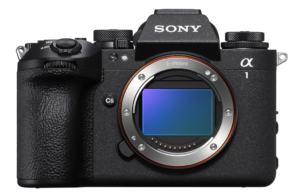
4)Sony Alpha 1 II Full Frame Mirrorless Interchangeable Lens Camera
Get it on Amazon
The Sony Alpha 1 II Full Frame Mirrorless Interchangeable Lens Camera is a high resolution, high speed camera designed for photographers and videographers who need advanced performance across different types of shooting. It combines a 50.1MP full frame Exmor RS image sensor with Sony’s BIONZ XR image processing engine and a dedicated AI processing unit. This combination gives the camera the ability to capture highly detailed images while maintaining fast autofocus, blackout free viewing, and continuous shooting at up to 30 fps.
Image quality is a major strength of the Alpha 1 II. The 50.1MP Exmor RS sensor captures a high level of fine detail, making the camera suitable for landscapes, commercial photography, portraits, wildlife, and other applications where resolution matters. Even when using APS C mode or cropping an image to APS C size, the camera can retain approximately 21MP of resolution, giving photographers useful flexibility when they need to crop their compositions.
The BIONZ XR processing engine is designed to handle the large volume of data generated by the 50.1MP sensor in real time. Working alongside the dedicated AI processing unit, it provides advanced subject recognition and tracking. The system can recognize people using human pose estimation as well as animals, vehicles, insects, and other subjects. This makes it easier to maintain focus when photographing subjects that move unpredictably or appear in challenging positions.
For action photography, the Alpha 1 II can shoot at up to 30 fps at the full 50.1MP resolution while maintaining AF and AE tracking. The camera can perform up to 120 AF and AE calculations per second using data from the image sensor, helping it respond rapidly to changes in subject movement. Blackout free shooting also allows photographers to maintain a continuous view of their subject through the viewfinder rather than losing sight of the action between frames.
The camera’s autofocus system is particularly useful for wildlife, sports, and other fast moving subjects. Its dedicated AI processing unit improves recognition of people through pose estimation and supports recognition of animals, vehicles, and insects. Combined with Real time Recognition AF and Real time Tracking, the system is designed to maintain focus on the intended subject while shooting at high speed.
Video performance is equally advanced. The Alpha 1 II can record 8K video at 4:2:2 10 bit using the XAVC HS format, providing detailed footage with extensive color information for editing. Its 8.6K oversampling also allows users to produce 4K footage with high resolution detail. Photographers and videographers can crop and edit 4K footage from an 8K source while retaining substantial image quality.
The camera supports several video recording options, including XAVC HS, XAVC S, and XAVC S I formats. 4K recording can be performed in full frame or Super 35mm size, with Super 35mm footage oversampled from 5.8K using full pixel readout without pixel binning. XAVC S I recording can reach up to 600 Mbps, providing a high quality option for users who need footage suitable for demanding post production workflows.
The Alpha 1 II is therefore aimed at users who want both high resolution still photography and professional level video capabilities in one interchangeable lens camera. Its combination of a 50.1MP sensor, rapid continuous shooting, advanced AI subject recognition, high speed autofocus, blackout free viewing, and 8K recording makes it capable of handling demanding photographic and video assignments.
For photographers who frequently crop their images, the high pixel count provides additional compositional flexibility. The ability to retain approximately 21MP when working in APS C mode can also be useful when a tighter field of view is needed without changing lenses. At the same time, the camera’s high speed performance means its resolution does not prevent it from being used for fast moving subjects.
The Sony Alpha 1 II Full Frame Mirrorless Interchangeable Lens Camera is a comprehensive option for professionals and advanced enthusiasts who need high resolution without giving up shooting speed. Its 50.1MP sensor, 30 fps continuous shooting, up to 120 AF and AE calculations per second, AI based recognition, and 8K video capabilities make it suitable for demanding photography and hybrid production workflows.
Pros
• 50.1MP full frame Exmor RS image sensor
• Highly detailed images for cropping and large prints
• Approximately 21MP resolution available in APS C mode
• BIONZ XR image processing engine
• Dedicated AI processing unit for advanced subject recognition
• Recognition of people, animals, vehicles, and insects
• Up to 30 fps continuous shooting at full 50.1MP resolution
• Full AF and AE tracking during high speed shooting
• Up to 120 AF and AE calculations per second
• Blackout free shooting and viewfinder tracking
• Advanced Real time Recognition AF and Real time Tracking
• 8K 4:2:2 10 bit video recording
• 8.6K oversampling for detailed 4K footage
• Multiple XAVC video recording formats
• 4K recording in full frame or Super 35mm size
• XAVC S I recording at up to 600 Mbps
Cons
• High resolution stills and 8K video require substantial storage space
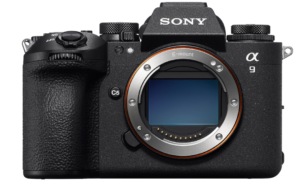
5)Sony Alpha A9 III Full Frame Mirrorless Camera
Get it on Amazon
The Sony Alpha A9 III Full Frame Mirrorless Camera is designed for photographers who need exceptional speed and precise capture of rapidly moving subjects. Its defining technology is a full frame global shutter sensor, which exposes and reads all pixels simultaneously rather than recording them sequentially like a conventional rolling shutter. This allows the camera to capture fast action without the distortion that can occur when subjects or cameras move quickly.
The 24.6MP full frame backside illuminated Exmor RS image sensor combines stacked CMOS architecture with integral memory to provide high speed performance and simultaneous full pixel readout. While its resolution is lower than some high resolution full frame cameras, the sensor is designed around speed and responsiveness. This makes the A9 III particularly suitable for sports, wildlife, motorsports, events, and other situations where accurately capturing a split second is more important than having extremely large image files.
Continuous shooting performance is exceptionally fast. The A9 III can capture bursts at up to 120 fps with full AF and AE tracking while maintaining blackout free viewing through the electronic viewfinder. This gives photographers a much better chance of recording the exact moment they want during rapidly changing action. Its AI processor also helps recognize subjects reliably, supporting autofocus performance while shooting at extremely high speeds.
The global shutter also provides an important advantage when photographing fast moving subjects. Because the entire sensor is exposed and read simultaneously, moving subjects can be captured without the skewing or distortion associated with sequential sensor readout. This can be especially useful when photographing fast vehicles, athletes, birds in flight, or other subjects whose shape and position can change rapidly between the beginning and end of a conventional sensor scan.
The camera offers a maximum shutter speed of 1/80,000 second, allowing photographers to freeze extremely fast movement in bright conditions. The high shutter speed also provides greater control when using wide apertures in strong light. Compatible flash units can synchronize at all shutter speeds, helping provide even illumination without the illumination drop off associated with conventional high speed sync techniques.
The evolved BIONZ XR image processing engine provides up to eight times more processing power than previous versions. This helps reduce latency while handling the large amount of data generated by the sensor. The processor also contributes to improved color gradation, more realistic color reproduction, and reduced image noise, helping produce cleaner and more natural looking photographs across different shooting conditions.
The A9 III is therefore particularly appealing to photographers whose work depends on timing. The combination of global shutter technology, 120 fps continuous shooting, blackout free viewing, rapid autofocus, and an extremely fast 1/80,000 second shutter gives it the tools needed for demanding action photography. It can also be useful for professional event photographers who need to capture fleeting expressions and moments accurately.
The camera’s 24.6MP resolution provides a practical balance between detail and manageable file sizes. Photographers who regularly shoot long bursts can benefit from not having to manage files as large as those produced by some higher resolution full frame cameras. However, users whose priority is maximum resolution for large prints, extensive cropping, or highly detailed landscapes may prefer a camera designed more specifically around high megapixel output.
The Sony Alpha A9 III Full Frame Mirrorless Camera is built primarily around speed, accuracy, and distortion free capture. Its full frame global shutter sensor, 120 fps shooting, full AF and AE tracking, blackout free viewing, 1/80,000 second shutter, and powerful BIONZ XR processing make it a specialized tool for photographers who regularly work with fast moving subjects and need to capture decisive moments with precision.
Pros
• Full frame global shutter sensor
• Simultaneous exposure and readout of all pixels
• Virtually eliminates rolling shutter distortion during fast action
• 24.6MP backside illuminated Exmor RS sensor
• Stacked CMOS architecture with integral memory
• Up to 120 fps continuous shooting
• Full AF and AE tracking during high speed bursts
• Blackout free electronic viewfinder shooting
• Maximum shutter speed of 1/80,000 second
• Flash synchronization at all shutter speeds with compatible units
• Advanced AI based subject recognition
• BIONZ XR processor with up to eight times the processing power of previous versions
• Improved color gradation and color reproduction
• Reduced image noise
• Well suited to sports, wildlife, motorsports, and fast moving subjects
Cons
• 24.6MP resolution is lower than many high resolution full frame cameras
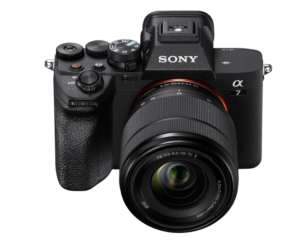
6)Sony Alpha A7 IV Mirrorless Camera with 28 70mm Lens is a versatile full frame camera
Get it on Amazon
The Sony Alpha A7 IV Mirrorless Camera with 28 70mm Lens is a versatile full frame camera designed for photographers and hybrid creators who want strong image quality, dependable autofocus, and advanced video capabilities. It combines a 33MP full frame Exmor R back illuminated CMOS sensor with Sony’s next generation BIONZ XR image processing engine. The included 28 70mm lens provides a practical zoom range for everyday photography, travel, portraits, events, and general purpose shooting.
The 33MP full frame sensor delivers detailed images while maintaining a useful balance between resolution and manageable file sizes. Its back illuminated design supports strong image quality across different lighting conditions, making the camera suitable for landscapes, portraits, street photography, and everyday shooting. The resolution also provides room for cropping images while retaining a good amount of detail.
Processing is handled by the BIONZ XR image processing engine, which Sony describes as offering eight times more processing power than the previous generation. This helps the A7 IV handle image processing efficiently while supporting responsive operation and advanced autofocus features. The processing system also contributes to the camera’s ability to produce detailed photographs and high quality video.
Autofocus is designed to work across both photography and movie recording. Real time Eye AF can recognize and track humans, animals, and birds, making it easier to maintain focus on subjects that move or change position. This is particularly useful for portraits, wildlife photography, family photography, and video where maintaining accurate focus is important.
Video performance makes the A7 IV a capable hybrid camera. It can record 4K video at up to 60p with 10 bit 4:2:2 recording and full pixel readout across its recording formats. This provides detailed footage with extensive color information for editing and color grading. The camera is therefore suitable for creators producing everything from travel videos and interviews to more advanced cinematic projects.
Sony also includes several movie focused features that give videographers greater control during recording and post production. Focus Map helps visualize depth of field and areas that are in or out of focus, while breathing compensation helps reduce changes in framing caused by focus adjustments with compatible lenses. S Cinetone provides a cinematic color look, while S Log3 and HLG offer additional options for users who want greater flexibility when grading footage.
AF Assist further supports video shooting by helping autofocus users maintain control when changing focus between subjects. Together with Eye AF and the camera’s advanced movie functions, these tools make the A7 IV useful for creators who want reliable autofocus without having to rely entirely on manual focusing.
The included 28 70mm lens makes the camera a convenient everyday kit. Its zoom range covers moderately wide perspectives through short telephoto views, allowing users to photograph landscapes, travel scenes, portraits, street subjects, and events without constantly changing lenses. For many photographers starting with a full frame system, this combination provides a practical range for general shooting.
The Sony Alpha A7 IV is well suited to users who want one full frame camera for both still photography and video. Its 33MP sensor provides detailed photographs, while the BIONZ XR processor, Real time Eye AF, 4K 60p recording, 10 bit 4:2:2 color, and advanced movie features give it broad hybrid capabilities. The 28 70mm lens adds versatility, making this package appropriate for everyday photographers, enthusiasts, and content creators.
Pros
• 33MP full frame Exmor R back illuminated CMOS sensor
• BIONZ XR image processing engine
• Up to 4K 60p video recording
• 10 bit 4:2:2 video recording
• Full pixel readout across recording formats
• Real time Eye AF for humans, animals, and birds
• Autofocus features available for both photos and movies
• Focus Map for video recording
• Focus Breathing Compensation with compatible lenses
• S Cinetone picture profile
• S Log3 and HLG support
• AF Assist for movie shooting
• Versatile 28 70mm lens included
• Suitable for photography and video production
Cons
• The 28 70mm lens may not provide enough reach for distant wildlife or sports
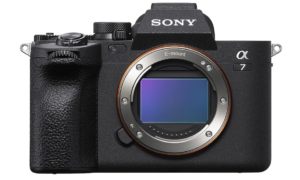
7)Sony Alpha A7 IV is a versatile full frame mirrorless camera
Get it on Amazon
The Sony Alpha A7 IV is a versatile full frame mirrorless camera designed for photographers and hybrid creators who want detailed still images and high quality video in one system. It features a 33MP full frame Exmor R back illuminated CMOS sensor paired with Sony’s next generation BIONZ XR image processing engine. The combination provides strong image quality and responsive processing, making the camera suitable for portraits, landscapes, travel, events, and content creation.
The 33MP sensor provides plenty of detail for everyday photography and gives users flexibility when cropping their images. Its back illuminated design is intended to support high quality image capture across different lighting conditions. The BIONZ XR processor is described as offering eight times more processing power than the previous generation, supporting the camera’s image processing, autofocus, and video capabilities.
Video performance is another important part of the A7 IV’s design. It can record up to 4K 60p in 10 bit 4:2:2 with full pixel readout across all recording formats. This provides detailed footage with substantial color information for editing and grading. For 4K 30p recording, the camera uses 7K oversampling with no pixel binning, helping produce detailed full frame footage while retaining natural image quality.
The S Cinetone color profile makes achieving attractive video color easier without requiring extensive grading. It is designed to provide pleasing color and skin tones straight from the camera, which can be useful for creators who want a polished appearance without spending significant time in post production.
The A7 IV also offers advanced movie tools for creators who want more control over their footage. Features such as Focus Map, Focus Breathing Compensation, S Log3, HLG, and AF Assist provide additional options for focusing, color grading, and recording. These features make the camera suitable for users who want to move beyond basic video recording and develop a more controlled production workflow.
The camera’s combination of a 33MP sensor, powerful BIONZ XR processing, and sophisticated video capabilities makes it a practical hybrid option. It can produce high resolution photographs while also handling professional oriented video formats. This versatility is particularly useful for photographers who also create interviews, travel videos, social media content, or other video projects.
The Sony Alpha A7 IV is therefore a flexible full frame camera for users who want a balance between still photography and video. Its 33MP sensor, 8x more powerful BIONZ XR processor, 4K 60p 10 bit 4:2:2 recording, 7K oversampled 4K 30p footage, and S Cinetone color profile give it a broad set of capabilities for both photographers and video creators.
Pros
• 33MP full frame Exmor R back illuminated CMOS sensor
• BIONZ XR image processing engine with eight times more processing power
• 4K 60p video recording
• 10 bit 4:2:2 recording
• Full pixel readout across recording formats
• 7K oversampling for full frame 4K 30p recording
• No pixel binning for 4K 30p recording
• S Cinetone color profile
• S Log3 and HLG support
• Focus Map and Focus Breathing Compensation
• AF Assist for video recording
• Strong combination of still photography and video features
Cons
• Advanced video functions may require time to learn
8)Sony Alpha A7S III Full Frame Mirrorless Camera
Get it on Amazon
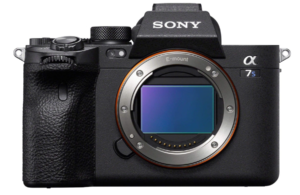
The Sony Alpha A7S III Full Frame Mirrorless Camera is built primarily for photographers and videographers who prioritize low light performance, fast processing, and advanced 4K video. Its 12.1MP Exmor R sensor is optimized for 4K recording, sensitivity, and speed rather than extremely high still image resolution. Combined with the BIONZ XR processing engine, the camera provides a strong platform for professional video production, nighttime shooting, events, and other situations where clean footage in difficult lighting is important.
The 12.1MP Exmor R sensor is designed to provide low noise performance and high sensitivity. The camera supports ISO settings up to 409,600, giving users considerable flexibility when working in very dim environments. It also offers more than 15 stops of dynamic range, helping preserve detail across shadows and highlights. This makes the A7S III particularly useful for night scenes, indoor productions, concerts, weddings, and other low light situations.
Processing is handled by Sony’s BIONZ XR engine, which delivers eight times more processing power than the previous generation. The additional processing capability supports the camera’s demanding video functions while contributing to responsive operation and image processing. It also helps the camera handle high quality footage across its different recording formats.
Video recording is the main focus of the A7S III. It can capture 4K video at up to 120p with 10 bit 4:2:2 recording and full pixel readout across all recording modes. The high frame rate allows users to create smooth slow motion footage while retaining detailed 4K resolution. The camera supports 4K 120p recording in XAVC S using AVC, XAVC HS using HEVC, and XAVC S I using All Intra recording.
The full pixel readout helps the camera produce detailed footage without relying on pixel binning across its recording modes. This makes the A7S III well suited to creators who need high quality footage for professional editing and production. Its 4K UHD 2160p video resolution also provides a practical format for a wide range of modern video projects.
The S Cinetone picture profile was introduced to Alpha cameras with the A7S III and provides a cinematic look with carefully tuned tones and colors. This can be useful for filmmakers and content creators who want attractive footage directly from the camera while still having the option to work with more advanced picture profiles when greater control is needed.
The camera is also designed to operate across a practical temperature range of 0 to 40 degrees Celsius, or 32 to 104 degrees Fahrenheit. Bluetooth 5.0 provides modern wireless connectivity, which can be useful when connecting the camera to compatible devices and accessories as part of a contemporary shooting workflow.
The A7S III’s 12.1MP resolution is deliberately modest compared with high resolution full frame cameras. For photographers who mainly create large prints or frequently crop still photographs, this can be a limitation. However, the lower pixel count is well matched to the camera’s focus on sensitivity, speed, low noise performance, and 4K video recording.
The Sony Alpha A7S III is therefore best suited to users who place video and low light performance above maximum still image resolution. Its 12.1MP Exmor R sensor, ISO up to 409,600, more than 15 stops of dynamic range, BIONZ XR processing, 4K 120p 10 bit 4:2:2 recording, full pixel readout, and S Cinetone profile make it a capable tool for demanding video and low light work.
Pros
• 12.1MP full frame Exmor R sensor optimized for 4K, sensitivity, and speed
• ISO sensitivity up to 409,600
• More than 15 stops of dynamic range
• BIONZ XR processing engine
• Eight times more processing power than the previous generation
• 4K recording at up to 120p
• 10 bit 4:2:2 video recording
• Full pixel readout in all recording modes
• Supports XAVC S, XAVC HS, and XAVC S I formats
• 4K UHD 2160p video resolution
• S Cinetone picture profile for cinematic color and tones
• Strong low light and noise performance
• Bluetooth 5.0 connectivity
Cons
• 12.1MP resolution is relatively low for high resolution still photography
9)Sony Alpha A7R IV Full Frame Mirrorless Camera
Get it on Amazon
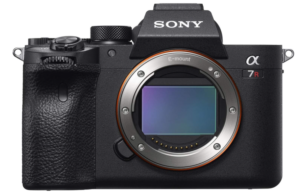
The Sony Alpha A7R IV Full Frame Mirrorless Camera is designed for photographers who want extremely high resolution, detailed images, and a sophisticated autofocus system. It features a 61MP full frame 35mm back illuminated Exmor R CMOS image sensor, making it particularly suitable for landscape, portrait, commercial, studio, and travel photography where fine detail is important. The camera also combines high resolution still photography with advanced 4K video capabilities.
The 61MP sensor provides an exceptional level of detail, giving photographers considerable flexibility when cropping images or producing large prints. Even when using the APS C crop mode, the camera retains approximately 26.2MP of resolution. This provides additional flexibility when a tighter composition is needed without changing lenses.
Despite its high resolution, the A7R IV can shoot continuously at up to 10 fps with AE and AF tracking at the full 61MP resolution. This allows photographers to capture sequences of moving subjects while retaining the camera’s high level of detail. The combination is useful for wildlife, sports, events, and other situations where both resolution and shooting speed are important.
Autofocus performance is supported by 567 phase detection AF points and 425 contrast detection AF points, providing broad coverage across the frame. The Fast Hybrid AF system helps maintain focus on moving subjects, while Real time Tracking and Real time Eye AF provide additional assistance when photographing people and animals. Eye AF is also available for movie recording, giving video creators more reliable subject focus.
Image processing is handled by Sony’s BIONZ X processor, which uses area specific noise reduction to help preserve fine detail while controlling image noise. The camera also provides up to 15 stops of dynamic range at low sensitivities, allowing photographers to capture smooth tonal transitions and retain useful information in highlights and shadows. This can be particularly helpful when editing photographs or working in scenes with challenging lighting.
The A7R IV also offers advanced video recording capabilities. It can record 4K footage with full pixel readout without binning in Super 35mm mode, helping produce detailed video. S Log and HLG recording options provide additional flexibility for users who want to adjust color and dynamic range during post production.
Color reproduction is another important aspect of the camera’s performance. Its processing system is designed to provide accurate color reproduction while maintaining the fine detail captured by the high resolution sensor. This makes the A7R IV suitable for professional applications where consistent and detailed images are important.
Compatibility with Final Cut Pro X and iMovie also makes the camera convenient for users working within Apple’s video editing ecosystem. Combined with its 4K recording capabilities and movie focused autofocus features, the camera can serve as both a high resolution still camera and a capable video tool.
The Sony Alpha A7R IV is particularly suited to photographers who want maximum detail while retaining useful autofocus and continuous shooting performance. Its 61MP sensor, 10 fps shooting, extensive AF coverage, advanced subject recognition, 15 stop dynamic range, and 4K video capabilities give it a broad range of applications. Its high resolution output makes it especially useful for detailed photography, cropping, and large format printing.
Pros
• 61MP full frame 35mm back illuminated Exmor R CMOS sensor
• Extremely detailed image output
• Up to 10 fps continuous shooting at 61MP
• AE and AF tracking during continuous shooting
• Approximately 26.2MP resolution in APS C crop mode
• 567 phase detection AF points
• 425 contrast detection AF points
• Real time Tracking
• Real time Eye AF for humans and animals
• Eye AF available during movie recording
• Up to 15 stops of dynamic range at low sensitivities
• BIONZ X image processing engine
• Area specific noise reduction
• 4K video recording with full pixel readout without binning in Super 35mm mode
• S Log and HLG recording
• Compatible with Final Cut Pro X and iMovie
Cons
• 61MP files require considerable storage space
You may also like to read
Best Sony Mirrorless Full Frame Cameras Advantages
High Image Resolution.
Many full frame mirrorless cameras offer high megapixel counts that capture fine details and provide greater flexibility for cropping, enlarging, and producing large prints. This is particularly useful for landscapes, portraits, wildlife, commercial photography, and other situations where retaining detail is important.
Excellent Low Light Performance.
Full frame sensors generally provide strong light gathering capabilities, while advanced processing and wide ISO ranges help produce cleaner images in challenging lighting. This makes these cameras suitable for night photography, indoor events, concerts, and other low light situations.
Advanced Autofocus.
Sophisticated autofocus systems with Real time Tracking, Eye AF, and subject recognition can accurately identify and follow people, animals, birds, vehicles, and other subjects. This helps photographers maintain focus when subjects are moving unpredictably.
Fast Continuous Shooting.
High speed burst shooting allows photographers to capture multiple frames of rapidly changing action. Depending on the camera, continuous shooting can reach extremely high frame rates while maintaining autofocus and exposure tracking, making it useful for sports, wildlife, and events.
Strong Video Capabilities.
Advanced full frame mirrorless cameras can provide high quality 4K and 8K recording, high frame rates, 10 bit color, and professional recording formats. Features such as S Log, HLG, and cinematic color profiles also give creators greater flexibility when editing and grading footage.
Wide Dynamic Range.
High dynamic range allows cameras to retain more information in both bright highlights and dark shadows. This is especially valuable when photographing scenes with strong differences in brightness and gives photographers more flexibility during editing and HDR processing.
Effective Image Stabilization.
In body stabilization helps reduce the effects of camera shake when shooting handheld. This can make it easier to use slower shutter speeds without immediately increasing ISO and is particularly useful for travel, low light photography, and longer focal lengths.
Versatility for Different Photography Styles.
Full frame mirrorless systems can accommodate a wide selection of interchangeable lenses and shooting features, allowing photographers to adapt their setup for portraits, landscapes, wildlife, sports, travel, video, and professional assignments.
Factors to Consider When Choosing The Best Sony Mirrorless Full Frame Cameras
Resolution.
Consider how much detail you need for your photography. Higher resolution is useful for large prints, professional work, and extensive cropping, while a moderate resolution can provide smaller file sizes and easier storage and editing.
Autofocus Performance.
Look for reliable autofocus with subject recognition, Eye AF, and real time tracking if you photograph people, animals, birds, sports, or other moving subjects. A responsive autofocus system can make it easier to maintain focus as subjects move through the frame.
Low Light Performance.
Consider the camera’s ISO range, sensor design, and noise reduction capabilities if you regularly shoot at night, indoors, or in other dim environments. Good low light performance can help preserve detail and reduce unwanted noise without requiring excessive lighting.
Continuous Shooting Speed.
If you photograph fast action, check the maximum burst rate and whether autofocus and exposure tracking remain active during continuous shooting. Faster burst speeds provide more frames from which to select when capturing unpredictable movement.
Video Features.
Consider the available video resolution, frame rates, color depth, recording formats, and readout method if you also create video. Features such as 4K or 8K recording, 10 bit color, high frame rates, Log profiles, and full pixel readout can provide greater flexibility during editing.
Dynamic Range.
A camera with a wide dynamic range can retain more information in bright highlights and dark shadows. This is especially important for landscapes, outdoor scenes, and other situations with strong differences between light and dark areas.
Image Stabilization.
In body image stabilization can be valuable when shooting handheld, particularly in low light or with longer focal lengths. Check the stabilization performance and compatibility with lenses if you plan to photograph without a tripod frequently.
Lens and Storage Requirements.
Consider the lenses you will need for your preferred photography style as well as the storage required for high resolution photos and video. Higher resolution images, rapid burst shooting, and advanced video formats can quickly consume memory card and backup space.
Best Sony Mirrorless Full Frame Cameras FAQs
1. What should I look for in a Sony full frame mirrorless camera?
Consider resolution, autofocus performance, low light capability, continuous shooting speed, video features, dynamic range, image stabilization, and compatibility with the lenses you plan to use.
2. Are Sony full frame mirrorless cameras good for both photography and video?
Yes. Many models combine high resolution still photography with advanced video features such as 4K or 8K recording, high frame rates, 10 bit color, Log profiles, and sophisticated autofocus for video.
3. Which Sony full frame mirrorless camera is suitable for low light photography?
Look for a model with strong high ISO performance, effective noise reduction, a wide dynamic range, and a sensor designed to perform well in low light. These features can help produce cleaner images while preserving detail in challenging lighting conditions.
Conclusion
Finding the best Sony mirrorless full frame camera is less about choosing the most advanced specifications and more about matching the camera to the way you shoot. From high resolution photography and fast action to low light performance and professional video, the options discussed offer different combinations of capabilities to suit different needs.
Use the features, advantages, and buying factors in this guide to narrow down your requirements before making a decision. Our finder approach focuses on helping you identify the right balance of resolution, speed, autofocus, stabilization, and video performance for your own photography journey, so you can choose with greater confidence and get a camera that fits your creative goals.