
Choosing the best mirrorless zoom lens can make photography more flexible by combining multiple focal lengths in a single lens. These lenses are great for photographers who want to capture everything from wide landscapes and travel scenes to portraits, wildlife and distant subjects without constantly changing lenses.
Modern options also offer features such as fast autofocus, image stabilization, strong optical performance, compact designs and weather resistant construction. In this guide, we will explore the important features to look for, review the top picks, provide a practical buying guide and answer frequently asked questions to help you choose the best mirrorless zoom lens for your photography needs.
Best Mirrorless Zoom Lens
1)Tamron 18 300mm F/3.5 6.3 Di III A VC VXD
Get it on Amazon
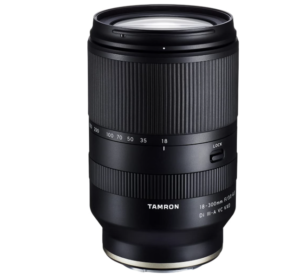
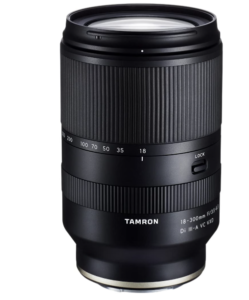
The Tamron 18 300mm F/3.5 6.3 Di III A VC VXD is an all in one zoom lens designed for APS C mirrorless cameras, offering an impressive 16.6x zoom range in a single compact lens. Its wide 18mm setting is useful for landscapes, travel and everyday photography, while the 300mm reach makes it suitable for distant subjects, wildlife and casual sports photography. This broad focal range reduces the need to carry several lenses when moving between different shooting situations.
Autofocus performance is another major advantage of this lens. Tamron uses its VXD linear motor focus mechanism to provide fast and precise autofocus across the zoom range. This makes it easier to follow moving subjects and quickly capture spontaneous moments. For travel and everyday photography, the responsive focusing system can also help when subjects appear unexpectedly.
The lens is designed to maintain high resolving power from the center to the corners throughout its zoom range. This helps produce detailed images across the frame rather than concentrating sharpness only in the middle. For photographers who want one lens for landscapes, portraits, street photography and distant subjects, consistent image quality across different focal lengths is particularly useful.
Its 18mm wide angle provides a practical perspective for photographing scenery, buildings and groups of people. As the lens extends toward 300mm, it provides substantially more reach for subjects that are farther away. Having this range available without changing lenses makes the Tamron 18 300mm particularly convenient for travel, outdoor photography and situations where carrying a full collection of lenses is impractical.
Despite covering such a wide focal range, the lens remains relatively compact and portable. It measures approximately 4.9 by 2.9 inches and weighs just 21.9 ounces. This makes it easier to carry throughout the day compared with bringing multiple lenses covering similar focal lengths. Its size is especially useful for photographers who prioritize mobility.
The lens also features moisture resistant construction, adding useful protection when photographing outdoors in changing conditions. This can provide additional confidence during travel, hiking and other outdoor activities where light moisture or damp conditions may be encountered. The fluorine coating also helps protect the front element and makes it easier to keep the lens surface clean.
The Tamron 18 300mm is particularly well suited to photographers who want flexibility without frequently changing lenses. Its combination of a 16.6x zoom range, fast autofocus, high resolving power and portable design makes it a versatile option for APS C mirrorless camera users. It can handle a wide variety of subjects while keeping the camera setup relatively simple.
Overall, the Tamron 18 300mm F/3.5 6.3 provides an extensive focal range in a single travel friendly package. Its combination of 18mm wide angle coverage and 300mm telephoto reach gives photographers considerable flexibility for everyday, travel and outdoor shooting. The VXD autofocus system, consistent resolving power, moisture resistant construction and fluorine coating further increase its practicality for photographers looking for a versatile mirrorless zoom lens.
Pros
• Extremely versatile 16.6x zoom range
• 18mm wide angle to 300mm telephoto coverage
• Fast and precise VXD autofocus
• High resolving power across the frame
• Compact design for an all in one zoom lens
• Relatively lightweight at 21.9 ounces
• Moisture resistant construction
• Fluorine coating helps keep the front element clean
Cons
• Maximum aperture of F/3.5 6.3 is relatively slow
2)Tamron 17-70mm f/2.8 Di III-A VC RXD Lens
Get it on Amazon
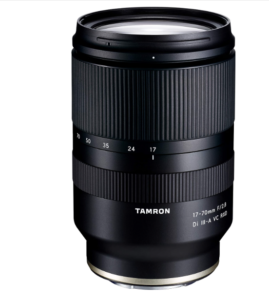
The Tamron 17 70mm F/2.8 Di III A VC RXD is a high speed standard zoom lens designed for APS C mirrorless cameras. With a 4.1x zoom ratio, it covers a useful 17mm wide angle through 70mm short telephoto range, making it suitable for landscapes, travel, street photography, portraits and everyday shooting. Its constant F/2.8 maximum aperture also provides flexibility when photographing in lower light.
Optical performance is a major strength of this lens. It uses a sophisticated optical design consisting of 16 elements in 12 groups, including two GM Glass Molded Aspherical lens elements and one hybrid aspherical lens element. This construction is designed to deliver detailed images while helping maintain image quality throughout the zoom range. The combination makes the lens a practical choice for photographers who want a versatile zoom without giving up strong optical performance.
The constant F/2.8 aperture is particularly useful for photographers who regularly shoot in changing lighting conditions. Unlike a variable aperture zoom, the lens maintains F/2.8 throughout its 17mm to 70mm range. This allows photographers to keep consistent exposure settings while zooming and provides greater control over shutter speed and depth of field.
The upgraded VC vibration compensation system adds stability when shooting handheld. When used with compatible Sony APS C mirrorless cameras, the system works with the camera’s technology and leverages AI for video shooting. This can be especially useful for handheld video and photography where reducing the effects of camera movement can help produce steadier results.
Close focusing capability adds another layer of versatility. The minimum object distance is just 7.5 inches at 17mm and 15.4 inches at 70mm. This allows photographers to move closer to subjects for detailed compositions, making the lens useful for photographing food, flowers, small objects and other nearby subjects without requiring a dedicated close focusing lens.
The 17mm wide angle setting provides a broad field of view for landscapes, architecture, interiors and group photographs. At 70mm, the lens offers a tighter perspective that works well for portraits and everyday subject isolation. This range gives photographers useful coverage without needing to constantly switch lenses.
For outdoor photographers, the moisture resistant construction provides added protection when working in damp or unpredictable conditions. The fluorine coating on the front element also helps resist dirt and makes the surface easier to clean. These features make the lens well suited to travel, outdoor photography and regular everyday use.
The Tamron 17 70mm F/2.8 Di III A VC RXD is a versatile option for APS C mirrorless photographers who want a standard zoom with a fast constant aperture. Its strong optical construction, upgraded stabilization, close focusing ability and weather conscious design make it suitable for a broad range of photography and video applications. The 17mm to 70mm range also provides a practical balance between wide angle coverage and short telephoto reach.
Pros
• Constant F/2.8 maximum aperture
• Versatile 17mm to 70mm focal range
• 4.1x zoom ratio
• Strong optical design with 16 elements in 12 groups
• Two GM Glass Molded Aspherical elements
• One hybrid aspherical lens element
• Upgraded VC stabilization
• AI assisted VC performance for video with compatible Sony APS C cameras
• Excellent close focusing capability
• Moisture resistant construction
• Fluorine coating on the front element
Cons
• Designed specifically for APS C mirrorless cameras
3)Tamron 28 200mm F/2.8 5.6 Di III RXD
Get it on Amazon
The Tamron 28 200mm F/2.8 5.6 Di III RXD is a versatile all in one zoom lens designed for full frame mirrorless cameras. Its 28mm to 200mm focal length range gives photographers a broad selection of perspectives without requiring frequent lens changes. It can handle everyday photography, travel, landscapes, portraits and distant subjects while keeping the camera setup relatively simple.
The lens combines a useful zoom range with a fast F/2.8 maximum aperture at the wide end. As the focal length increases, the maximum aperture changes to F/5.6. The wider F/2.8 aperture can be helpful when photographing in lower light and can also provide greater control over depth of field at shorter focal lengths.
Portability is another important advantage of this lens. It weighs only 20.3 ounces and measures approximately 4.6 inches in length. For a lens covering 28mm to 200mm, this compact and lightweight design makes it easier to carry during travel, walks and everyday shooting. Photographers who prefer to travel with one lens can benefit from having a broad focal range without a bulky setup.
The Tamron 28 200mm also offers strong close focusing performance. At the 28mm wide end, it can focus as close as 7.5 inches with a maximum magnification ratio of 1:3.1. At the 200mm telephoto end, the minimum focusing distance is 31.5 inches with a maximum magnification ratio of 1:3.8. This gives photographers the flexibility to capture relatively small subjects and detailed close up compositions.
Autofocus is handled by Tamron’s RXD stepping motor unit, which is designed to operate exceptionally quietly. This is useful for both photography and video because the focusing system can help minimize distracting mechanical noise. Quiet focusing is particularly beneficial when recording video or photographing subjects in quieter environments.
The lens is also designed for outdoor use with moisture resistant construction. This provides added protection when shooting in damp or unpredictable conditions. The fluorine coating helps protect the front element and makes it easier to clean when dust, fingerprints or moisture reach the lens surface.
A Zoom Lock switch is included to help prevent unwanted lens extension when carrying the lens. This can be useful when the camera and lens are hanging from a strap or being moved between shooting locations. Together with its compact size, the feature contributes to the lens’s convenience for travel and everyday use.
The Tamron 28 200mm F/2.8 5.6 Di III RXD offers a practical combination of versatility, portability and close focusing capability. Its broad focal range reduces the need to change lenses, while the lightweight construction makes it convenient to carry. The quiet RXD autofocus, moisture resistant construction, fluorine coating and Zoom Lock switch further add to its usefulness for photographers looking for an all in one full frame mirrorless lens.
Pros
• Versatile 28mm to 200mm focal range
• Fast F/2.8 maximum aperture at the wide end
• Lightweight design at just 20.3 ounces
• Compact 4.6 inch length
• Excellent close focusing capability
• 7.5 inch minimum focusing distance at 28mm
• 31.5 inch minimum focusing distance at 200mm
• Maximum magnification ratios of 1:3.1 wide and 1:3.8 telephoto
• Exceptionally quiet RXD stepping motor autofocus
• Moisture resistant construction
• Fluorine coating
• Zoom Lock switch
Cons
• Maximum aperture decreases to F/5.6 at 200mm
4)Sony FE 24 70mm F2.8 GM II
Get it on Amazon
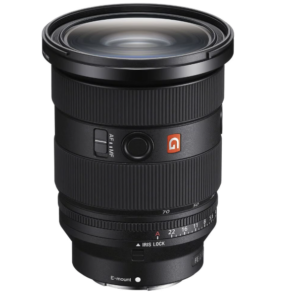
The Sony FE 24 70mm F2.8 GM II is a professional standard zoom lens designed for full frame mirrorless cameras. It combines a constant F2.8 aperture with Sony’s G Master optical technology, providing a versatile focal range for landscapes, street photography, portraits, events and professional video. Its 24mm wide angle coverage and 70mm short telephoto reach make it suitable for a wide variety of shooting situations.
Image quality is a major strength of this lens, with excellent contrast at high spatial frequencies helping produce sharp and detailed images even when shooting at F2.8. The optical design includes two high precision XA Extreme Aspherical elements, two ED Extra low Dispersion glass elements and two Super ED glass elements. A floating focus mechanism also helps control aberrations and maintain clear images across different focal lengths and aperture settings.
The 24mm wide angle provides an 84 degree angle of view on a 35mm full frame system, while the 70mm setting narrows the view to 34 degrees. On APS C cameras, the angle of view ranges from 61 degrees to 23 degrees. This gives photographers useful flexibility, from broader compositions and environmental scenes to tighter portraits and subjects.
Portability is another important advantage. At just 24.6 ounces or 695 grams, the lens is described as the smallest and lightest F2.8 24 70mm zoom in its class. It is more than 20 percent lighter than the previous model, while its length has been reduced by 16mm and its overall volume by approximately 18 percent. These reductions make the lens easier to carry during long shooting sessions.
Autofocus performance has also been significantly developed. Four XD Extreme Dynamic Linear Motors work together with the floating focus mechanism and advanced lens control to provide fast, precise and quiet autofocus with strong subject tracking. With a compatible camera body, the lens can support continuous shooting at up to 30 frames per second and video recording at up to 4K 120p.
The updated aperture system also contributes to fast autofocus performance. It allows the lens to maintain full autofocus tracking capability even when the aperture is stopped down with compatible cameras. This can be particularly useful for photographers and videographers who need accurate tracking while controlling depth of field and exposure.
For video work, Sony has incorporated several design features intended to produce smoother footage. The optical design reduces focus breathing, focus shift and axial shift during zooming, helping minimize changes in framing and image position. The XD Linear Motors and new aperture unit also contribute to quiet, low vibration operation, while compatible Alpha series bodies can use a breathing compensation function.
The Sony FE 24 70mm F2.8 GM II is therefore a highly versatile standard zoom for photographers and filmmakers who need professional optical performance without carrying a particularly large lens. Its constant F2.8 aperture, advanced optical construction, fast autofocus, compact design and video focused features make it suitable for demanding full frame mirrorless applications.
Pros
• Constant F2.8 aperture throughout the 24mm to 70mm zoom range
• High resolution and strong contrast even at F2.8
• Two XA Extreme Aspherical elements
• Two ED glass elements and two Super ED glass elements
• Floating focus mechanism for improved aberration control
• Compact and lightweight design
• Weighs only 24.6 ounces or 695 grams
• More than 20 percent lighter than the previous model
• Four XD Linear Motors for fast and precise autofocus
• Quiet autofocus with excellent subject tracking
• Supports up to 30 frames per second with a compatible camera body
• Supports up to 4K 120p video with a compatible camera body
• Reduced focus breathing and focus shift
• Useful 24mm to 70mm standard zoom range
Cons
• 70mm may not provide enough telephoto reach for distant wildlife or sports subjects
5)Canon RF100 400mm F5.6 8
Get it on Amazon
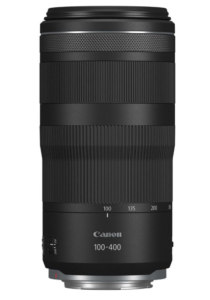
The Canon RF100 400mm F5.6 8 IS USM is a compact and lightweight telephoto zoom lens designed for Canon EOS R series mirrorless cameras. Its versatile 100mm to 400mm focal length range provides plenty of reach for wildlife, birds, sports, outdoor photography and distant subjects. Despite its long telephoto range, the lens is designed to remain practical for photographers who need a portable setup.
The 100mm starting focal length is useful for subjects that are relatively close, while extending to 400mm provides significantly more reach for distant subjects. This makes the lens suitable for situations where moving closer to the subject is difficult or undesirable. The broad zoom range also allows photographers to adjust their composition quickly without changing lenses.
Image stabilization is another important advantage of this lens. Its Optical Image Stabilizer provides up to 5.5 stops of shake correction, helping reduce the effects of camera movement when shooting handheld. When paired with compatible EOS R series cameras equipped with In Body Image Stabilization, the system can provide up to 6 stops of shake correction.
The lens also offers useful close focusing capability for a telephoto zoom. At 200mm, the minimum focusing distance is just 2.89 feet, allowing photographers to work relatively close to their subjects. At 400mm, the maximum magnification reaches 0.41x, making it possible to fill more of the frame with smaller subjects and capture detailed images from a comfortable distance.
Autofocus is handled by Canon’s Nano USM technology, which provides high speed, smooth and quiet focusing. This is useful for photographing moving wildlife, birds and sports subjects where quick focusing can make it easier to capture the action. The quiet operation also makes the lens suitable for video recording and situations where distracting focusing noise should be minimized.
The lens’s compact and lightweight design makes it easier to carry compared with many longer telephoto zooms. This is particularly useful for wildlife photographers, hikers and travelers who may spend several hours carrying their camera equipment. The portability also makes the lens more practical for everyday outdoor photography.
The variable F5.6 to F8 aperture is designed around the lens’s compact telephoto format. At 100mm, the maximum aperture is F5.6, while it narrows to F8 at 400mm. Photographers may need to use higher ISO settings or faster shutter speeds depending on available light, particularly when shooting distant subjects in darker conditions.
The Canon RF100 400mm F5.6 8 IS USM combines long reach, effective stabilization, close focusing and quiet autofocus in a relatively portable package. Its 100mm to 400mm range makes it useful for wildlife, birds, sports and outdoor photography, while the optical stabilization and Nano USM autofocus provide additional support for handheld shooting and moving subjects.
Pros
• Versatile 100mm to 400mm telephoto zoom range
• Compact and lightweight design
• Up to 5.5 stops of Optical Image Stabilization
• Up to 6 stops of shake correction with compatible EOS R cameras featuring IBIS
• Minimum focusing distance of 2.89 feet at 200mm
• Maximum magnification of 0.41x at 400mm
• High speed autofocus
• Smooth and quiet Nano USM autofocus
• Useful for wildlife and bird photography
• Suitable for sports and outdoor photography
• Long 400mm telephoto reach without requiring a larger professional super telephoto lens
Cons
• Maximum aperture narrows from F5.6 to F8 across the zoom range
6)Canon RF70 200mm F2.8 L
Get it on Amazon
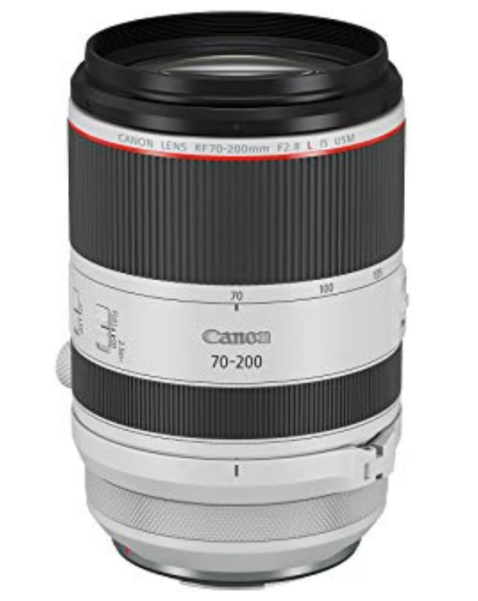
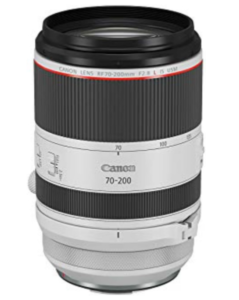
The Canon RF70 200mm F2.8 L IS USM is a professional telephoto zoom lens designed for Canon full frame mirrorless cameras. It combines a versatile 70mm to 200mm focal range with a bright constant F2.8 aperture, making it suitable for portraits, weddings, events, sports, travel and other situations where photographers need both reach and strong low light performance.
The bright F2.8 aperture allows photographers to work effectively in challenging lighting conditions while also providing greater control over depth of field. At 70mm, the lens is useful for wider portrait compositions and everyday subjects, while the 200mm setting provides additional reach for tighter portraits, events and distant subjects. The constant aperture also maintains the same maximum brightness throughout the zoom range.
Image stabilization provides up to 5 stops of shake correction, helping reduce the effects of camera movement when shooting handheld. This is particularly useful when working at longer focal lengths, where small movements can become more noticeable. Stabilization can also help photographers use slower shutter speeds in suitable conditions without relying entirely on a tripod.
Autofocus performance is handled by Canon’s dual Nano USM system. It provides high speed, smooth and quiet focusing, making the lens suitable for both still photography and video. Fast autofocus is especially useful for portraits, sports and events where subjects can move unpredictably and photographers need to acquire focus quickly.
The lens also offers a minimum focusing distance of just 2.3 feet or 0.7 meters. This allows photographers to move relatively close to their subjects while maintaining the flexibility of a telephoto zoom. The close focusing capability is useful for portraits, details, products and other subjects where a tighter composition is desired.
Despite its bright F2.8 aperture and telephoto range, the RF70 200mm F2.8 L IS USM is designed to be compact and lightweight. This makes it easier to carry during extended shooting sessions compared with larger telephoto zooms. The more portable design can be particularly useful for event photographers and travelers who need professional performance without an overly cumbersome setup.
The 70mm to 200mm range is a practical choice for photographers who frequently work with people and distant subjects. It provides enough flexibility to change composition without changing lenses, while the F2.8 aperture allows photographers to create attractive background separation. This combination makes the lens useful across portraits, weddings, sports and other professional applications.
The Canon RF70 200mm F2.8 L IS USM is compatible with Canon full frame mirrorless cameras including the EOS RP, EOS R, EOS R5 and EOS R6. Its combination of high image quality, constant F2.8 aperture, optical stabilization, fast autofocus and close focusing capability makes it a versatile telephoto zoom for Canon’s full frame mirrorless system.
Pros
• Bright constant F2.8 aperture
• Versatile 70mm to 200mm focal range
• High image quality
• Compact and lightweight design
• Up to 5 stops of Optical Image Stabilization
• High speed autofocus with dual Nano USM
• Smooth and quiet autofocus operation
• Minimum focusing distance of 2.3 feet or 0.7 meters
• Useful for portraits, weddings and events
• Suitable for sports and travel photography
• Compatible with Canon full frame mirrorless cameras
Cons
• 200mm may not provide enough reach for distant wildlife
You may also like to read Best Hybrid Mirrorless Camera for Travel
Best Mirrorless Zoom Lens Advantages
Versatile Focal Length Range.
A mirrorless zoom lens can cover multiple focal lengths in one lens, allowing photographers to switch from wide angle scenes to closer subjects without changing lenses. This makes it useful for travel, landscapes, portraits, wildlife, events and everyday photography.
Greater Shooting Flexibility.
Zoom lenses allow you to adjust the composition simply by changing the focal length. This is especially helpful when you cannot physically move closer to or farther away from your subject.
High Image Quality.
Many modern mirrorless zoom lenses use advanced optical elements and specialized coatings to produce sharp, detailed images with good contrast across the frame. This makes them suitable for both professional and enthusiast photography.
Fast and Accurate Autofocus.
Advanced autofocus motors provide quick, precise and quiet focusing, making it easier to capture moving subjects. This is particularly useful for wildlife, sports, events and video recording.
Effective Image Stabilization.
Some zoom lenses include optical image stabilization that helps reduce the effects of camera shake when shooting handheld. This can be particularly valuable when using longer focal lengths or working in lower light.
Portable Design.
Modern mirrorless zoom lenses can provide extensive focal length coverage while remaining relatively compact and lightweight. This makes them easier to carry during travel, hiking, outdoor photography and extended shooting sessions.
Useful Close Focusing Capability.
Some zoom lenses can focus at relatively short distances and provide useful magnification. This allows photographers to capture flowers, food, products, details and other smaller subjects without needing a dedicated close focusing lens.
Weather and Outdoor Protection.
Moisture resistant construction and protective coatings can make a lens more suitable for outdoor photography. These features provide additional protection when shooting in damp or unpredictable conditions while making the front element easier to maintain.
Factors to Consider When Choosing Best Mirrorless Zoom Lens
Focal Length Range.
Consider the focal lengths you photograph most often before choosing a zoom lens. A wider range provides greater versatility, while a more specialized range may offer better performance for particular subjects such as landscapes, portraits, wildlife or sports.
Maximum Aperture.
The maximum aperture affects how much light enters the lens and how much control you have over background blur. A constant wider aperture can be particularly useful for low light photography, portraits and situations where maintaining consistent exposure while zooming is important.
Image Quality.
Look for a lens that can produce sharp, detailed images across its zoom range. Optical construction, specialized lens elements and coatings can contribute to resolution, contrast, color accuracy and overall image quality.
Autofocus Performance.
Consider how quickly, accurately and quietly the lens focuses. Fast and reliable autofocus is especially important for moving subjects, wildlife, sports, events and video, while quiet focusing can help prevent distracting sounds during recording.
Image Stabilization.
Built in stabilization can help reduce blur caused by camera movement when shooting handheld. Check how many stops of correction are provided and whether the lens can work with your camera’s in body stabilization system for additional support.
Size and Weight.
Consider how comfortable the lens will be to carry and use for extended periods. A compact and lightweight lens can be more convenient for travel and everyday photography, while larger lenses may provide greater reach or wider apertures at the expense of portability.
Close Focusing Ability.
Check the minimum focusing distance and maximum magnification if you photograph small or nearby subjects. Strong close focusing performance can make a zoom lens more versatile for details, food, flowers, products and other close up subjects.
Build Quality and Weather Protection.
Consider the lens construction if you regularly photograph outdoors. Moisture resistant designs and protective coatings can provide additional durability in challenging conditions, while a robust build can be valuable for photographers who frequently travel or work in demanding environments.
Best Mirrorless Zoom Lens FAQs
1. What should I look for in the best mirrorless zoom lens?
Look for a focal length range that suits your photography, a suitable maximum aperture, strong image quality, fast autofocus and effective image stabilization. Size, weight, close focusing ability and weather protection are also important depending on how and where you plan to use the lens.
2. Is a mirrorless zoom lens good for travel photography?
Yes. A versatile zoom lens can cover multiple focal lengths without requiring frequent lens changes. A compact and lightweight design is particularly useful for travel because it reduces the amount of equipment you need to carry while still allowing you to photograph landscapes, people, architecture and distant subjects.
3. Are mirrorless zoom lenses suitable for wildlife and sports photography?
Yes, particularly models with longer telephoto ranges, fast autofocus and effective image stabilization. A longer focal length allows you to photograph distant subjects, while responsive autofocus helps track movement. A wider maximum aperture can also be beneficial when shooting fast action or working in lower light.
Conclusion
Finding the best mirrorless zoom lens is less about choosing the lens with the longest range or most impressive specifications and more about finding the right balance for your photography. Consider how you shoot, the focal lengths you use most, the aperture you need, autofocus performance, stabilization, portability and build quality before making your choice.
Whether you prioritize travel convenience, professional image quality, portraits, landscapes or distant subjects, the right zoom lens should make your camera easier and more enjoyable to use. This finder brings together the important differences so you can choose a mirrorless zoom lens that fits your camera system, shooting style and everyday photography needs.