
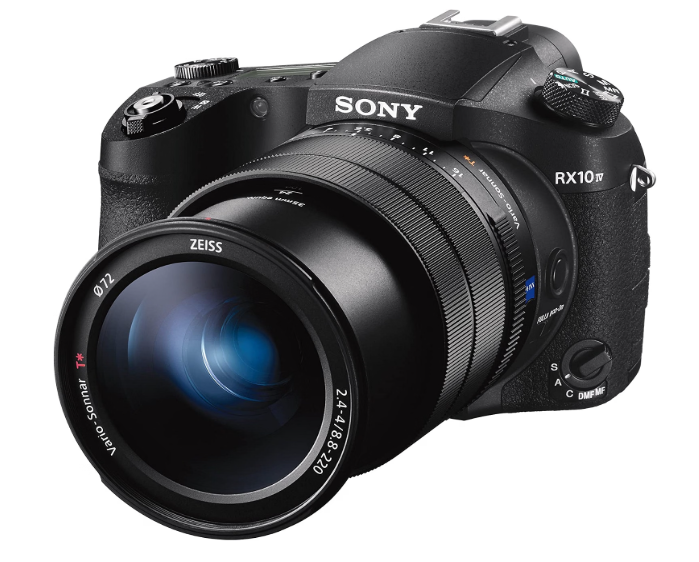
The best bridge camera for wildlife and birding combines long zoom reach, reliable stabilization, responsive focusing, and practical shooting features in an all in one design. Cameras such as the Sony Cyber Shot RX10 IV, Panasonic LUMIX FZ80D, Fujifilm FinePix S1, Nikon COOLPIX P1100, and Nikon COOLPIX P950 offer different approaches to photographing distant and fast moving subjects, from the Sony’s 24 to 600mm optical range and fast autofocus to the Nikon P1100’s extraordinary 125x optical zoom.
These cameras are great for wildlife photographers who want substantial telephoto reach without carrying multiple lenses. In this guide, we’ll cover their important features, top picks, key factors to consider when choosing a bridge camera, and frequently asked questions to help you understand which specifications matter most for wildlife and birding.
Best Bridge Camera for Wildlife and Birding
1)Sony Cyber‑Shot RX10 IV with 0.03 Second Auto-Focus
Get it on Amazon
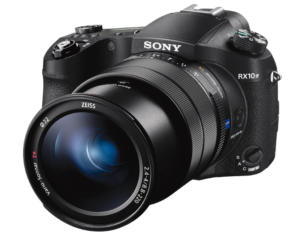
The Sony Cyber Shot RX10 IV is a versatile bridge camera designed for wildlife and birding photographers who need a long reach without carrying multiple lenses. Its ZEISS Vario Sonnar T 24 600mm F2.4 F4 lens provides a broad zoom range, making it useful for everything from wider environmental shots to distant birds and animals. The combination of a 20.1 MP 1 inch back illuminated Exmor RS stacked CMOS sensor with DRAM and optical image stabilization also helps produce detailed images while making handheld shooting more manageable at longer focal lengths.
Autofocus performance is one of the camera’s major strengths for fast moving wildlife. Sony rates its AF acquisition speed at just 0.03 seconds, while 315 phase detection AF points cover approximately 65% of the frame. This wide AF coverage helps the camera locate and track subjects across a large portion of the composition. For birding, where a subject can suddenly take flight or move between branches, the responsive focusing system can make it easier to maintain focus during unpredictable movement.
The 24 600mm optical zoom gives wildlife photographers considerable reach without requiring a separate telephoto lens. At the 600mm end, distant birds can fill more of the frame while photographers can remain farther away from their subjects. The optical image stabilization system is particularly useful at this ultra telephoto range because even small hand movements become more noticeable as magnification increases. It can also help when shooting handheld in lower light conditions.
The 20.1 MP stacked sensor is designed to deliver detailed images while supporting the camera’s fast performance. Combined with the BIONZ X image processor and DRAM architecture, the sensor enables high speed continuous shooting and responsive operation. For wildlife photography, this is useful when the subject’s behavior changes quickly and there is only a brief opportunity to capture the desired pose, flight position, or interaction.
Continuous shooting is another important advantage for birding. The RX10 IV can capture up to 24 frames per second with AF and AE tracking, with a burst capacity of up to 249 frames. This gives photographers a long sequence of images to choose from when photographing birds taking off, landing, flying, or changing position. AF and exposure tracking throughout the sequence also help maintain consistency while the subject moves.
The camera offers several metering options, including Multi Pattern, Centre Weighted, Spot in Standard or Large sizes, Entire Screen Average, and Highlight. These choices allow photographers to adjust exposure behavior according to different wildlife scenes. Spot metering can be useful when a bird is surrounded by a much brighter or darker background, while Multi Pattern metering provides a more general approach for changing outdoor conditions.
Despite its extensive zoom range and advanced features, the RX10 IV is still a substantial bridge camera. It weighs approximately 2 pounds 6.7 ounces with the battery and SDXC card installed, while the body only weighs approximately 2 pounds 5.1 ounces. Its dimensions are approximately 5 1/4 x 3 3/4 x 5 3/4 inches, making it larger and heavier than many compact cameras. For photographers spending long periods outdoors, the weight is worth considering alongside the convenience of having a 24 600mm lens built into the camera.
The 62mm filter diameter provides compatibility with a range of photographic filters, while the built in optical stabilization adds another layer of support for handheld shooting. Overall, the Sony Cyber Shot RX10 IV combines long optical reach, fast autofocus, high speed continuous shooting, and image stabilization in a single camera body. For wildlife and birding, its specifications make it particularly suited to photographers who want substantial telephoto capability without carrying a separate collection of interchangeable lenses.
Pros
• 0.03 second AF acquisition speed for responsive focusing
• 315 phase detection AF points covering approximately 65% of the frame
• 24 600mm ZEISS Vario Sonnar T F2.4 F4 lens provides extensive optical reach
• Optical image stabilization supports handheld shooting at long focal lengths
• 20.1 MP 1 inch back illuminated Exmor RS stacked CMOS sensor with DRAM
• Up to 24 fps continuous shooting with AF and AE tracking
• Burst capacity of up to 249 frames
• Multiple metering modes provide flexibility for different wildlife lighting conditions
Cons
• Approximately 2 pounds 6.7 ounces with battery and SDXC card, which may feel heavy during extended outings
2)Panasonic LUMIX FZ80D Point and Shoot Digital Camera
Get it on Amazon
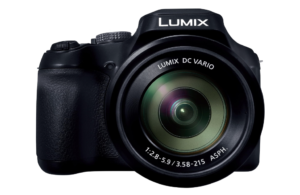
The Panasonic LUMIX FZ80D is a bridge camera designed for photographers who want extensive zoom reach without carrying a collection of interchangeable lenses. Its long zoom capability makes it useful for wildlife and birding, where subjects are often far away and difficult to approach. The camera combines a powerful telephoto range with optical image stabilization, a high resolution electronic viewfinder, 4K video, and several shooting features that can help capture fast moving subjects and distant wildlife.
For outdoor wildlife photography, having a clear view through the electronic viewfinder can make a significant difference, particularly under strong sunlight. The FZ80D features a 2,360K dot Large LVF with a 0.74x 35mm equivalent magnification. This provides a detailed viewing experience and helps photographers compose distant birds and animals without relying entirely on the rear screen, which can become difficult to see when direct sunlight creates glare.
The camera is also equipped with 4K Video Mode, allowing it to record video at up to four times the resolution of Full HD. This can be useful for wildlife photographers who want to document animal behavior, bird flight, or other fast paced action. The 4K Photo feature adds another practical option by allowing users to extract an 8 megapixel still image from 4K video, giving photographers more opportunities to capture a precise moment that may have been difficult to photograph as a conventional still image.
The Post Focus feature provides additional flexibility when photographing wildlife subjects. Instead of being limited to the original focus point, photographers can select the area they want in focus after taking the photograph. This can be helpful in situations where branches, leaves, or other objects make it challenging to achieve the desired focus point while photographing a distant bird.
At long zoom ranges, even small hand movements can cause noticeable image shake. The FZ80D uses Panasonic POWER O.I.S. optical image stabilization to suppress hand shake, particularly at the telephoto end of the zoom range. This can make handheld shooting more practical when photographing distant wildlife, especially when using the camera at its extended 60x zoom capability.
The extensive zoom range is particularly useful for birding because it allows photographers to frame subjects from a distance without physically moving closer. This can be helpful when photographing birds that are easily disturbed or animals that need to be observed from a safe distance. The combination of long zoom reach and optical stabilization gives the camera useful flexibility for outdoor wildlife photography.
The 4K capabilities also make the FZ80D suitable for photographers who want both still photography and video in one device. Fast moving animals can be difficult to predict, and recording 4K video provides another way to preserve moments that might otherwise be missed. The ability to extract an 8 megapixel image from 4K Photo sequences further expands its usefulness for action oriented subjects.
Overall, the Panasonic LUMIX FZ80D provides a practical combination of long zoom capability, optical stabilization, a high resolution electronic viewfinder, 4K video, 4K Photo, and Post Focus technology. For wildlife and birding, these features are particularly useful when subjects are distant, moving quickly, or being photographed in bright outdoor conditions.
Pros
• 60x zoom provides extensive reach for distant wildlife and birds
• POWER O.I.S. optical image stabilization helps reduce hand shake at long zoom ranges
• 2,360K dot Large LVF provides a detailed electronic viewing experience
• 0.74x 35mm equivalent viewfinder magnification assists with subject framing
• 4K Video Mode provides high resolution video for fast moving wildlife
• 4K Photo allows users to extract 8 megapixel still images from 4K footage
• Post Focus allows the desired focus area to be selected after the photograph is taken
• Suitable for photographers who want long zoom capability without changing lenses
Cons
• Extracted 8 megapixel images from 4K Photo have less resolution than a full resolution still photograph
3)Fujifilm FinePix S1 16 MP Digital Camera with 3.0-Inch LCD
Get it on Amazon
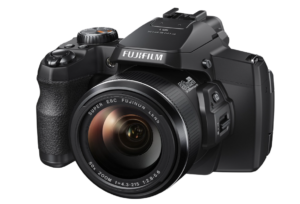
The Fujifilm FinePix S1 is a bridge camera designed for photographers who want substantial telephoto reach for wildlife and birding without carrying interchangeable lenses. Its 50x optical zoom covers an impressive 24 to 1200mm equivalent range, allowing photographers to switch from wider environmental scenes to distant birds and animals. Combined with a backlit CMOS sensor, Full HD video, a vari angle LCD monitor, and Wi Fi connectivity, the FinePix S1 offers a versatile setup for outdoor photography.
The 16.2MP 1/2.3 inch backlit CMOS sensor provides enough resolution for everyday wildlife and bird photography while maintaining a relatively compact sensor design. The backlit construction is intended to improve the sensor’s ability to work with available light, which can be useful when photographing wildlife in changing outdoor conditions. For daylight birding and general nature photography, the 16.2MP resolution provides flexibility for cropping and composing images.
The 50x optical zoom is particularly useful for wildlife photographers because it reaches an equivalent focal length of 1200mm. This allows distant birds and animals to be framed more closely without relying on digital zoom. The 24mm wide angle starting point is also useful when photographing animals in their surroundings or capturing broader landscape scenes before moving into the telephoto range.
For birding, the extensive zoom range can make it easier to photograph subjects that are high in trees, across open fields, or positioned at a considerable distance. A 1200mm equivalent reach gives photographers the ability to fill more of the frame with a small bird while remaining at a respectful distance. As with any long zoom camera, steady handling becomes increasingly important at the longest focal lengths.
The FinePix S1 also supports Full HD movie recording at 1920 x 1080 resolution and 60i. This provides an option for recording wildlife behavior rather than relying solely on still photographs. Video can be useful when photographing birds in flight, animals moving through their environment, or other scenes where continuous action is more important than capturing a single frame.
Framing can be done using the 3.0 inch approximately 920K dot vari angle LCD monitor or the approximately 920K dot electronic viewfinder. The vari angle screen provides additional flexibility when shooting from different positions, while the electronic viewfinder can be useful when photographing outdoors and trying to maintain a stable shooting position. Using the viewfinder can also make it easier to keep the camera pressed against the face for added stability at longer zoom settings.
Wi Fi connectivity adds convenience for photographers who want to transfer images from the camera to compatible devices. This can be useful after a wildlife outing when you want to review, share, or move photographs without relying entirely on a wired connection.
Overall, the Fujifilm FinePix S1 combines a 16.2MP backlit CMOS sensor, 50x optical zoom, a 24 to 1200mm equivalent focal range, Full HD video, dual viewing options, and Wi Fi connectivity. Its extensive optical reach makes it particularly suited to birding and wildlife situations where subjects are often distant and difficult to approach.
Pros
• 50x optical zoom provides an extensive 24 to 1200mm equivalent range
• 1200mm equivalent telephoto reach is useful for distant birds and wildlife
• 16.2MP backlit CMOS sensor provides useful resolution for wildlife photography
• 3.0 inch approximately 920K dot vari angle LCD offers flexible framing
• Approximately 920K dot electronic viewfinder provides an alternative way to compose images
• Full HD 1920 x 1080 video recording at 60i supports wildlife movie capture
• Wi Fi connectivity makes image transfer more convenient
• Wide 24mm equivalent starting point works well for environmental wildlife scenes
Cons
• The 1/2.3 inch sensor is smaller than the sensors used in many advanced interchangeable lens cameras
4)Nikon COOLPIX P1100 Superzoom Digital Camera
Get it on Amazon
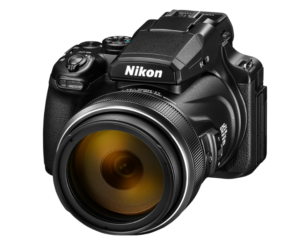
The Nikon COOLPIX P1100 Superzoom Digital Camera is built for wildlife and birding photographers who need extreme telephoto reach in a single bridge camera. Its 125x optical zoom provides an extraordinary 24 to 3000mm equivalent focal range, allowing photographers to move from wide angle landscapes to extremely distant birds and animals without changing lenses. The camera also offers a 250x Dynamic Fine Zoom, giving users even more reach when photographing subjects that are exceptionally far away.
The 24 to 3000mm equivalent range makes the P1100 particularly useful for birdwatching and wildlife photography. Small birds that appear tiny at conventional focal lengths can be framed much more closely, while the wide angle end can be used for animals in their surroundings. This extensive range also reduces the need to carry multiple lenses, making the camera a practical option for photographers who prefer an all in one setup.
At extreme telephoto lengths, camera movement can become much more noticeable. The P1100 uses Dual Detect Optical VR image stabilization, providing stabilization equivalent to shooting at a shutter speed approximately 4.0 stops faster. This can help reduce the effects of hand movement and make handheld shooting more manageable, although careful technique remains important when working at the 3000mm equivalent end of the zoom.
The dedicated Bird Watching Mode is especially useful for photographers who regularly photograph birds. It can be selected directly from the mode dial and optimizes camera settings for bird photography. Having a dedicated mode makes it easier to quickly prepare the camera when a bird appears unexpectedly, without requiring the photographer to manually adjust numerous settings before taking the shot.
The P1100 is also more versatile than its extreme telephoto specifications might suggest. It can capture JPEG and NRW RAW photographs, 4K UHD video, smooth slow motion, time lapse movies, and Superlapse movies. RAW capability gives photographers additional flexibility when processing wildlife photographs, while 4K video provides an option for recording animal behavior and bird activity.
The camera also includes a Close Focus Macro Mode that allows photographers to get approximately 1 cm from a subject. This makes the P1100 useful beyond distant wildlife, allowing photographers to photograph very small subjects and reveal fine details at close range. The ability to move between ultra telephoto wildlife photography and close focus work adds considerable versatility to the camera.
A customizable control ring provides additional control over important shooting adjustments. It can be assigned to manual focus or functions such as exposure compensation and white balance. This gives photographers a convenient way to make adjustments while keeping their attention on the subject, which can be useful when lighting or focus conditions change during a wildlife session.
Overall, the Nikon COOLPIX P1100 combines an extraordinary 125x optical zoom, 24 to 3000mm equivalent reach, Dual Detect Optical VR, dedicated Bird Watching Mode, RAW photography, 4K video, macro focusing, and customizable controls. For wildlife and birding, its extreme zoom range is particularly useful for subjects that are difficult to approach, while its broader shooting capabilities make it suitable for a variety of nature photography situations.
Pros
• 125x optical zoom provides an extraordinary 24 to 3000mm equivalent range
• 250x Dynamic Fine Zoom provides additional reach for extremely distant subjects
• Dedicated Bird Watching Mode provides quick access to bird photography settings
• Dual Detect Optical VR provides stabilization equivalent to approximately 4.0 stops
• Supports JPEG and NRW RAW photography for greater editing flexibility
• 4K UHD video supports high resolution wildlife recording
• Close Focus Macro Mode can focus from approximately 1 cm
• Customizable control ring can be assigned to manual focus, exposure compensation, or white balance
• Supports slow motion, time lapse, and Superlapse movie recording
Cons
• Extreme 3000mm equivalent telephoto shooting requires careful handling and steady technique
5)Nikon COOLPIX P950 16MP 83x Optical Zoom Digital Camera
Get it on Amazon
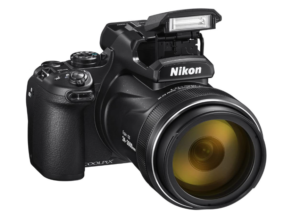
The Nikon COOLPIX P950 is a superzoom bridge camera designed for photographers who want substantial telephoto capability for wildlife and birding. Its 83x optical zoom provides considerable reach, making it possible to photograph distant birds and animals without carrying a collection of interchangeable lenses. The camera combines a CMOS sensor, optical and digital image stabilization, and support for both JPEG and RAW files, giving wildlife photographers flexibility in how they capture and process their images.
The extensive zoom capability is particularly useful for birding, where subjects can remain high in trees, across open spaces, or at distances where approaching them is impractical. The P950 allows photographers to frame distant subjects more closely while remaining at a suitable distance. This can be valuable for observing and photographing birds without disturbing their natural behavior.
The camera uses CMOS sensor technology and supports a 4:3 aspect ratio. This provides a familiar photographic format that works well for wildlife compositions, particularly when photographing birds against natural backgrounds. The sensor and image processing system are designed to support the camera’s extensive zoom range and general purpose photography capabilities.
Image stabilization is another important consideration when using a superzoom camera. The P950 offers both optical and digital image stabilization to help reduce the effects of camera movement. At long focal lengths, even small movements can become visible in the photograph, so stabilization can make handheld shooting more manageable. A stable shooting position is still helpful when working at extreme telephoto settings.
The ability to record photographs in both JPEG and RAW formats gives photographers greater flexibility. JPEG files are convenient for quick sharing and everyday use, while RAW files provide more information for photographers who want to make detailed adjustments during post processing. For wildlife photography, RAW support can be useful when recovering detail or adjusting exposure and color in challenging lighting conditions.
The P950’s long focal length capability makes it suitable for more than just birds. Wildlife photographers can use its telephoto reach for animals in open landscapes, while the broader end of the zoom range can be used for environmental scenes. This versatility means photographers can carry one camera for a variety of nature photography situations instead of switching between multiple lenses.
The camera uses a Nikon 1 compatible mounting specification, while its 4:3 aspect ratio provides a conventional composition format. Its combination of optical and digital stabilization is particularly relevant for photographers who intend to use the camera primarily at longer focal lengths. With distant wildlife, careful framing, good lighting, and stable handling can all contribute to sharper results.
Overall, the Nikon COOLPIX P950 provides a practical bridge camera setup for wildlife and birding photographers who prioritize long zoom capability and an all in one shooting system. Its CMOS sensor, 83x optical zoom, optical and digital stabilization, and JPEG and RAW support give it flexibility for both casual birdwatching and more involved wildlife photography.
Pros
• 83x optical zoom provides substantial reach for distant wildlife and birds
• CMOS sensor technology supports general purpose photography
• Optical image stabilization helps reduce camera movement at long focal lengths
• Digital image stabilization provides additional assistance against camera shake
• Supports both JPEG and RAW file formats
• 4:3 aspect ratio suits traditional photographic compositions
• All in one bridge camera design eliminates the need to change lenses while photographing wildlife
• Long telephoto capability allows photographers to maintain distance from subjects
Cons
• Extreme telephoto shooting requires careful handling and a stable shooting position
You may also like to read Best Superzoom Camera for Moon Photography
Best Bridge Camera for Wildlife and Birding Advantages
1.Long Optical Zoom Range.
A powerful optical zoom is one of the most useful advantages for wildlife and birding because subjects are often far away and difficult to approach. A long focal range allows photographers to fill more of the frame with distant birds and animals while maintaining a safer and less disruptive distance.
2.Fast and Accurate Autofocus.
Wildlife can move suddenly, so responsive autofocus helps photographers acquire and maintain focus quickly. A camera with extensive autofocus coverage and subject tracking can make it easier to capture birds in flight, animals running, or unpredictable movements before the moment is gone.
3.Effective Image Stabilization.
Long telephoto shooting magnifies even small hand movements, which can result in blurry photographs. Optical image stabilization helps reduce camera shake, making handheld photography more practical when using extreme zoom ranges, particularly in changing light conditions.
4.High Speed Continuous Shooting.
Birds can change position or direction in an instant, making a single photograph difficult to time perfectly. Fast continuous shooting allows photographers to capture a sequence of images and select the frame with the best wing position, expression, pose, or interaction.
5.Flexible Shooting Modes.
Dedicated wildlife and birding modes can simplify camera operation by adjusting settings for specific subjects and situations. Additional options such as manual controls, RAW photography, macro focusing, and different metering modes also provide greater flexibility as shooting conditions change.
6.Clear Electronic Viewfinder.
A detailed electronic viewfinder helps photographers compose distant subjects more accurately, especially when bright sunlight makes a rear LCD difficult to see. A good viewfinder can also provide a steadier shooting position when the camera is held against the face.
7.Versatile Video Capability.
Wildlife photography often involves interesting behavior that is better captured as moving footage. Features such as 4K video, slow motion, time lapse, and high resolution recording allow photographers to document birds and animals in ways that still photography alone cannot provide.
8.All in One Convenience.
A bridge camera combines a camera body and a broad zoom lens into one system, eliminating the need to carry and change several lenses in the field. This makes wildlife photography more convenient when hiking, traveling, or spending long periods outdoors while still providing substantial telephoto reach.
Factors to Consider When Choosing Best Bridge Camera for Wildlife and Birding
1.Optical Zoom Range.
Consider how much telephoto reach you need for the wildlife and birds you photograph. A longer optical zoom makes it easier to frame distant subjects without moving closer, while a useful wide angle starting point provides flexibility for environmental wildlife scenes and landscapes.
2.Autofocus Performance.
Fast and reliable autofocus is important when photographing unpredictable wildlife. Look for a camera with responsive focusing, broad autofocus coverage, and tracking capabilities that can help maintain focus as birds fly or animals move through the frame.
3.Image Stabilization.
Strong optical image stabilization becomes increasingly important as the zoom range increases. It helps reduce the effects of hand movement when shooting handheld at long focal lengths, particularly when photographing in lower light or using extreme telephoto settings.
4.Continuous Shooting Speed.
Wildlife moments can happen in a fraction of a second, so consider how quickly the camera can capture consecutive photographs. A high continuous shooting rate gives you more frames to choose from when photographing birds taking off, landing, flying, or interacting with other animals.
5.Sensor and Image Quality.
Consider the sensor size, resolution, and low light performance before choosing a camera. A larger or more capable sensor can provide better detail and image quality in challenging lighting, while sufficient resolution gives you more flexibility when cropping distant wildlife photographs.
6.Viewfinder and Screen Quality.
A clear electronic viewfinder can make it easier to locate and track distant subjects, especially under bright sunlight. Also consider the resolution and flexibility of the rear screen if you frequently photograph from unusual angles or positions.
7.Video and Shooting Features.
If you want to record wildlife behavior as well as still photographs, consider features such as 4K video, slow motion, time lapse, RAW photography, and specialized wildlife modes. These functions can provide additional ways to capture and preserve wildlife encounters.
8.Size, Weight, and Handling.
Wildlife photography often involves walking, hiking, or waiting outdoors for extended periods, so the camera should be comfortable to carry and operate. Consider its weight, grip, controls, and overall handling, especially if you plan to use the camera for long sessions at extended zoom ranges.
Best Bridge Camera for Wildlife and Birding FAQs
What zoom range is best for wildlife and birding?
A long optical zoom is generally useful because birds and wildlife are often far from the photographer. A camera offering several hundred millimeters of equivalent telephoto reach can provide enough magnification for many situations, while ultra telephoto ranges are useful for very distant or small subjects.
Is image stabilization important for wildlife photography?
Yes. Image stabilization can help reduce camera shake when shooting handheld at long focal lengths. This is particularly helpful when using high magnification, where even small movements can make an image appear blurry.
What other features should I look for in a bridge camera for birding?
Fast autofocus, continuous shooting, a clear electronic viewfinder, good subject tracking, and useful wildlife shooting modes can all be valuable. If you also record wildlife behavior, consider 4K video and other video features for greater flexibility.
Conclusion
Finding the best bridge camera for wildlife and birding comes down to matching zoom reach, autofocus speed, image stabilization, shooting speed, and handling with the type of subjects you plan to photograph. A camera with extreme telephoto reach can help capture distant birds, while fast autofocus and continuous shooting are valuable for unpredictable movement.
Rather than simply choosing the camera with the biggest zoom number, consider how comfortably you can carry and operate it during long wildlife sessions, the lighting conditions you usually encounter, and whether you also need strong video capabilities. The right bridge camera should give you the reach and control to spend more time observing wildlife and less time changing equipment, making every outdoor photography trip more flexible and enjoyable.